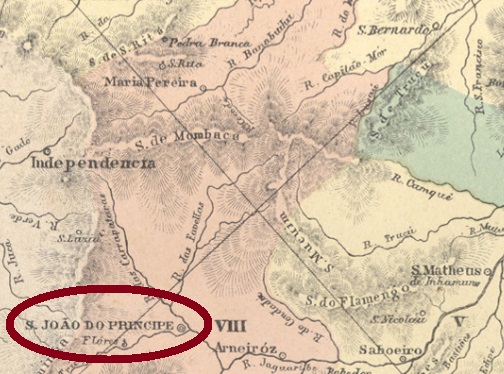
Other names: Sao João do Principe dos Inhamuns, S. João de Inhamuns (1889), Tauá (1892)
This village was during the 18th century a settlement near Quixeramobim, which was located about 240 km south of the later provincial capital Fortaleza. Already in colonial times, around 1801, it became a villa called S. João do Príncipe de Inhamuns. The cited Prince João later became King João VI of Portugal, who fled to Brazil in 1808 when Napoleon invaded Portugal. At the end of the empire, the prince also had to flee from the place name, either due to a favor by the regional authorities or out of republican zeal: at the beginning of December 1889 the villa was already called S. João de Inhamuns. Almost three years later, the town was given the still actual name of Município de Tauá. The word from the Tupi language means red clay, but is also used to call the festive amazon (Amazona festiva, Linnaeus, 1758), a kind of parrot:

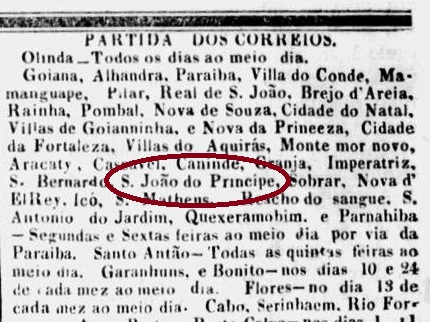
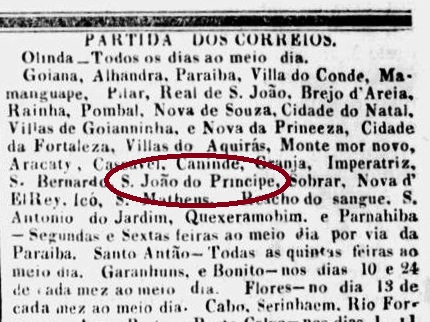
Three operating periods are already known for the local post office, but at least one more could be added. According to the Pernambuco press, as early as April 1836, postmen from Recife to Parnahiba in the province of Piauhy were on the courier route twice a week, which also served the Sao João do Principe in Ceará. This presupposes the existence of a post office there:
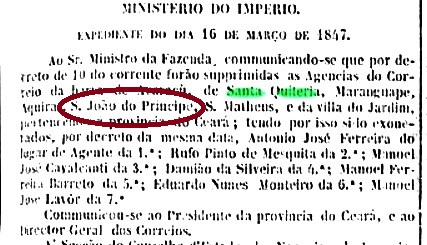
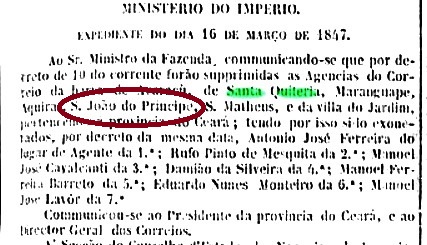
The post office closed in March 1847, as one can read in the Rio press:
The second opening of the post office in S. João do Principe may have taken place in 1851, as noted in the Imperial Mail Register (Tabella das Agencias do Correio do Imperio) of 1885. And Nova Monteiro (Administrações e Agencias Postaes do Brasil Imperio, in Brasil Filatelico/RJ, 1934-5; Reprint SPP 1994-1999) lists the agency with creation year 1857.
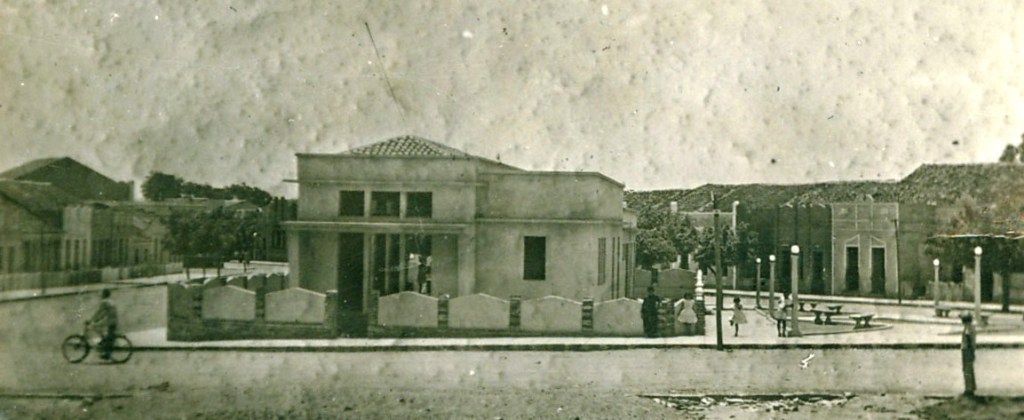
Since there was a village of the same name in the province of Rio de Janeiro in the Empire (SRJ-0945), no postmark could be assigned here with final security. Nevertheless, we can strongly assume that the stamp MTP 801 presented by Cicero A. Almeida in Carimbos Postais – século XIX (Rio de Janeiro, 1989) belongs to the province of Ceará as SCE-0290b, as it bears the No. (2), while No. (I) and (3), which were in use at about the same time, have already been identified as belonging to Rio de Janeiro.

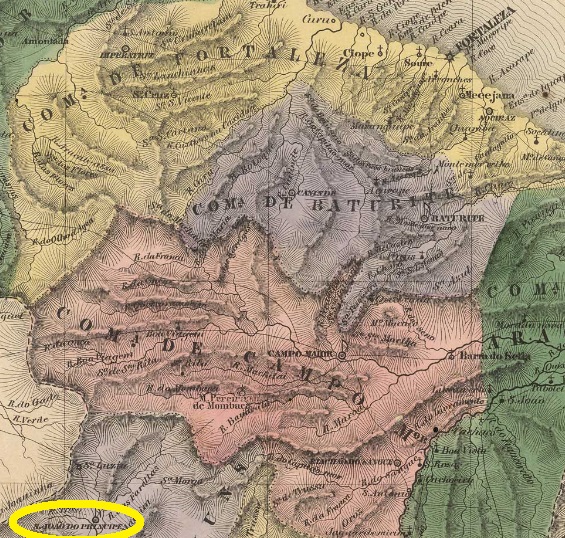
Andere Namen: São João do Príncipe dos Inhamuns, S. João de Inhamuns (1889), Tauá (1892)
Diese Ortschaft war im 18. Jahnhundert eine Siedlung bei Quixeramobim, die ca. 240 km südlich der später Provinzhauptstadt Fortaleza lag. Noch in Kolonialzeiten, um 1801, wurde daraus die Villa namens S. João do Príncipe de Inhamuns. Der genannte Prinz João wurde später König João VI von Portugal, der 1808 Hals über Kopf nach Brasilien geflohen ist, als Napoleon in Portugal einmarschierte. Am Ende des Kaiserreichs musste der Prinz auch aus dem Ortsnamen fliehen, sei es aus einer Gefälligkeit der regionalen Obrigkeit, sei es aus republikanischem Eifer: bereits Anfang Dezember 1889 hieß die Villa S. João de Inhamuns. Knapp drei Jahre später erhielt der Ort den heute noch gültigen Namen Município de Tauá. Das Wort aus der Tupi-Sprache bedeutet Roter Lehm, wird aber auch als Bezeichnung für die Blaubartamazone (Amazona festiva, Linnaeus, 1758), eine Papageienart, verwendet:

Es sind bereits drei Betriebsperioden fürs örtliche Postamt bekannt, aber es könnte mindestens eine weitere dazu kommen. Aus der Pernambuco-Presse geht hervor, dass schon im April 1836 Poststaffeten von Recife bis Parnahiba in der Provinz Piauhy zweimal in der Woche unterwegs waren, die auch São João do Principe in Ceará bedienten, was wohl die Existenz eines Postamts dort voraussetzt:
Das Postamt schloss aber im März 1847, wie man in der Rio-Presse lesen kann:
Die zweite Posteröffnung in S. João do Principe dürfte 1851 stattgefunden haben, wie im Verzeichnis der kaiserlichen Postämter (Tabella das Agencias do Correio do Imperio) von 1885 vermerkt. Und Nova Monteiro (Administrações e Agencias Postaes do Brasil Imperio, in Brasil Filatelico/RJ, 1934-5; Reprint SPP 1994-1999) listet die Agentur mit Gründungsdatum 1857 auf.
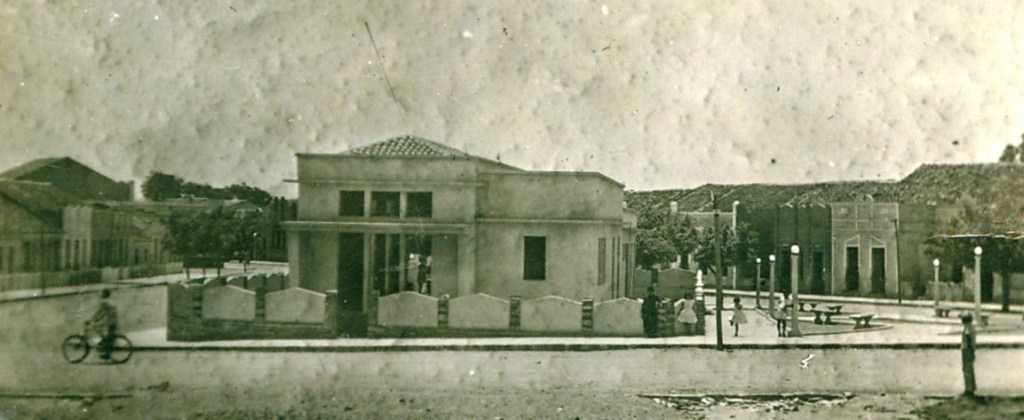
Da es im Kaiserreich eine gleichnamige Ortschaft in der Provinz Rio de Janeiro gab (SRJ-0945), konnte bisher kein Poststempel mit endgültiger Sicherheit hierher zugeordnet werden. Dennoch können wir stark annehmen, dass der von Cicero A. Almeida in Carimbos Postais – século XIX (Rio de Janeiro, 1989) vorgestellte Stempel MTP 801 zur Provinz Ceará als SCE-0290b gehört, da er die Nr. (2) trägt, während Nr. (I) und (3), die etwa zur gleichen Zeit in Gebrauch waren, bereits als zu Rio de Janeiro gehörend identifiziert wurden.


 Carimbologia