
Print edition update, on December 19, 2021
From April 1874, this village was a freguesia near Casa Branca, located on the southern bank of the Rio Pardo, about 260 km north of the provincial capital São Paulo. In May 1877, it became a district of Caconde, which in April 1880 changed to the municipality of Casa Branca. Since March 1885, the town has been a villa in the municipality of Rio Pardo, and became a town in May 1891.
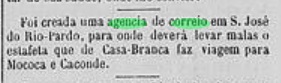
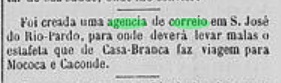
The local post office was established in July 1879, as can be read in the press in São Paulo:
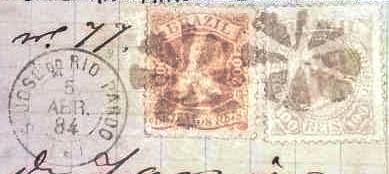
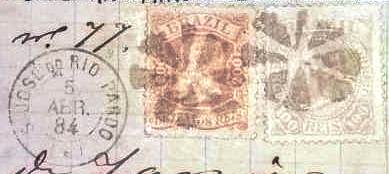
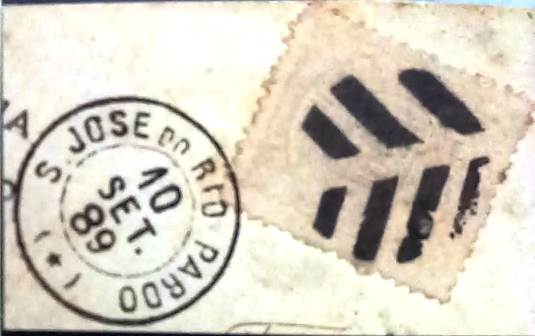
One local and one mute cancel were found. SSP-1180a (Coll. Fuad Ferreira Fo.) is a French type, with the inscription S. JOSÉ DO RIO PARDO above and the typical star between brackets below. The dates inside were found for the period 1884-1890. The mute cancellation (Coll. Fuad Ferreira Fo.) was found on a fragment from 1884, in connection with SSP-1180:
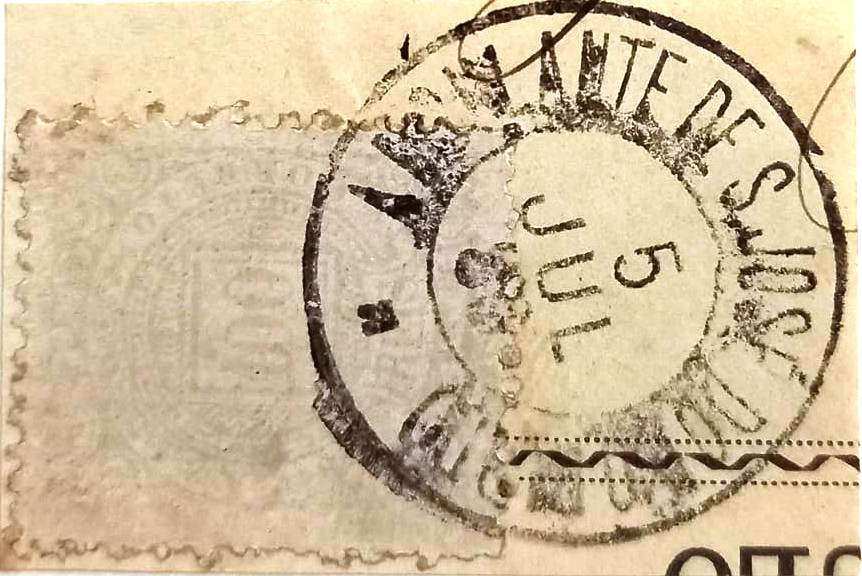
After the opening of the train station in 1887 with the construction of a line branch from Casa Branca, a cancellation for itinerant railway mail was also used. As this postmark has not yet been seen in Carimbologia S2, SSP-1181a is shown here:
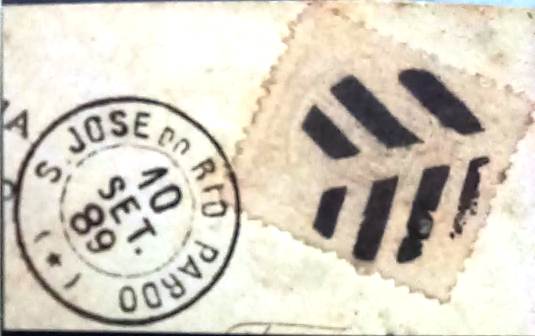
In the meantime, another mute cancel from this locality has also shown up, which was to be used at the end of the Empire in connection with SSP-1180a. However, caution is advised here, as such a late date and a hitherto unknown design are very unusual:
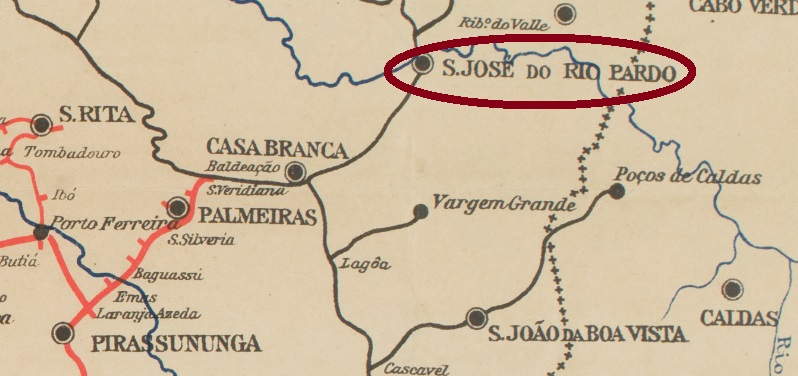
Aktualisierung der Printausgabe, am 19. Dezember 2021
Diese Ortschaft war ab April 1874 eine Freguesia bei Casa Branca, die am Südufer des Rio Pardo lag, knapp 260 km nördlich der Provinzhauptstadt São Paulo entfernt. Im Mai 1877 wurde sie ein Distrikt von Caconde, der im April 1880 zum Município von Casa Branca wechselte. Seit März 1885 ist São José do Rio Pardo eine Villa im eigenen Município, die sich seit Mai 1891 eine Stadt nennen darf.
Das örtliche Postamt ist im Juli 1879 entstanden, wie aus der Presse im São Paulo hervorgeht:
Ein Orts- und ein stummer Stempel wurden gefunden. SSP-1180a (Samml. Fuad Ferreira Fo.) ist ein Französischer-Typ, mit der Inschrift S. JOSÉ DO RIO PARDO oben und dem typischen Stern zwischen Klammern unten. Die Daten in der Mitte wurden für den Zeitraum 1884-1890 gefunden. Der stumme Stempel (Samml. Fuad Ferreira Fo.) wurde auf einem Fragment aus 1884 gefunden, in Verbindung mit SSP-1180:
Nach der Eröffnung des Bahnhofs im Jahr 1887 durch den Bau einer Linienabzweigung von Casa Branca aus wurde auch eine Abstempelung für die ambulante Bahnpost verwendet. Da dieser Poststempel in Carimbologia S2 noch nicht zu sehen war, wird SSP-1181a hier gezeigt:
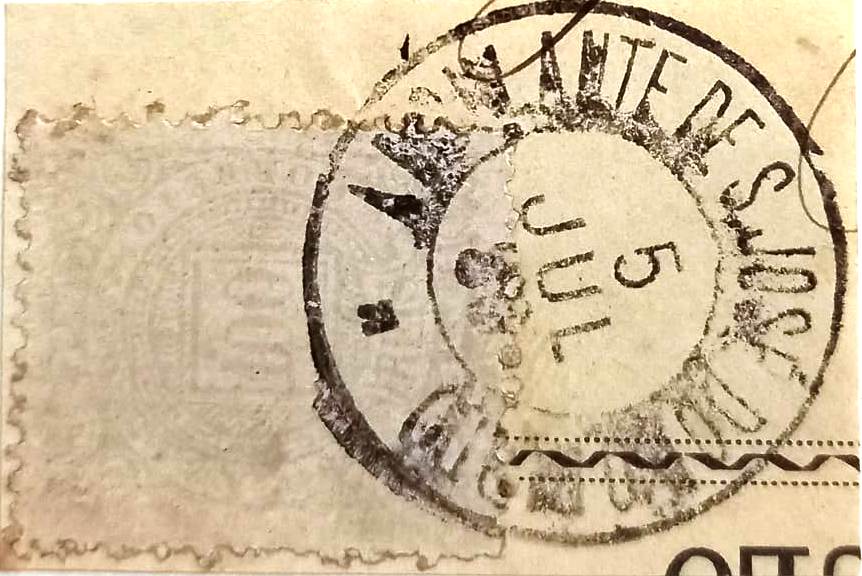
Inzwischen ist auch ein weiterer stummer Stempel aus dieser Ortschaft aufgetaucht, der am Ende des Kaiserreichs in Verbindung mit SSP-1180a verwendet werden sollte. Allerdings ist hier Vorsicht geboten, da solch ein spätes Datum und auch ein bisher unbekanntes Muster sehr unüblich sind:

 Carimbologia