Print edition update, on December 13, 2021
Another name: Turvo (1938-1943)
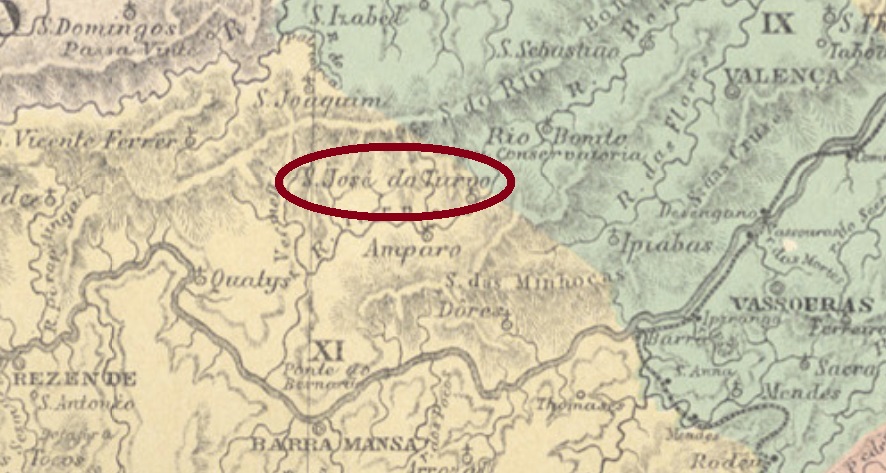
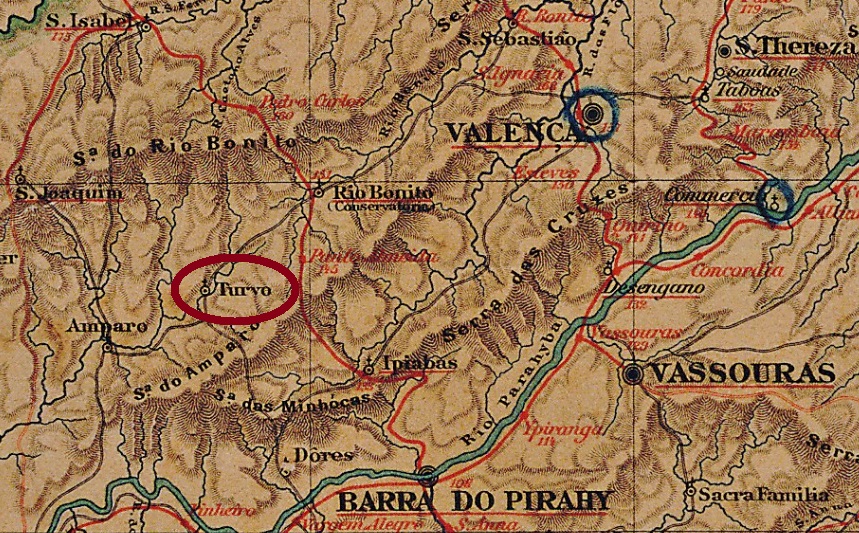
São José do Turvo was a former freguesia of Pirahy, located on the River Turvo, about 160 km northwest of the imperial capital Rio de Janeiro. In February 1890, it became a district of Barra do Pirahy. Between 1938 and 1943, the district was simply called Turvo, after then the old official name returned.
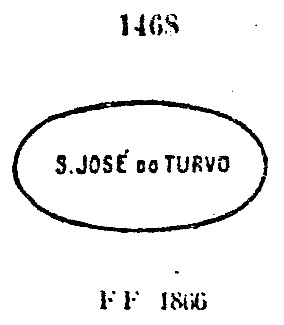
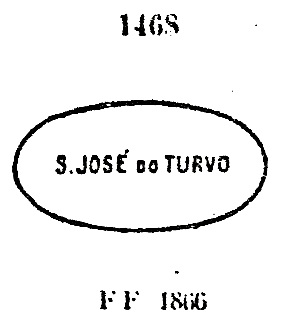
As Paulo Novaes (agenciaspostais.com.br) writes, there has been a post office there since March 1866. Two postmarks from the 19th century are known. SRJ-1465a is the first one, as shown by Paulo Ayres in Catálogo de Carimbos Brasil-Império (S. Paulo, 1937, 1942) under No. 1468:
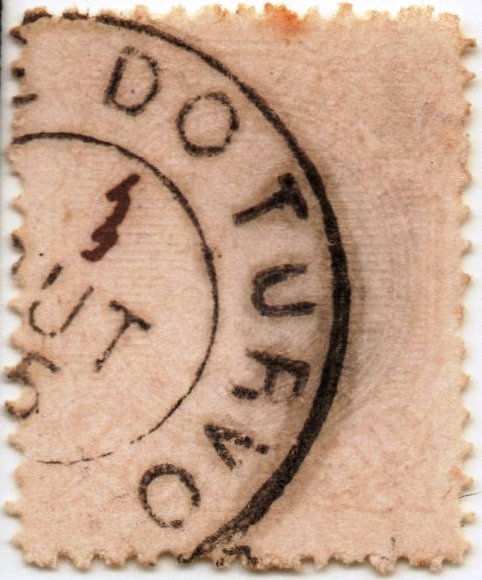
It was followed by SRJ-1465b (Coll. José A. Junges): a double circle with the inscription S. JOSÉ DO TURVO at the top and an ornament at the bottom, consisting of a small circle with two semicircles as side wings below. Dates inside from 1890 to 1895.
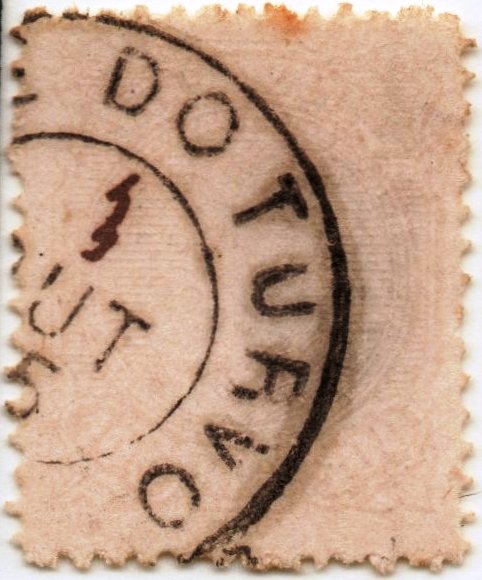
A third postmark from this locality appeared after the publication of Carimbologia S2. Here is SRJ-1465c, from the José A. Junges collection:
Aktualisierung der Printausgabe, am 13.12.2021
Anderer Name: Turvo (1938-1943)
São José do Turvo war eine frühere Freguesia von Pirahy, die am Fluss Turvo (=Trüb) lag, rund 160 km nordwestlich der kaiserlichen Hauptstadt Rio de Janeiro entfernt. Im Februar 1890 ging er als Distrikt zum neu gegründeten Município von Barra do Pirahy. Zwischen 1938 und 1943 hieß der Distrikt einfach Turvo, dann kehrte die alte offizielle Ortsbezeichnung zurück.
Wie Paulo Novaes (agenciaspostais.com.br) schreibt, gibt es dort ein Postamt seit März 1866. Zwei Poststempel aus dem 19. Jahrhundert sind bekannt. SRJ-1465a ist der erste, wie bereits durch Paulo Ayres in Catálogo de Carimbos Brasil-Império (S. Paulo, 1937, 1942) unter Nr. 1468 gezeigt wurde:
Ihm folgte SRJ-1465b (Samml. José A. Junges): ein Doppelkreis mit der Inschrift S. JOSÉ DO TURVO oben und einem Ornament unten, das aus einem kleinen Kreis mit zwei Halbkreisen als Seitenflügel unten. Daten in der Mitte von 1890 bis 1895.
Ein dritter Stempel von diesem Ort erschien nach der Veröffentlichung von Carimbologia S2. Hier ist SRJ-1465c, aus der Sammlung José A. Junges:

 Carimbologia