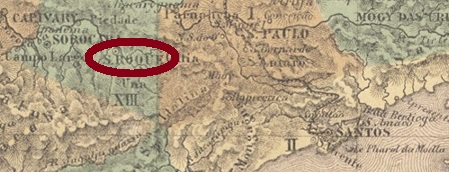
This old village had been a freguesia at Sant’Anna do Parnahyba since 1768, located on the important trade route between São Paulo and Sorocaba, about 60 km west of the provincial capital. In June 1832 the place rose to a villa and in April 1864 to a town.
Two creations of the local post office were registered. Nova Monteiro (Administrações e Agencias Postaes do Brasil Imperio, in Brasil Filatelico/RJ, 1934-5; Reprint SPP 1994-1999) writes May 1833 for it, while in the Imperial Mail Register (Tabella das Agencias do Correio do Imperio, Rio de Janeiro, 1885) the agency is listed from 1847. So, it was closed sometime after 1843 in between.
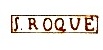
Three local cancels and one mute cancellation are present. SSP-1225a is clearly the oldest of these, having been found on Bull’s Eyes issued in 1843:
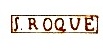
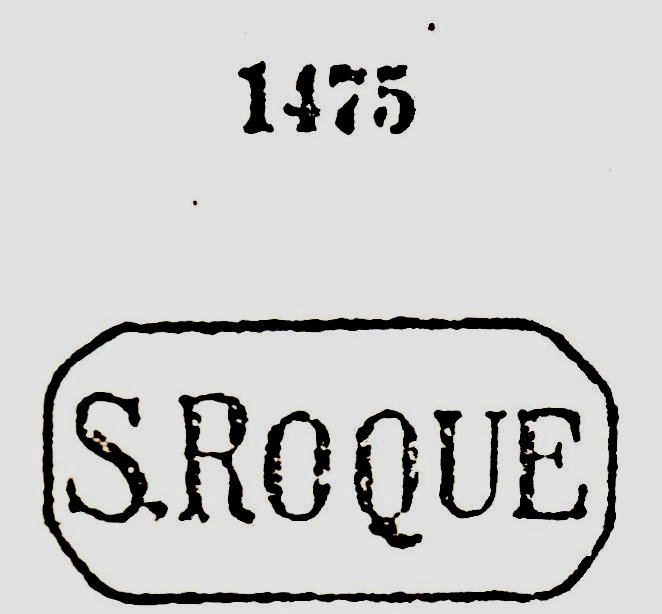
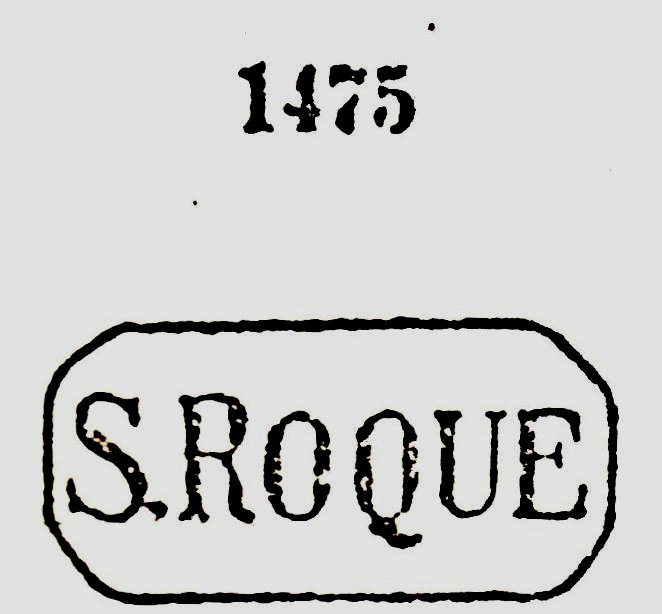
It was followed by SSP-1225b, a cancel in use at least until 1868 and already introduced by Paulo Ayres (Catálogo de Carimbos Brasil-Império, S. Paulo, 1937, 1942) under no. 1475:
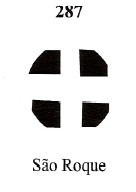
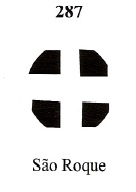
The third local cancel is the double circle SSP-1225c (Coll. Karlheinz Wittig), with the inscription S. ROQUE at the top. Dates in the centre from 1895 to 1896, although sometimes the year may be missing. The mute cancel has already been presented by J.A. Dingler and K. W. Lopes in Mute Cancellations of the Brazil Empire / Carimbos Mudos do Brasil Império (Brazil Philatelic Association, Rio de Janeiro, 2000) under no. 287:
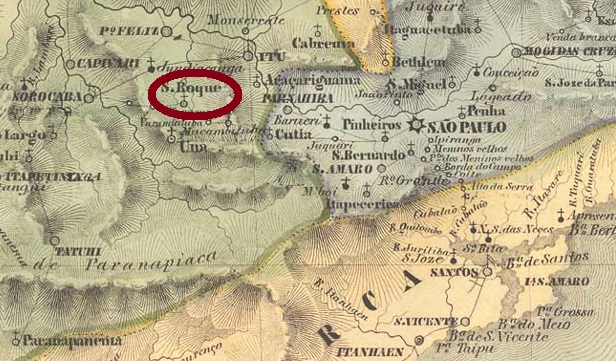
Diese alte Ortschaft war seit 1768 eine Freguesia bei Sant’Anna do Parnahyba, die auf dem wichtigen Handelsweg zwischen São Paulo und Sorocaba lag, ca. 60 km westlich der Provinzhauptstadt entfernt. Im Juni 1832 stieg der Ort zur Villa und im April 1864 zur Stadt auf.
Zwei Gründungen des Postamtes wurden registriert. Nova Monteiro (Administrações e Agencias Postaes do Brasil Imperio, in Brasil Filatelico/RJ, 1934-5; Reprint SPP 1994-1999) schreibt dafür den Mai 1833, während im Verzeichnis der kaiserlichen Postämter (Tabella das Agencias do Correio do Imperio, Rio de Janeiro, 1885) die Agentur ab 1847 geführt wird. Also wurde sie irgendwann nach 1843 mal geschlossen.
Drei Ortsstempel und eine stumme Entwertung sind vorhanden. SSP-1225a ist eindeutig die älteste davon, da sie auf Ochsenaugen von 1843 gefunden wurde:
Ihr folgte SSP-1225b, ein Stempel, der zumindest bis 1868 im Gebrauch war und bereits durch Paulo Ayres (Catálogo de Carimbos Brasil-Império, S. Paulo, 1937, 1942) unter Nr. 1475 vorgestellt wurde:
Der dritte Ortsstempel ist der Doppelkreis SSP-1225c (Samml. Karlheinz Wittig), mit der Inschrift S. ROQUE oben. Daten in der Mitte von 1895 bis 1896, wobei manchmal die Jahresangabe fehlen kann. Der stumme Stempel wurde bereits durch J.A. Dingler und K. W. Lopes in Mute Cancellations of the Brazil Empire / Carimbos Mudos do Brasil Império (Brazil Philatelic Association, Rio de Janeiro, 2000) unter Nr. 287 präsentiert:

 Carimbologia