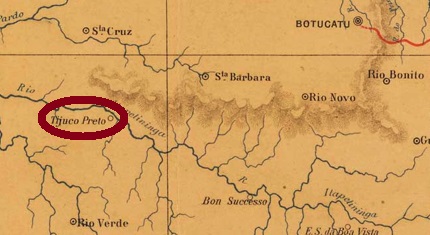
Other names:Tijuco Preto, Piraju (1891)
São Sebastião do Tijuco Preto was already around 1865a chapel near Botucatu, located on the south bank of the Paranapanema River, 320 km west of the provincial capital São Paulo. In March 1871, the place went as a district to the Município of S. João Baptista do Rio Verde before it became the Villa of S. Sebastião do Tijuco Preto in April 1880. The name was changed to Piraju in June 1891; this means Yellow Fish on Tupi-Guarani. Piraju has been a town since December 1906.
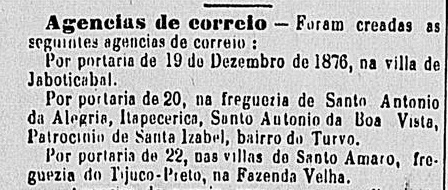
The local post office was established in December 1876, according to the regional press:

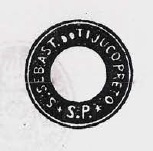
Two postmarks of the imperial period were found, both already made known by Paulo Ayres in Catálogo de Carimbos Brasil-Império (S. Paulo, 1937, 1942). SSP-1695a was probably in use from the beginning until at least 1890:
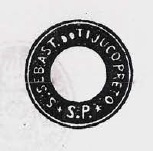
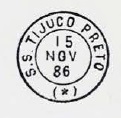
Its successor SSP-1695b is a French type that was in circulation from 1886.
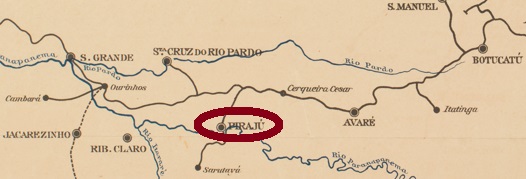
Andere Namen: Tijuco Preto, Piraju (1891)
São Sebastião do Tijuco Preto war bereits um 1865 eine Kapelle bei Botucatu, die am Südufer des Flusses Paranapanema lag,320 km westlich der Provinzhauptstadt São Paulo. Im März 1871 ging der Ort als Distrikt zum Município von S. João Baptista do Rio Verde, bevor daraus im April 1880 die Villa von S. Sebastião do Tijuco Preto wurde. Der Name wurde im Juni 1891 zu Piraju geändert; das bedeutet Gelber Fisch auf Tupi-Guarani. Seit Dezember 1906 ist Piraju eine Stadt.
Das Postamt vor Ort wurde im Dezember 1876 ins Leben gerufen, wie die Regionalpresse zu berichten weiß:
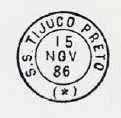
Zwei Poststempel der Kaiserzeit wurden gefunden, beide sind bereits durch Paulo Ayres in Catálogo de Carimbos Brasil-Império(S. Paulo, 1937, 1942) bekannt gemacht. SSP-1695awar wohl von Beginn an bis mindestens 1890 in Gebrauch:
Sein Nachfolger SSP-1695b ist ein französischer -Typus, der ab 1886 im Umlauf war.

 Carimbologia