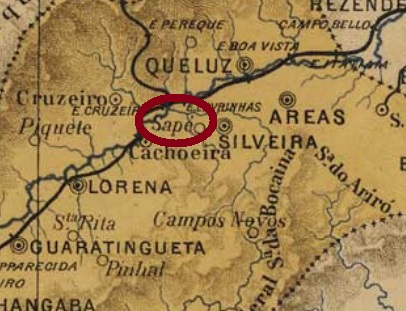
Other names: Sapé do Norte, Jatahy (1887).
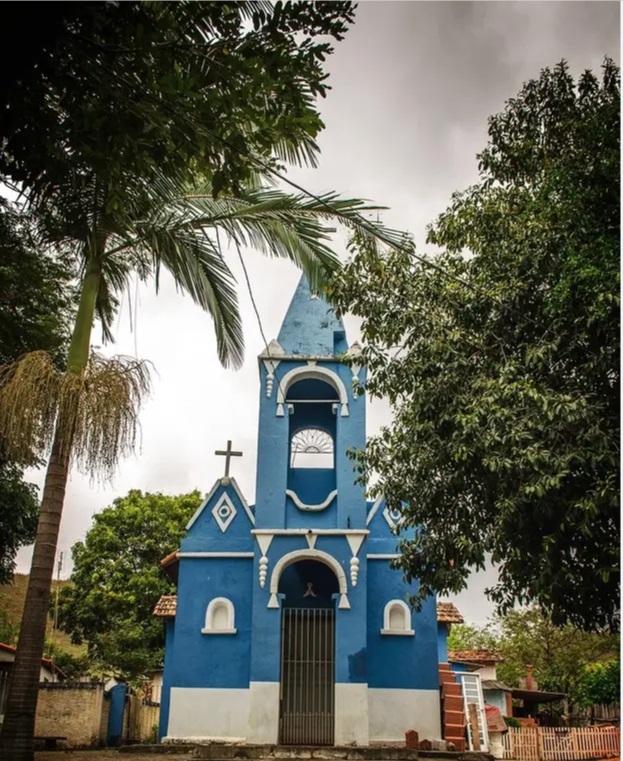
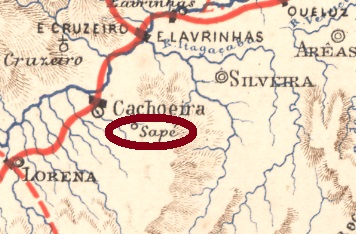
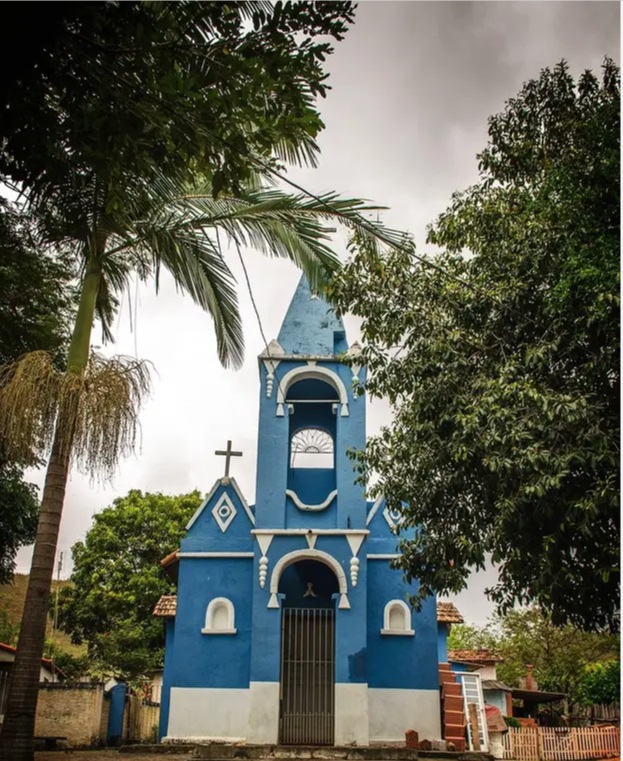
With Sapé, we finally leave the long line of Brazilian localities with saint’s names in the empire. The old village was a freguesia of Silveiras from April 1857, close to the south bank of the Rio Paraíba, more than 200 km northeast of the provincial capital São Paulo. With coffee cultivation came prosperity; the decline of this culture in the region was followed by decadence. So, in April 1887, the place became an independent município called Jatahy. The Indian word denotes both a plant of the Faseolaceae family (also called Butiá) and a variety of bee. At the end of the Empire, over three thousand people lived there. In May 1934, the place descended to the district of Cachoeira, and today it is a sparsely inhabited rural suburb of Cachoeira Paulista. Only the church of N. Sa. da Piedade reminds us of the old days:
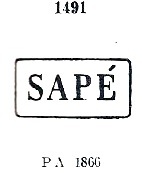
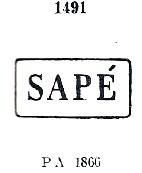
As Nova Monteiro writes in Administrações e Agencias Postaes do Brasil Imperio (in Brasil Filatelico/RJ, 1934-5; reprint SPP 1994-1999), there was a post office there from October 1861. At the beginning there were two postmarks, which are very similar. SSP-1350b also occurs in brown and red and was already presented by Paulo Ayres in Catálogo de Carimbos Brasil-Império, (S. Paulo, 1937, 1942) under no. 1491:
Even older seems to be the variant SSP-1350a (Coll. José A. Junges), which shows a dot after the E and thus has a somewhat larger frame. Later, the cancel in the double circle SSP-1350c (Coll. José A. Junges) was added: here, one reads only the inscription SAPÉ at the top, and the dates (from 1881 to 1887) in the middle.
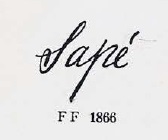
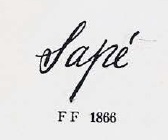
Paulo Ayres (op.cit. p.147) shows us another handwritten cancellation from Sapé, and from the Junges’ collection we also know a mute stamp:

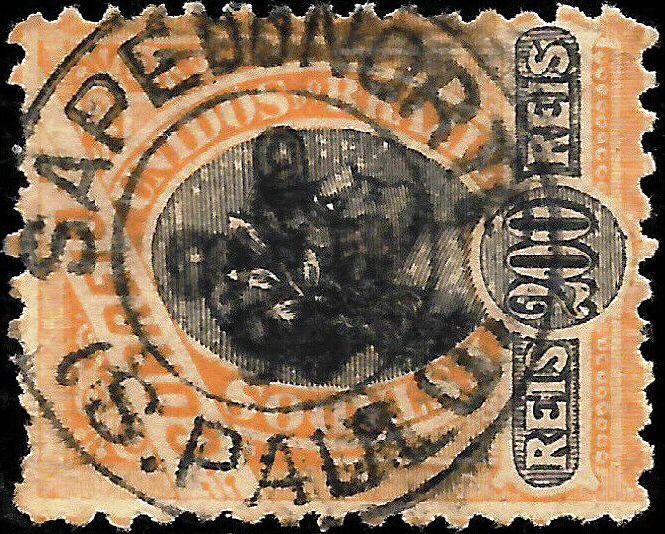
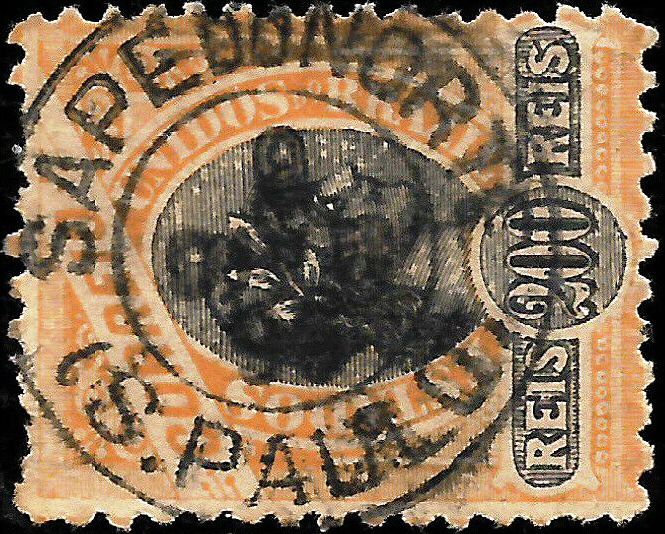
Although the change of place name to Jatahy took place already in 1887, R. Koester does not mention a cancel under this name in his Carimbologia. Instead, one can find the rare cancel with Sapé do Norte in the early Republic:
Andere Namen: Sapé do Norte, Jatahy (1887)
Mit Sapé verlassen wir endlich die lange Reihe der brasilianischen Ortschaften mit Heiligennamen im Kaiserreich. Die alte Ortschaft war schon ab April 1857 eine Freguesia bei Silveiras, die nah am Südufer des Rio Paraíba lag, über 200 km nordöstlich der Provinzhauptstadt São Paulo entfernt. Mit dem Kaffeeanbau kam der Wohlstand, dem Niedergang dieser Kultur in der Region folgte die Dekadenz. So wurde der Ort im April 1887 zum selbständigen Município namens Jatahy. Das indianische Wort bezeichnet sowohl eine Pflanze der Fam. Faseolaceae (auch Butiá genannt) als auch eine Bienensorte. Am Ende des Kaiserreichs wohnten dort über dreitausend Menschen. Im Mai 1934 stieg der Ort zum Distrikt von Cachoeira ab, und heute ist es ein wenig bewohnter ländlicher Vorort von Cachoeira Paulista. Nur die Kirche von N. Sa. da Piedade erinnert noch an die alten Zeiten:
Wie Nova Monteiro in Administrações e Agencias Postaes do Brasil Imperio (in Brasil Filatelico/RJ, 1934-5; Reprint SPP 1994-1999) schreibt, gab es dort ein Postamt ab Oktober 1861. Zu Beginn gab es zwei Poststempel, die sehr ähnlich sind. SSP-1350b kommt auch in braun und rot vor und wurde bereits durch Paulo Ayres im Catálogo de Carimbos Brasil-Império, (S. Paulo, 1937, 1942) unter Nr. 1491 vorgestellt:
Noch älter scheint die Variante SSP-1350a (Samml. José A. Junges) zu sein, die einen Punkt nach dem E zeigt und dadurch einen etwas größeren Rahmen hat. Hier gehen die Daten sogar bis mindestens 1876. Später kam der Stempel im Doppelkreis SSP-1350c (Samml. José A. Junges) dazu: hier liest man nur die Inschrift SAPÉ oben, und die Daten (v. 1881 bis 1887) in der Mitte.
Paulo Ayres (op.cit. S.147) zeigt uns noch eine handschriftliche Entwertung aus Sapé, und aus der Junges’ Sammlung kennen wir auch einen stummen Stempel:

Obwohl der Ortsnamenwechsel zu Jatahy bereits 1887 erfolgte, nennt R. Koester keinen Stempel unter diesem Namen in seiner Carimbologia. Stattdessen sieht man den seltenen Stempel mit Sapé do Norte in der frühen Republik:

 Carimbologia