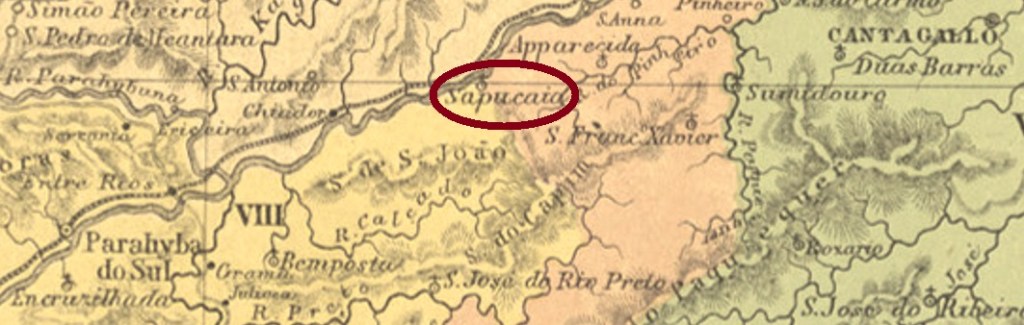
Another name: Ponte de Sapucaia
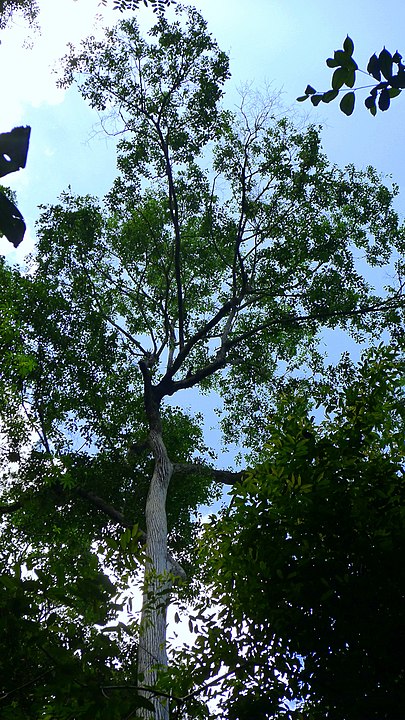
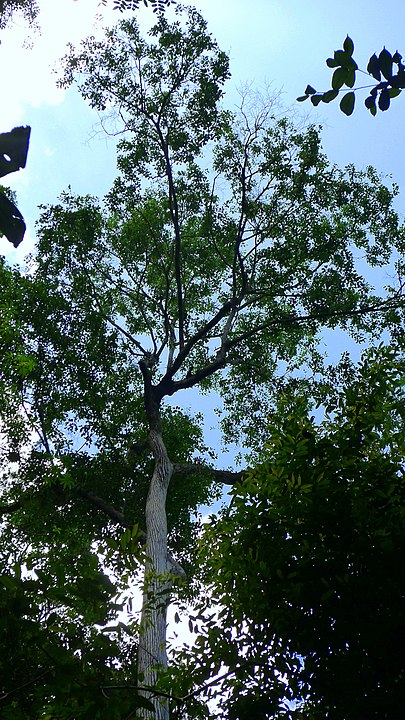
Sapucaia is a South American chestnut tree (Lecythis Sp.) that is now endangered because of its popularity. The Tupi word means fruit whose eye springs.
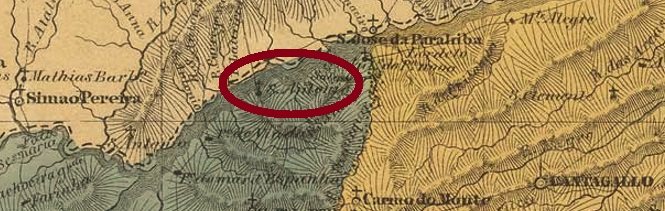
The village was the freguesia of Santo Antonio de Sapucaia (also written Sapocaia) from September 1871 and was located near Magé on the south bank of the Paraíba do Sul River, over 150 km north of the capital Rio de Janeiro. The place rose to the status of a villa in December 1874 and a town 15 years later.
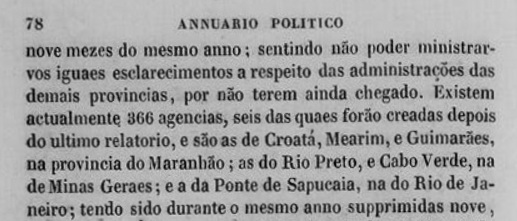
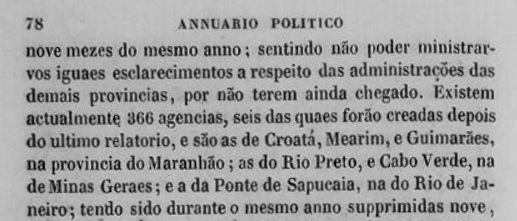
As Nova Monteiro writes in Administrações e Agencias Postaes do Brasil Imperio (Brasil Filatelico/RJ, 1934-5; Reprint SPP 1994-1999), there had been a post office there since August 1846. This can be confirmed by the official annual report for 1847:
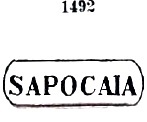
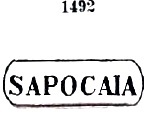
Through Paulo Novaes (agenciaspostais.com.br) we know that the agency was closed in June 1861, only to reopen four months later. Four early postmarks have been found, the two older ones were made known by Paulo Ayres (Catálogo de Carimbos Brasil-Império, S. Paulo, 1937, 1942). SRJ-0960a corresponds to P. Ayres No. 1492, which was in circulation ca. 1866-1888 and also occurs in blue, red and green:
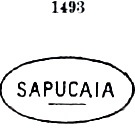
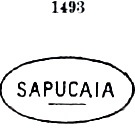
SRJ-0960b is P. Ayres No. 1493, which was also in use around the same time:
Two postmarks in double circle followed. SRJ-0960c (Coll. José A. Junges) has the inscription SAPUCAIA at the top, dates inside go from about 1877 to 1890. SRJ-0960d (image from the Internet) has the same inscription at the top, with a four-leaf ornament in X at the bottom. Dates inside, from 1890 to 1897.
Anderer Name: Ponte de Sapucaia
Sapucaia ist ein südamerikanischer Kastanienbaum (Lecythis Sp.), der wegen seiner Beliebtheit inzwischen gefährdet ist. Das Tupi-Wort bedeutet Frucht, deren Auge springt.
Die Ortschaft war ab September 1871 die Freguesia von Santo Antonio de Sapucaia (auch Sapocaia geschrieben) und lag bei Magé am Südufer des Flusses Paraíba do Sul, über 150 km nördlich der Hauptstadt Rio de Janeiro. Der Ort stieg im Dezember 1874 zur Villa und 15 Jahre später zur Stadt auf.
Wie Nova Monteiro in Administrações e Agencias Postaes do Brasil Imperio (Brasil Filatelico/RJ, 1934-5; Reprint SPP 1994-1999) schreibt, gab es dort ein Postamt seit August 1846. Das kann durch den amtlichen Jahresbericht für 1847 bestätigt werden:
Durch Paulo Novaes (agenciaspostais.com.br) wissen wir, dass die Agentur im Juni 1861 geschlossen wurde, um vier Monate später abermals zu eröffnen. Vier frühe Poststempel wurden gefunden, die zwei älteren davon sind durch Paulo Ayres (Catálogo de Carimbos Brasil-Império, S. Paulo, 1937, 1942) bekannt gemacht worden. SRJ-0960a entspricht P. Ayres Nr. 1492, der ca. 1866-1888 im Umlauf war und auch in blau, rot und grün vorkommt:
SRJ-0960b ist P. Ayres Nr. 1493, der auch um die gleiche Zeit verwendet wurde:
Es folgten zwei Poststempel in Doppelkreis. SRJ-0960c (Samml. José A. Junges) hat oben die Inschrift SAPUCAIA, die Daten im Inneren gehen von ca. 1877 bis 1890. SRJ-0960d (Abb. aus dem Internet) hat oben die gleiche Inschrift, unten ist ein vierblättriges Ornament in X. Daten in der Mitte von 1890 bis 1897.

 Carimbologia