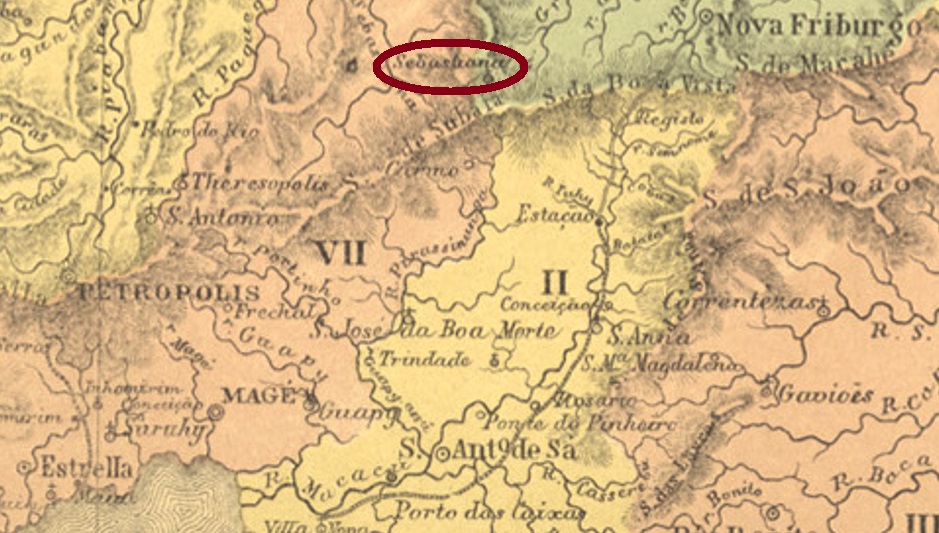
Print edition update, on October 25, 2021
Other names: Venda Nova, Nhunguaçu, Vale de Bonsucesso (1990)
Sebastianna was a district of Nova Friburgo, located on the river of the same name, about 120 km northeast of the capital Rio de Janeiro. In December 1901, the place changed to the Município of Teresópolis. The place name was changed twice after that: in December 1843 to Nhunguaçu and in April 1990 to the still current Vale de Bonsucesso.
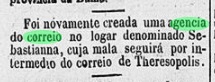
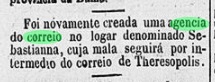
Two foundation dates for the local post office were found. Paulo Novaes writes March 1869 in agenciaspostais.com.br. The agency was closed sometime later, as a reopening was announced in the Rio press in July 1876:
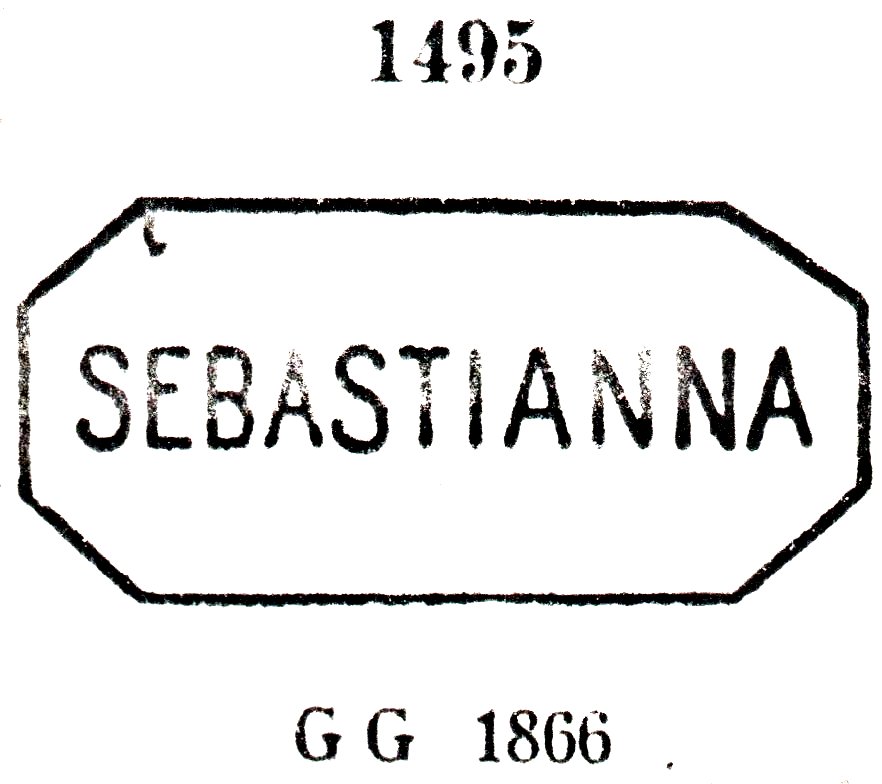
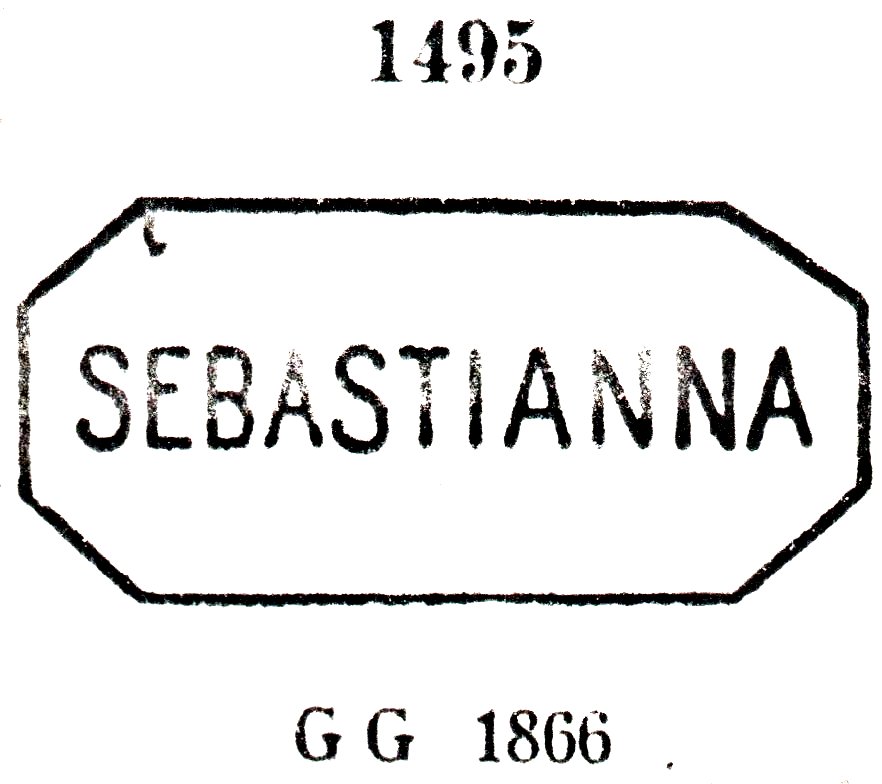
Three 19th century postmarks were seen. SRJ-1580a is the oldest of them; it was used at least until 1877 and is also illustrated by Paulo Ayres in Catálogo de Carimbos Brasil-Império, (S. Paulo, 1937, 1942) under No. 1495:
It was followed by SRJ-1580b (Coll. José A. Junges): a double circle with the inscription SEBASTIANNA above and an ornament in lozenge below, dated in the centre from 1886 to 1890. SRJ-1580c (Coll. José A. Junges) could already be Republican, as its earliest date is from 1893. The double circle reads the same inscription as before, the ornament at the bottom is now X-shaped.
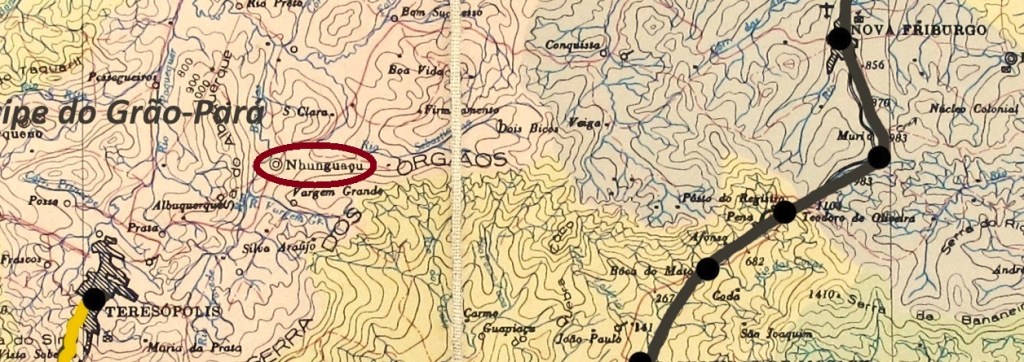
Printausgabe-Aktualisierung, am 25. Oktober 2021
Andere Namen: Venda Nova, Nhunguaçu, Vale de Bonsucesso (1990)
Sebastianna war ein Distrikt von Nova Friburgo, der am gleichnamigen Fluss lag, ca. 120 km nordöstlich der Hauptstadt Rio de Janeiro entfernt. Im Dezember 1901 wechselte der Ort zum Município von Teresópolis. Der Ortsname wurde danach zweimal geändert: im Dezember 1843 zu Nhunguaçu und im April 1990 zum noch aktuellen Vale de Bonsucesso.
Zwei Gründungsdaten fürs örtliche Postamt wurden gefunden. Paulo Novaes schreibt in agenciaspostais.com.br den März 1869. Die Agentur wurde irgendwann später geschlossen, denn eine Wiedereröffnung wurde im Juli 1876 in der Rio-Presse bekannt gemacht:
Drei Poststempel aus dem 19. Jahrhundert sind vorhanden. SRJ-1580a ist der älteste davon; er wurde mindestens bis 1877 verwendet und ist auch bei Paulo Ayres im Catálogo de Carimbos Brasil-Império, (S. Paulo, 1937, 1942) unter Nr. 1495 abgebildet:
Ihm folgte SRJ-1580b (Samml. José A. Junges): Ein Doppelkreis mit der Inschrift SEBASTIANNA oben und einem Ornament in Raute unten, datiert in der Mitte von 1886 bis 1890. SRJ-1580c (Samml. José A. Junges) könnte bereits republikanisch sein, da sein frühestes Datum aus 1893 ist. Im Doppelkreis liest man die gleiche Inschrift wie bisher, das Ornament unten ist nun X-förmig.

 Carimbologia