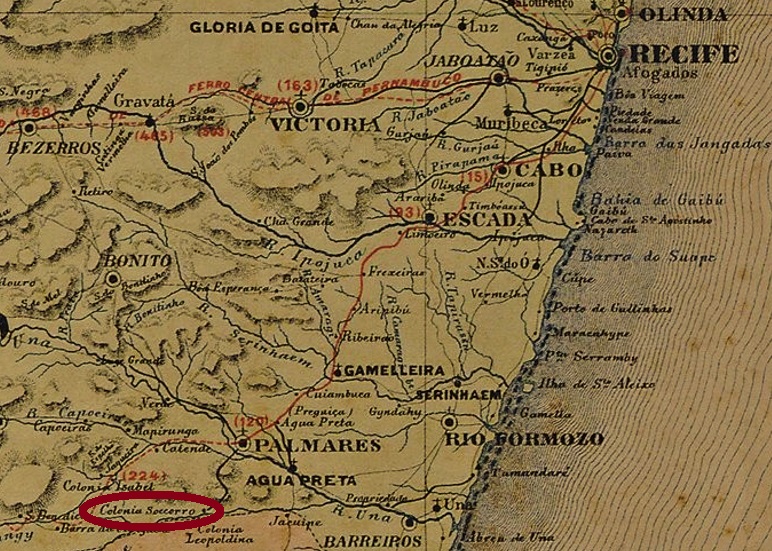
Other names: Colonia Soccorro, Sertãozinho de Baixo (1930)
See also Riacho do Matto (RPE-0720)
The amazing story of this small village near the Alagoas border in southern Pernambuco has yet to be told. Until about 1870, it was still an Indian reservation. Around that time, a dispute arose between Indians and farmers, at the end of which a land survey project was launched by the provincial government. In 1872, the dispute escalated into open conflict, and the whole area was subsequently redemarcated.
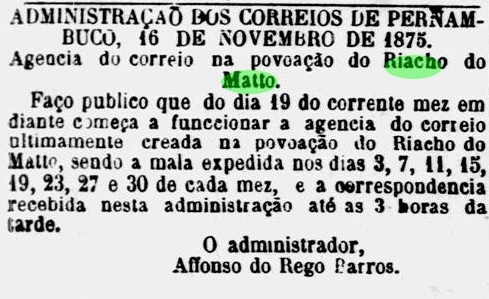
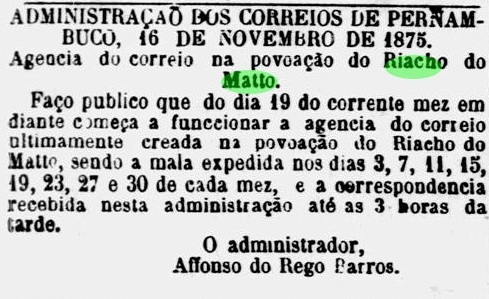
By July 1875, the Indian reservation was history, making way for an ambitious government settlement plan that included three colonies. A few months later, the new post office for Riacho do Matto was announced:
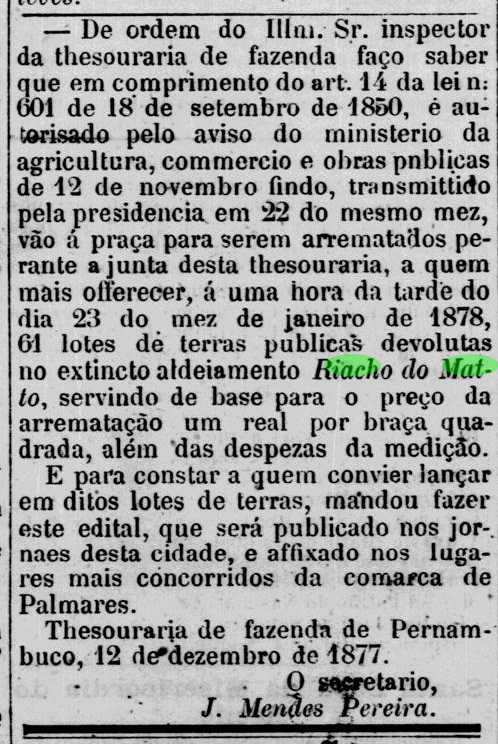
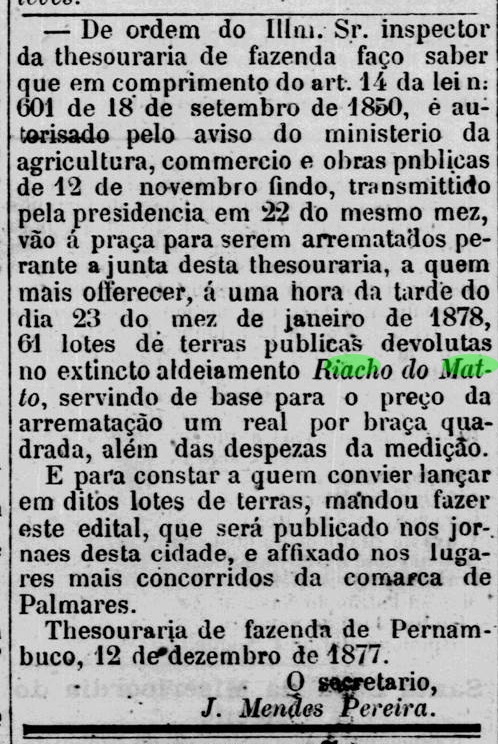
However, the land parcels were not put up for public auction until December 1877:
In April 1878, the first colonist train arrived at Cinco Pontas station, about 30 km away, to ceremoniously inaugurate the new colonisation of Riacho do Matto. Most of the new settlers were refugees from the drought areas in Brazil’s northeast. But they were also joined by many poor people from Recife who had been persuaded to leave the provincial capital with the prospect of a piece of land. This new colony was called Colonia Soccorro, and lay between Colonia Isabel (see also Koester, Carimbologia XII) and Colonia Leopoldina. (see map above).
Within a month, the population reached over 3,000 inhabitants, causing major problems in the social fabric of the new municipality. In the 1980s, even veterans from the region who had returned from the war against Paraguay applied to the Pernambuco government for their land parcels.
The settlement was renamed Sertãozinho in 1893 – after an old fazenda in the region – and was now under the control of the Villa of Água Preta. In 1930 it was given its current name, Sertãozinho de Baixo (= Lower Sertãozinho), and from 1938 it became a district of the newly founded Município of Maraial.
So far, no stamp from the imperial period could be found for this locality.
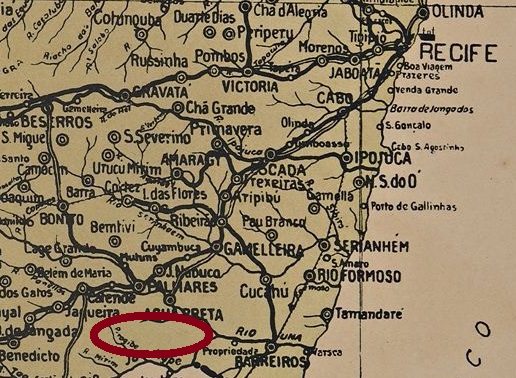
Andere Namen: Colonia Soccorro, Sertãozinho de Baixo (1930)
Siehe auch Riacho do Matto (RPE-0720)
Die erstaunliche Geschichte dieser kleinen Ortschaft nahe der Alagoas-Grenze im südlichen Pernambuco wurde noch nicht erzählt. Bis ca. 1870 war sie noch ein Indianerreservat. Um diese Zeit entfachte sich ein Disput zwischen Indianer und Farmern, am dessen Ende ein Landvermessungsprojekt von der Provinzregierung gestartet wurde. In 1872 eskalierte der Streit zum offenen Konflikt, und das ganze Gebiet wurde anschließend neu demarkiert.
Bis Juli 1875 war das Indianerreservat bereits Geschichte und machte Platz einem ehrgeizigen Siedlungsplan der Regierung, der drei Kolonien vorsah. Ein Paar Monate später kündigte man schon das neue Postamt für Riacho do Matto an:
Die Landparzellen wurden gleichwohl erst im Dezember 1877 zur Versteigerung öffentlich ausgeschrieben:
In April 1878 kam der erste Kolonistenzug am ca. 30 km entfernten Bahnhof Cinco Pontas an, um die Neukolonisierung von Riacho do Matto feierlich einzuleiten. Die meisten der neuen Siedler waren Flüchtlinge aus den Dürregebieten in Brasiliens Nordosten. Dazu kamen aber auch viele Arme aus Recife, die überredet worden waren, mit der Aussicht auf ein Stück Land die Provinzhauptstadt zu verlassen. Diese neue Kolonie wurde Colonia Soccorro genannt, und lag zwischen Colonia Isabel (s.a. Koester, Carimbologia XII) und Colonia Leopoldina. (s. Karte zu Beginn des englischen Textes).
Binnen eines Monates erreichte die Bevölkerungszahl über 3.000 Einwohner, was große Probleme im sozialen Gefüge der neuen Gemeinde mit sich brachte. In den 80er Jahren haben sogar Veteranen aus der Region, die zurück aus dem Krieg gegen Paraguay zurückgekehrt waren, ihre Landesparzellen bei der Pernambuco-Regierung beantragt.
Die Siedlung wurde in 1893 in Sertãozinho umbenannt – nach einer alten Fazenda der Region – und war nun der Villa von Água Preta unterstellt. In 1930 erhielt sie nun die aktuelle Bezeichnung, Sertãozinho de Baixo (= Untere Sertãozinho), und wurde ab 1938 ein Distrikt des neu gegründeten Município von Maraial.
Bisher konnte kein Stempel aus der Kaiserzeit für diese Ortschaft gefunden werden.

 Carimbologia