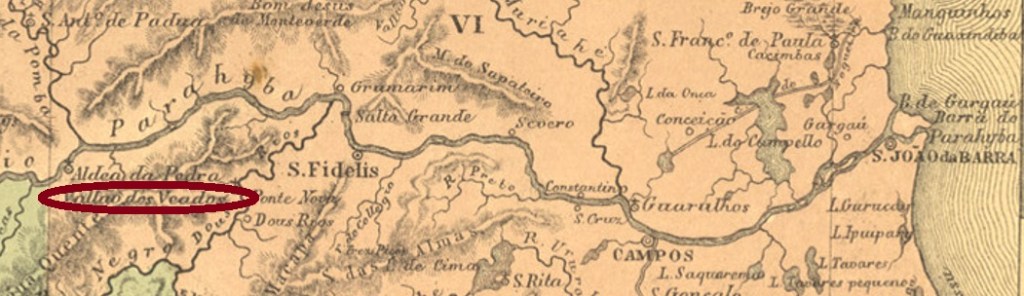
Other names: Dois Rios, Colonia
See also Conceição da Ponte Nova (Koester: Carimbologia XIII).
In addition to the Tapir Rift, there was also the Deer Rift (Vallão dos Veados) in the Imperial Province of Rio de Janeiro. This parish was named S. João Baptista do Vallão dos Veados in October 1857 and was located on the stream of the same name in the Município of São Fidélis, 270 km northeast of the capital Rio de Janeiro. Afterwards, the place name changed twice: in October 1890 to Dois Rios and in December 1938 to the district of Colônia, which is still valid today.
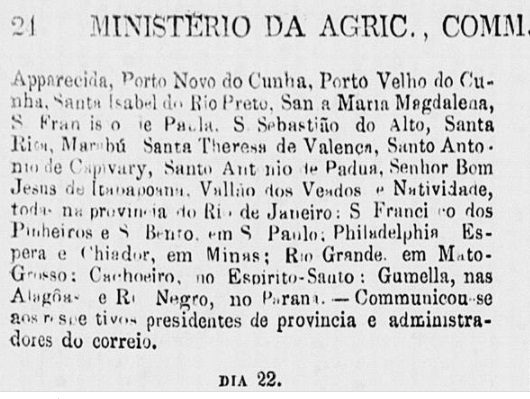
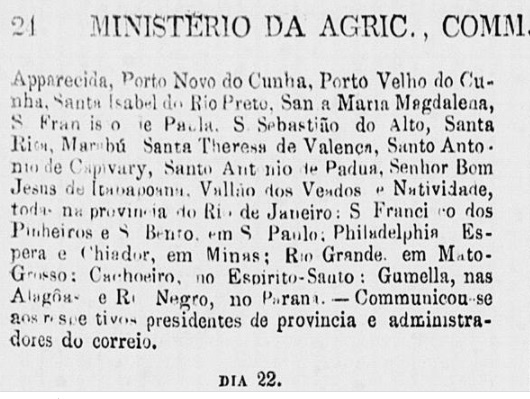
According to Nova Monteiro (Administrações e Agencias Postaes do Brasil Imperio, in Brasil Filatelico/RJ, 1934-5; Reprint SPP 1994-1999), the local post office came into being in July 1855. It had a short period of operation, as only six years later its closure was announced:
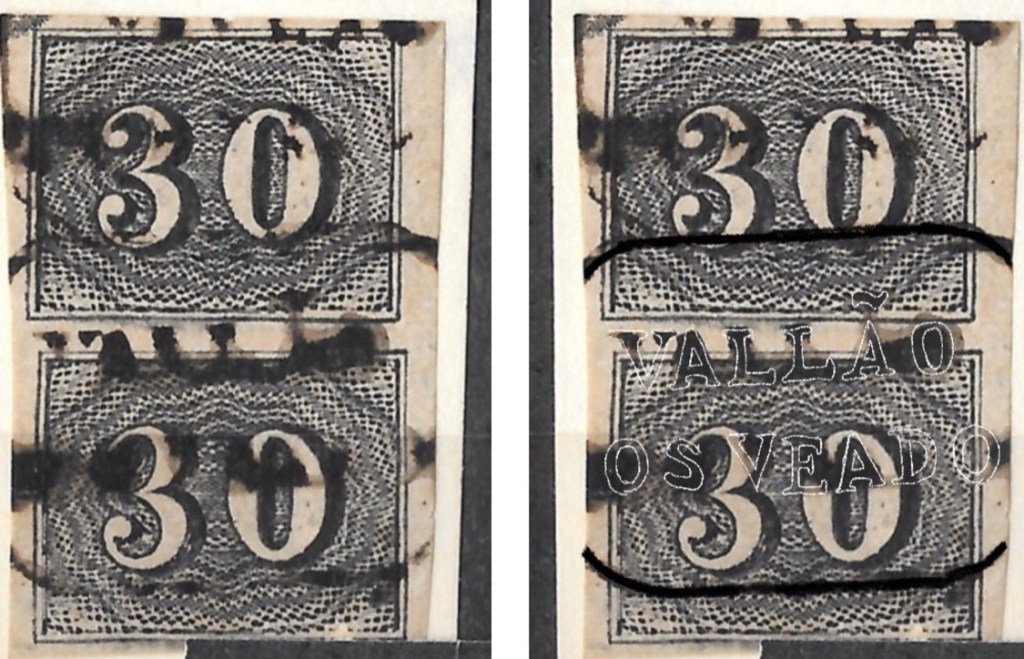
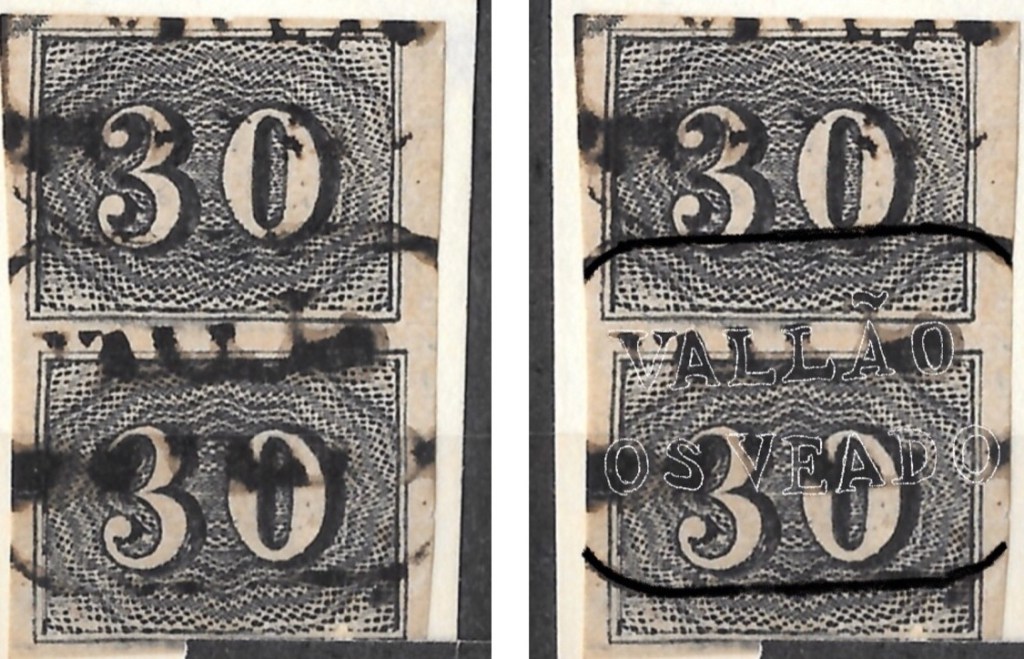
The postmark VRJ-0985a (RHM) is therefore rarely seen:
The post office reopened in 1873 in the neighbouring town of Conceição da Ponte Nova. For these postmarks see R. Koester: Carimbologia XIII.
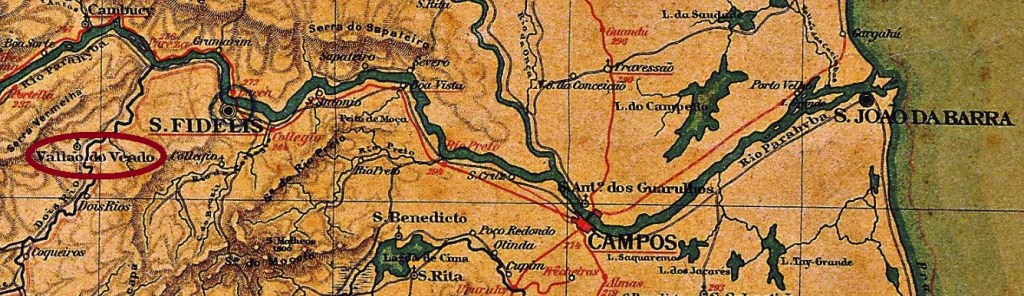
Andere Namen: Dois Rios, Colonia
Siehe auch Conceição da Ponte Nova (Koester: Carimbologia XIII)
Außer dem Tapirgraben gab es ebenfalls den Rehgraben (Vallão dos Veados) in der kaiserlichen Provinz Rio de Janeiro. Diese Pfarrei wurde im Oktober 1857 mit Namen S. João Baptista do Vallão dos Veados und lag am gleichnamigen Bach im Município von São Fidélis, 270 km nordöstlich der Hauptstadt Rio de Janeiro entfernt. Danach wechselte der Ortsname zweimal: im Oktober 1890 zu Dois Rios und im Dezember 1938 zum heute noch gültigen Distrikt Colônia.
Laut Nova Monteiro (Administrações e Agencias Postaes do Brasil Imperio, in Brasil Filatelico/RJ, 1934-5; Reprint SPP 1994-1999) entstand das örtliche Postamt im Juli 1855. Es hatte eine kurze Betriebsdauer, denn bereits sechs Jahre später wurde seine Schließung angekündigt:
Der Poststempel VRJ-0985a (RHM) ist daher selten anzutreffen:
Das Postamt eröffnete wieder 1873, allerdings im Nachbarort Conceição da Ponte Nova. Für diese Poststempel siehe R. Koester: Carimbologia XIII.

 Carimbologia