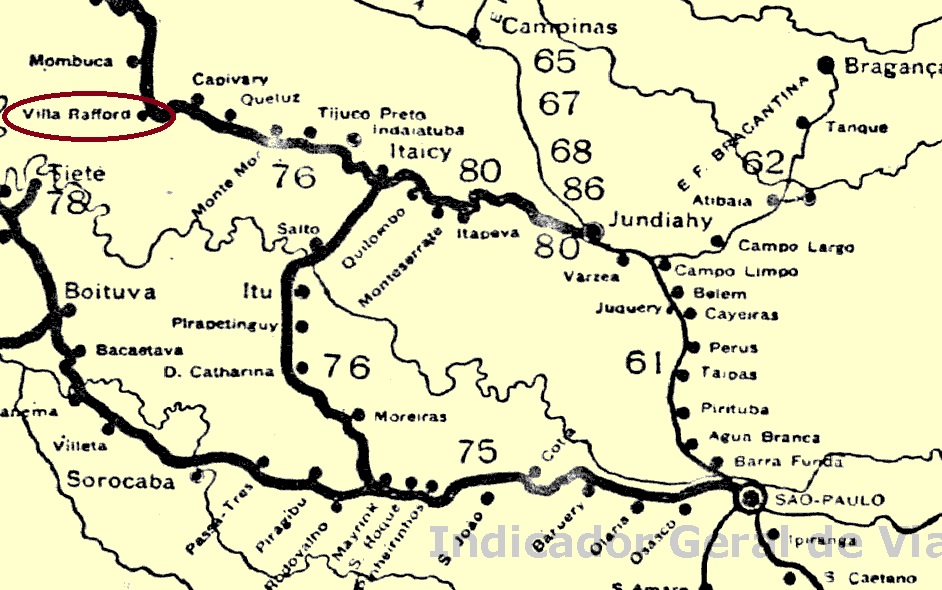
Another name: Rafard (1929)
The present-day Município of Rafard began in 1883 as a workers’ settlement, housing mostly European immigrants contracted to the sugar cane processing factory Engenho Central de S. João do Capivary. Since both the factory and the settlement were model projects and were built upon personal initiative of Emperor D. Pedro II, the enterprise was particularly successful. The Villa Henrique Raffard was named after the company’s first director – Júlio Henrique Raffard (1851-1906), son of a Swiss consul in Rio – and was located on the south bank of the Capivary River, 140 km northwest of the provincial capital São Paulo. In November 1929, Raffard became a district of Capivary and has been a Município since February 1964. The sugar factory is still in operation today.
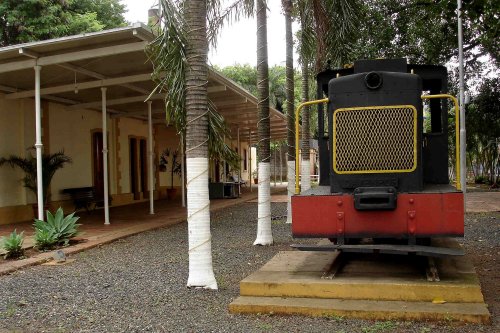
A Companhia Ytuana railway station (Piracicaba branch) was inaugurated there as early as September 1884. The railway line changed to the Cia. União Sorocabana e Ytuana in 1892 and to the Sorocabana Railway in 1907; from 1919 until its closure in 1971, it belonged to the Estrada de Ferro Sorocabana (estacoesferroviarias.com.br). Most recently, the station building served as the headquarters of the Municipal Culture and Tourism Office:
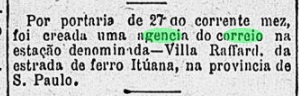
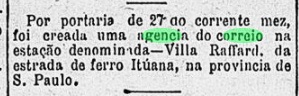
The station post office was established as early as August 1884 – before the station was built – according to the Rio press:
The oldest station postmark is VSP-1495a (Coll. José A. Junges): a double circle with the inscription EST. V. RAFFARD above and an ornament in cross below. The dates in the middle were found for the period 1884-1886. It was followed by VSP-1495b (Coll. José A. Junges): in this double circle the inscription above reads VILLA RAFFARD, and below it reads (S. PAULO). All dates in the middle are from the Republic so far: 1900-1904.
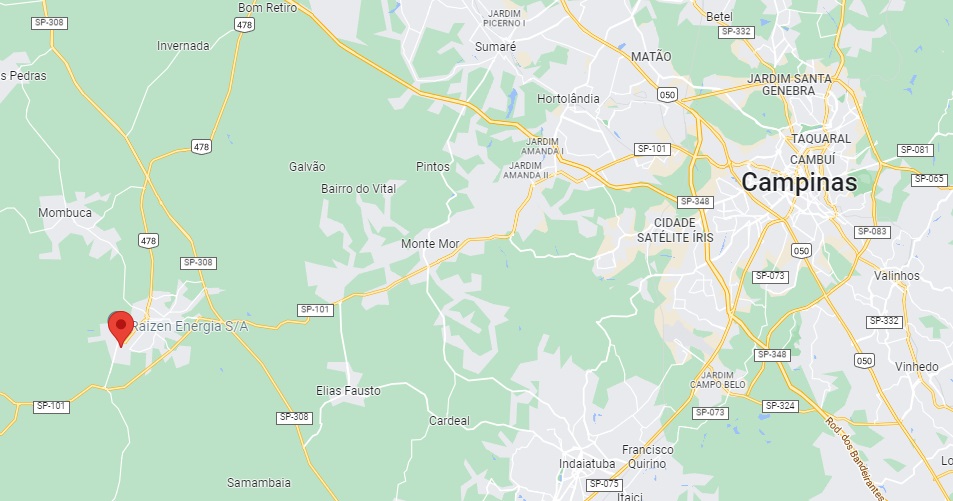
Der heutige Município von Rafard begann 1883 als eine Arbeitersiedlung, die meistens europäische Immigranten beherbergte, die an der Zuckerrohr-Verarbeitungsfabrik Engenho Central de S. João do Capivary unter Vertrag standen. Da sowohl Fabrik als auch Siedlung Modellprojektcharakter hatten und auf persönliche Initiative des Kaisers D. Pedro II entstanden sind, war das Unternehmen besonders erfolgreich. Die Villa Henrique Raffard wurde nach dem ersten Direktor der Firma genannt – Júlio Henrique Raffard (1851-1906), Sohn eines schweizerischen Konsuls in Rio – und lag am Südufer des Flusses Capivary, 140 km nordwestlich der Provinzhauptstadt São Paulo entfernt. Im November 1929 wurde Raffard ein Distrikt von Capivary und ist ein Município seit Februar 1964. Die Zuckerfabrik ist noch heute in Betrieb.
Bereits im September 1884 wurde dort ein Bahnhof der Companhia Ytuana (Piracicaba-Abzweigung) eingeweiht. Die Bahnlinie wechselte 1892 zur Cia. União Sorocabana e Ytuana und 1907 zur Sorocabana Railway; von 1919 bis zur Stilllegung 1971 gehörte sie der Estrada de Ferro Sorocabana (estacoesferroviarias.com.br). Zuletzt diente das Bahnhofsgebäude als Sitz des städtischen Kultur- und Tourismusamts:
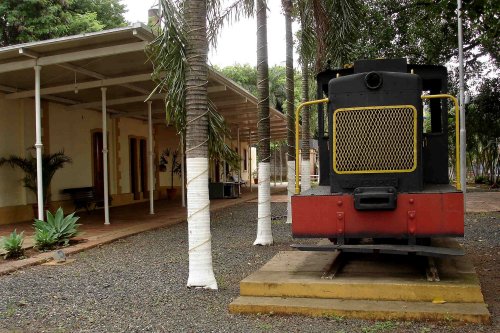
Das Bahnhofspostamt wurde bereits im August 1884 – also noch vor dem Bahnhof – ins Leben gerufen, wie die Presse aus Rio mitteilte:
Der älteste Poststempel des Bahnhofs ist VSP-1495a (Samml. José A. Junges): ein Doppelkreis mit der Inschrift EST. V. RAFFARD oben und einem Ornament in Kreuz unten. Die Daten in der Mitte wurden für den Zeitraum 1884-1886 gefunden. Ihm folgte VSP-1495b (Samml. José A. Junges): in diesem Doppelkreis lautet die obige Inschrift VILLA RAFFARD, unten liest man (S. PAULO). Alle Daten in der Mitte entstammen bisher der Republik: 1900-1904.

 Carimbologia