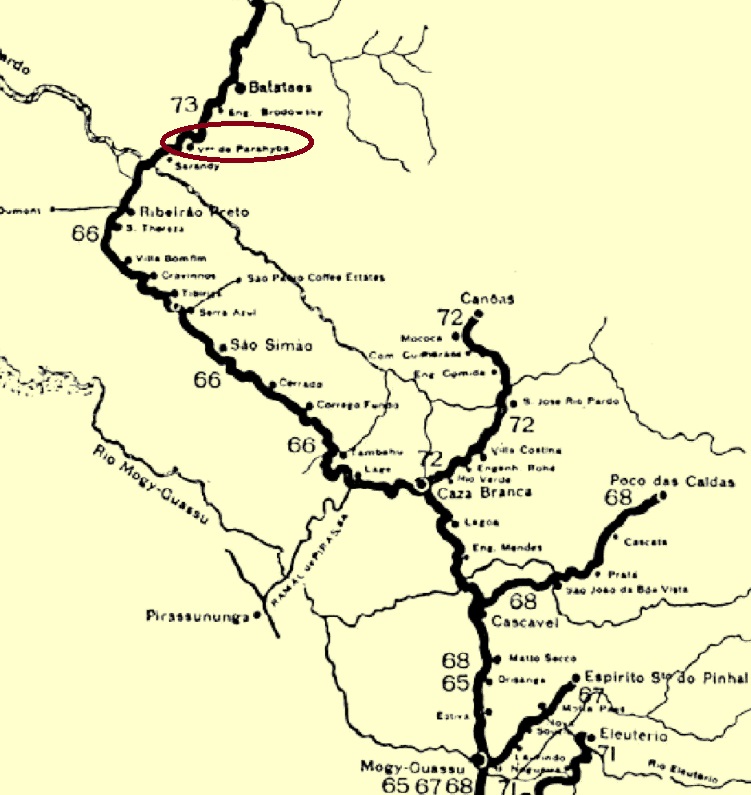
Another name: Rio Pardo (Est.)
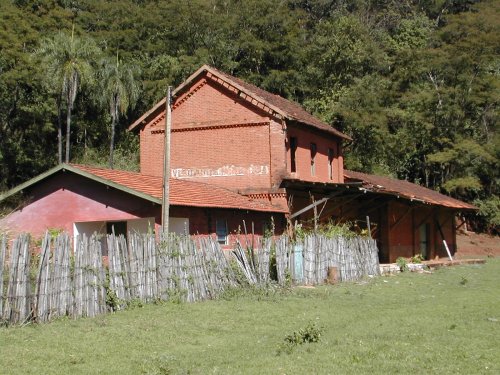
There were three railway stations in the province of São Paulo at the end of the Brazilian Empire that were named after vicomtes, suggesting competition for status symbols among the nobility. The series starts with Visconde de Parnahyba station, inaugurated in October 1886 by the Companhia Mogyana de Estradas de Ferro (Rio Grande Line) in the município of Batatais (now in Jardinópolis) and located 330 km north of the provincial capital São Paulo. The railway line belonged to FEPASA from 1971 until its closure in 1988. Today, the station is abandoned (estacoesferroviarias.com.br).
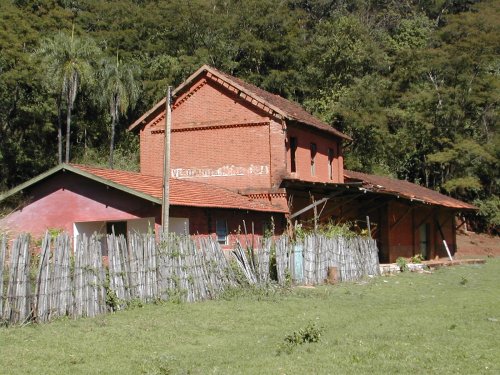
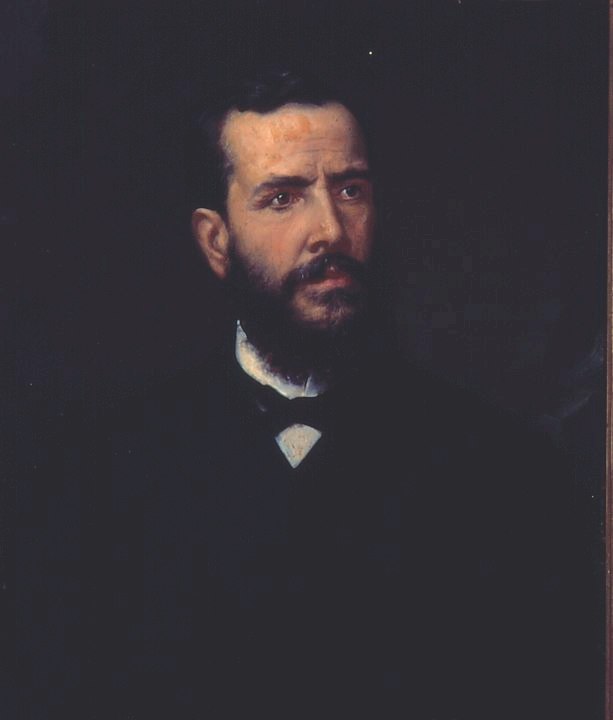
The Viscount de Parnahyba’s civil name was Antonio de Queiroz Telles (1831-1888), he was President of the Cia. Mogyana (1873-1886), and also of the Province of São Paulo (1886-1887). He died as a count from yellow fever contracted in Rio while accompanying his son before the latter left for Europe. The station was built on his large estate.

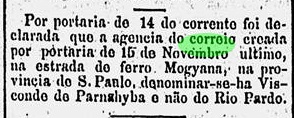
The station post office was built in November 1887, as reported by the Rio press:
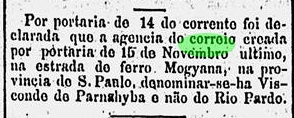
No imperial postmark from this station has yet appeared.
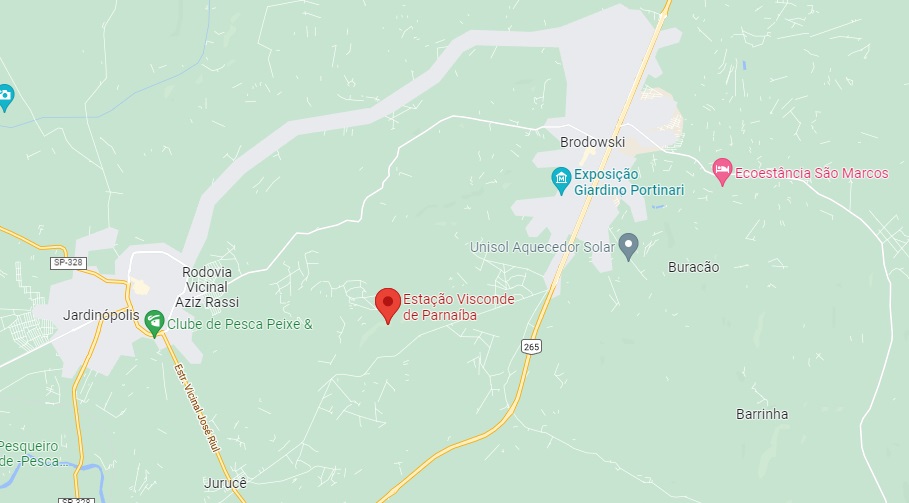
Anderer Name: Rio Pardo (Est.)
Es gab am Ende des brasilianischen Kaiserreichs in der Provinz São Paulo drei Bahnhöfe, die nach Vicomtes genannt wurden, was einen Konkurrenzkampf um Statussymbole unter Adeligen vermuten lässt. Die Reihe startet mit dem Bahnhof Visconde de Parnahyba, der im Oktober 1886 durch die Companhia Mogyana de Estradas de Ferro (Rio Grande-Linie) im Município von Batatais (heute in Jardinópolis) eingeweiht wurde und 330 km nördlich der Provinzhauptstadt São Paulo lag. Die Bahnlinie gehörte von 1971 bis zur Stilllegung 1988 der FEPASA. Heute ist der Bahnhof verlassen (estacoesferroviarias.com.br).
Der Vicomte de Parnahyba hieß mit bürgerlichem Namen Antonio de Queiroz Telles (1831-1888), er war Präsident der Cia. Mogyana (1873-1886) und auch der Provinz São Paulo (1886-1887). Er starb als Graf an einem in Rio geholten Gelbfieber, als er seinen Sohn begleitete, bevor dieser nach Europa fuhr. Der Bahnhof wurde in seinem Großgrundbesitz gebaut.
Das Bahnhofspostamt entstand im November 1887, wie die Presse aus Rio berichtet:
Bisher ist kein kaiserlicher Poststempel aus diesem Bahnhof aufgetaucht.

 Carimbologia