Another name: Eldorado (1948)
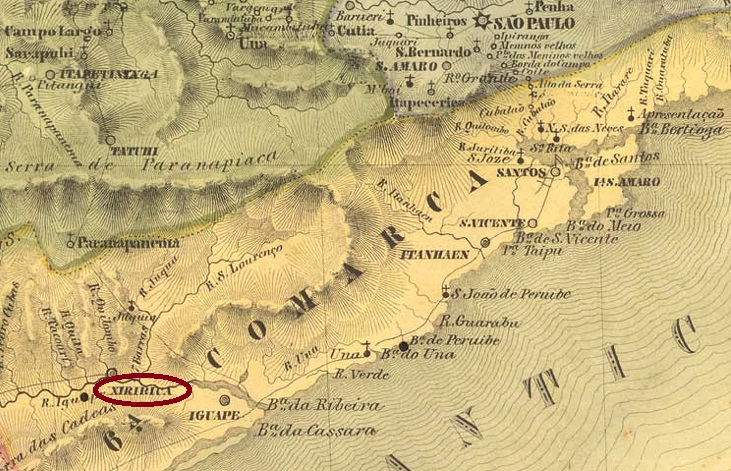
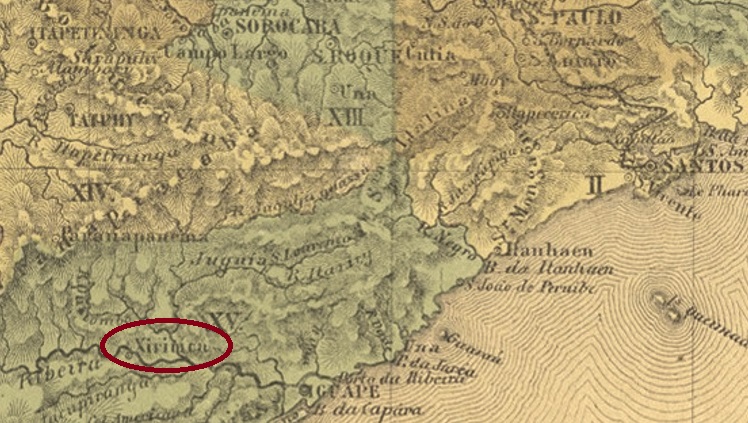
The indigenous word Xiririca means rapids, and the river Ribeira de Iguape is meant here. The chapel of N. Sra. da Guia de Xiririca was built in September 1757 on the south bank of the Ribeira de Iguape, 240 km southwest of the future provincial capital of São Paulo. In January 1763, the village was elevated to a freguesia in the Município of Iguape, in March 1842 Xiririca was declared a vila and in May 1895 a town, which has been called Eldorado since December 1948.
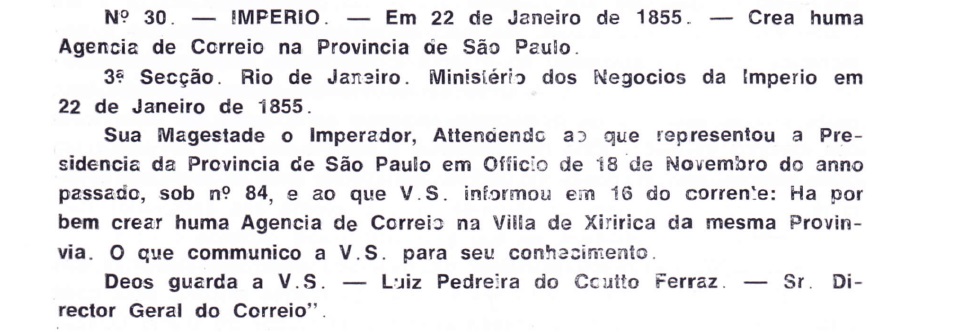
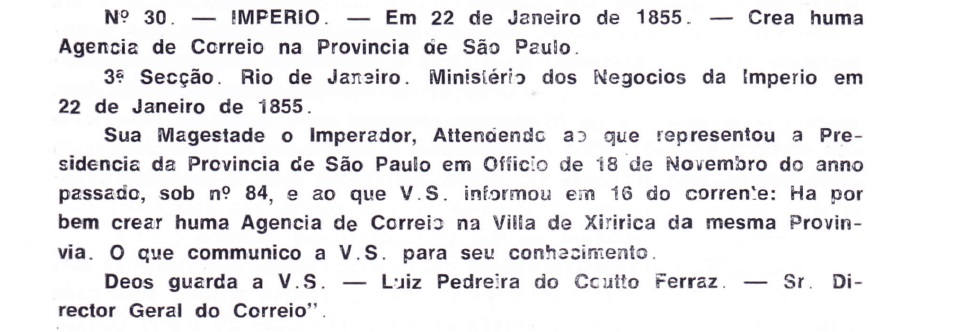
The local post office was established at least twice, although we do not yet know when the first creation took place. However, since the oldest postmark can be seen on stamp issues from 1843, we may assume that the postal agency was first opened around 1842, when Xiririca had become a vila. The second creation of the post office in January 1855 was reported by Aureo G. Santos in Agências de Correio Criadas e Suprimidas 1851, 1855, 1856 e 1857 (Brasil Filatélico 181, Rio de Janeiro, 1977):
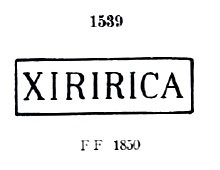
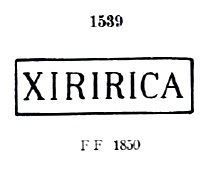
Nova Monteiro, in Administrações e Agencias Postaes do Brasil Imperio (Brasil Filatelico/RJ, 1934-5; Reprint SPP 1994-1999), gives a date of March 1855, but this may have been the commissioning of the agency. The first postmark XSP-1515a was used from about 1843 until at least 1876. It also exists in green, and Paulo Ayres has already shown it in Catálogo de Carimbos Brasil-Império (S. Paulo, 1937, 1942) under No. 1539:
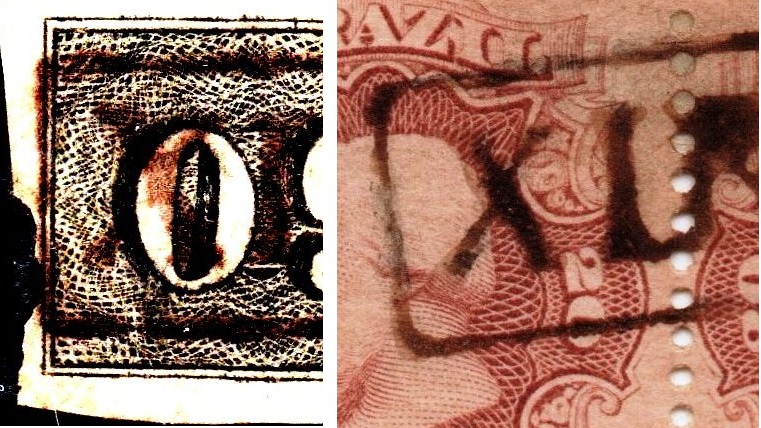
There is the variant XSP-1515b, which can be seen from about 1866 onwards and differs in the slightly sloping nature of the initial X:
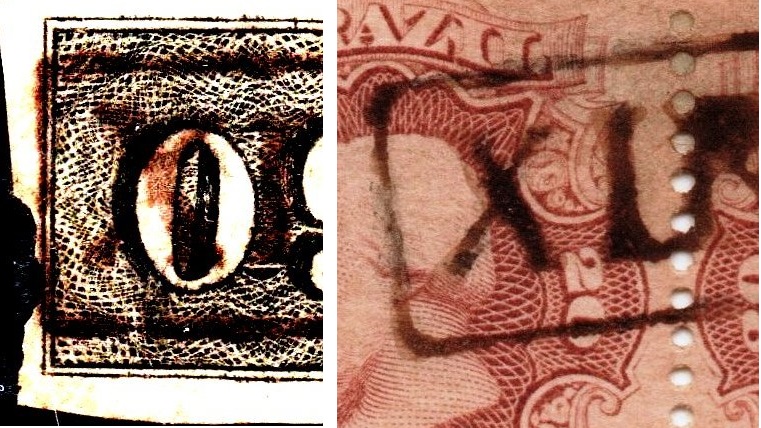
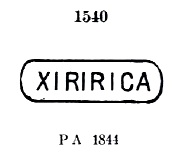
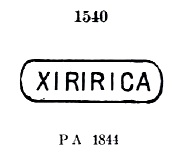
Parallel to this there came XSP-1515c, which was in use from c. 1844 to c. 1850 and is also known by Paulo Ayres (op. cit.) as no. 1540:
Two postmarks followed as double circles. XSP-1515d also exists in blue. It was used ca. 1877-1887 and could be seen in Paulo Ayres on p. 126:
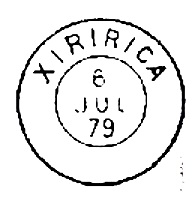
The French type XSP-1515e (Coll. Mario Celso Orsi Jr.) is also found in red. Here the above inscription is XIRIRICA; at the bottom is the small star between brackets, and the inner dates go from 1887 to 1898.
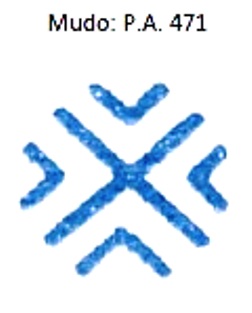
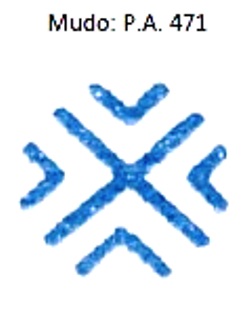
From Xiririca, Mario Celso Orsi Jr, also reported this mute cancel in the Empire:
Anderer Name: Eldorado (1948)
Das indigene Wort Xiririca bedeutet Stromschnelle, und gemeint wird hier der Fluss Ribeira de Iguape sein. Die Kapelle von N. Sra. da Guia de Xiririca wurde im September 1757 am Südufer des Ribeira de Iguape errichtet und lag 240 km südwestlich der späteren Provinzhauptstadt São Paulo entfernt. Im Januar 1763 wurde der Ort zur Freguesia im Município von Iguape erhoben, im März 1842 wurde Xiririca zur Vila und im Mai 1895 zu einer Stadt erklärt, die seit Dezember 1948 Eldorado heißt.
Das örtliche Postamt wurde mindestens zweimal ins Leben gerufen, wobei wir noch nicht wissen, wann das erste Mal stattfand. Da aber der älteste Poststempel auf Markenausgaben von 1843 zu sehen ist, darf man annehmen, dass die Postagentur erstmals um 1842 eröffnet wurde, als Xiririca eine Vila geworden war. Über die zweite Entstehung des Postamtes im Januar 1855 hat Aureo G. Santos in Agências de Correio Criadas e Suprimidas 1851, 1855, 1856 e 1857 (Brasil Filatélico 181, Rio de Janeiro, 1977) berichtet:
Nova Monteiro gibt in Administrações e Agencias Postaes do Brasil Imperio (Brasil Filatelico/RJ, 1934-5; Reprint SPP 1994-1999) ein Datum aus März 1855 an, aber dieses könnte die Inbetriebnahme der Agentur gewesen sein. Das erste Poststempel XSP-1515a wurde von ca. 1843 bis mindestens 1876 verwendet. Es gibt ihn auch in grün, und Paulo Ayres hat ihn bereits in Catálogo de Carimbos Brasil-Império (S. Paulo, 1937, 1942) unter Nr. 1539 gezeigt:
Davon gibt es die Variante XSP-1515b, die ab ca. 1866 zu sehen ist und sich durch die leicht geneigte Art der Initiale X unterscheidet:
Parallel dazu kam XSP-1515c, der von ca. 1844 bis ca. 1850 in Gebrauch war und auch durch Paulo Ayres (op. cit.) unter Nr. 1540 bekannt ist:
Es folgten zwei Poststempel als Doppelkreise. XSP-1515d gibt es auch in blau. Er wurde ca. 1877-1887 verwendet und war in Paulo Ayres auf S. 126 zu sehen:
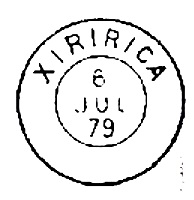
Der französische Typus XSP-1515e (Samml. Mario Celso Orsi Jr.) kommt auch in rot vor. Hier lautet die obige Inschrift XIRIRICA; unten ist der kleine Stern zwischen Klammern, und die Daten im Inneren gehen von 1887 bis 1898.
Aus Xiririca zeigte Mario Celso Orsi Jr, auch diesen stummen Stempel im Kaiserreich:

 Carimbologia