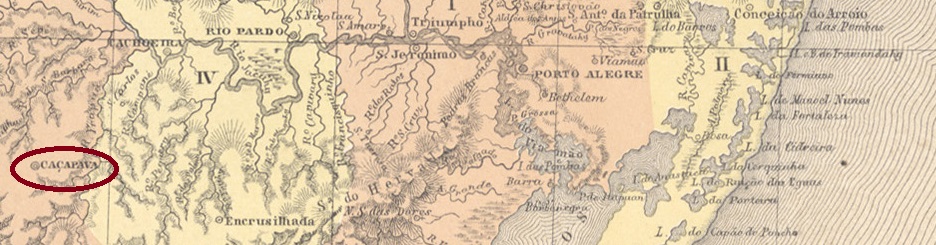
Another name: Caçapava do Sul (1943)
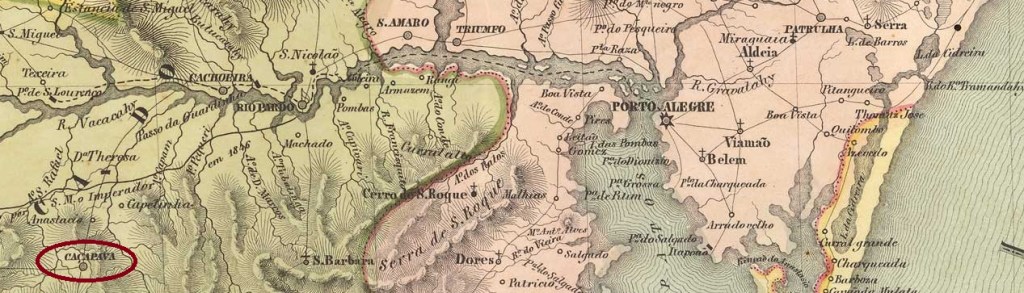
Caçapava (formerly also spelled Cassapava) means forest clearing in the Tupi-Guarani language. The chapel of N. Sra. de Assunção de Caçapava was built in July 1800, belonged to the Vila de Cachoeira and was located 260 km west of the later provincial capital Porto Alegre. It was elevated to vila status in October 1831 and became in January 1839 the capital of the Piratini Republic, proclaimed by the Farroupilha revolutionaries. After the end of the uprising in 1845, some calm returned and since December 1885 Caçapava has been a town, called Caçapava do Sul since December 1944, as opposed to Caçapava in the state of São Paulo.
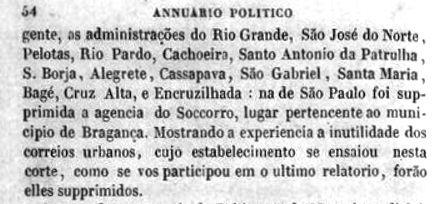
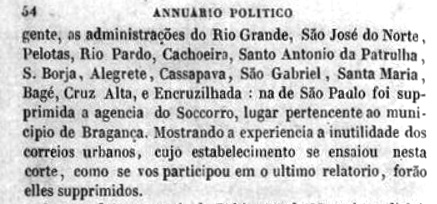
Three creation dates have been found for the local post office. First in 1831, as Nova Monteiro writes in Administrações e Agencias Postaes do Brasil Imperio (Brasil Filatelico/RJ, 1934-5; reprinted by SPP 1994-1999). Then in 1833, as indicated in the Directory of Imperial Post Offices (Tabella das Agencias do Correio do Imperio, Rio de Janeiro, 1885). And finally, around 1845, after the end of the Farroupilha uprising, as indicated in the Official Yearbook 1846:
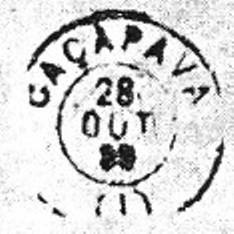
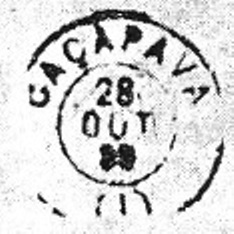
The first postmark is CRS-0050a, which also occurs in sepia and can be seen in the RHM catalogue under P-RS-04. However, the illustration there shows some differences from the actual cancel (José A. Junges coll.):

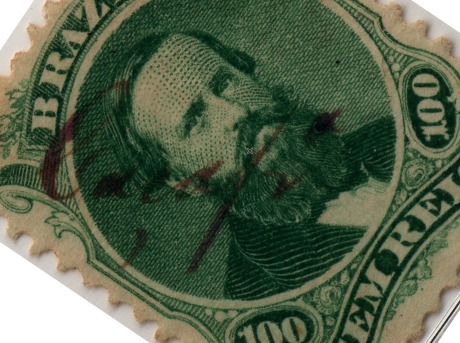
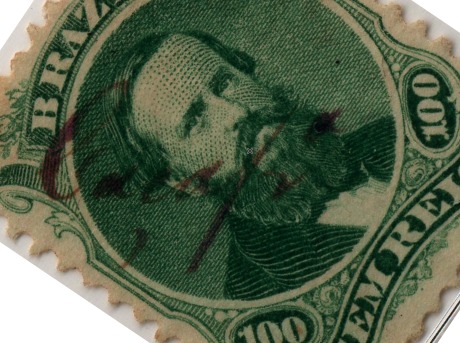
After the peace of 1845, it took some time for the official postmarks to arrive. The postal agency had to bridge the waiting time with handwritten marks:
The next postmark CRS-0050b is not yet confirmed, but according to R. Koester (Carimbologia VII) it is assumed to belong to the province of Rio Grande do Sul:
Anderer Name: Caçapava do Sul (1943)
Caçapava (früher auch Cassapava geschrieben) bedeutet in der Sprache der Tupi-Guarani Waldlichtung. Die Kapelle der N. Sra. de Assunção de Caçapava wurde im Juli 1800 errichtet, gehörte zur Vila de Cachoeira und lag 260 km westlich der späteren Provinzhauptstadt Porto Alegre. Im Oktober 1831 wurde sie zur Vila erhoben und im Januar 1839 zur Hauptstadt der von den Farroupilha-Revolutionären ausgerufenen Piratini-Republik. Nach dem Ende des Aufstandes 1845 kehrte etwas Ruhe ein, und seit Dezember 1885 ist Caçapava eine Stadt, die seit Dezember 1944 Caçapava do Sul heißt, im Gegensatz zu Caçapava im Bundesstaat São Paulo.
Für das örtliche Postamt wurden drei Gründungsdaten gefunden. Zuerst 1831, wie Nova Monteiro in Administrações e Agencias Postaes do Brasil Imperio (Brasil Filatelico/RJ, 1934-5; Nachdruck SPP 1994-1999) schreibt. Dann 1833, wie im Verzeichnis der kaiserlichen Postämter (Tabella das Agencias do Correio do Imperio, Rio de Janeiro, 1885) angegeben. Und schließlich um 1845, nach dem Ende des Farroupilha-Aufstandes, wie aus dem Amtlichen Jahrbuch 1846 hervorgeht:
Der erste Poststempel ist CRS-0050a, der auch in Sepia vorkommt und im RHM-Katalog unter P-RS-04 zu sehen ist. Die Abbildung dort weist jedoch einige Unterschiede zum tatsächlichen Stempel (Samml. José A. Junges) auf:

Nach dem Frieden von 1845 dauerte es einige Zeit, bis die offiziellen Poststempel eintrafen. Die Postagentur musste die Wartezeit mit handschriftlichen Entwertungen überbrücken:
Der nächste Stempel CRS-0050b ist noch nicht bestätigt, wird aber nach R. Koester (Carimbologia VII) als zur Provinz Rio Grande do Sul gehörig vermutet:

 Carimbologia