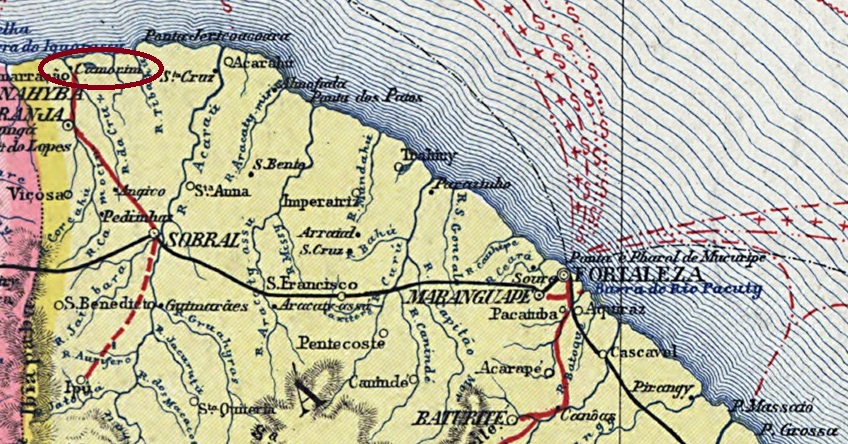
Founded in September 1873, the Freguesia de Bom Jesus dos Navegantes de Camocim, which belonged to the Vila de Granja, was located on the western bank of the mouth of the Curiaú into the Atlantic, 360 km west of the provincial capital Fortaleza. As R. Koester writes in Carimbologia VII, the village, which was not even marked on the 1868 map, experienced rapid population growth from May 1877 onwards due to the influx of refugees from the drought areas in the hinterland. As early as September 1879, Camocim was elevated to the status of a vila and ten years later to that of a town.
Koester (op. cit.) writes that the establishment of a local post office was ordered in July 1881. This is confirmed by the provincial president’s report of December of the same year.

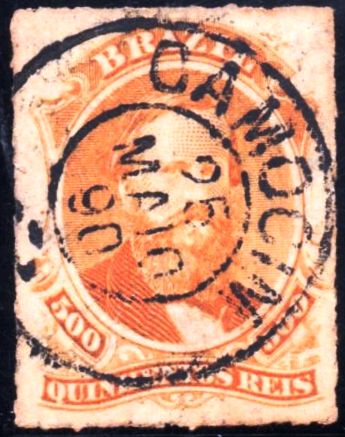
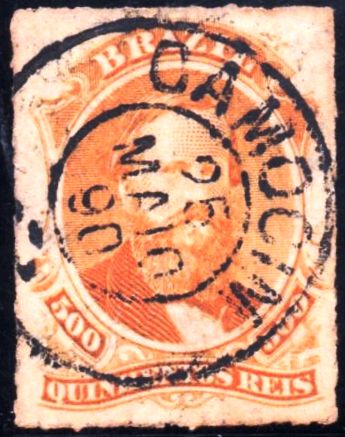
The oldest postmark so far is CCE-0070a (image from the internet):
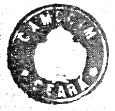
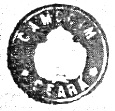
Koester also shows us a seal cancel:
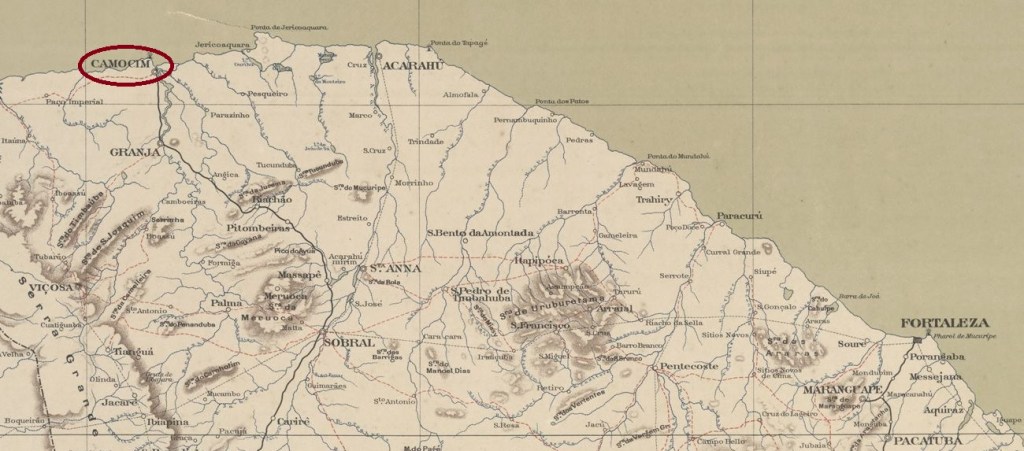
Die im September 1873 gegründete Freguesia de Bom Jesus dos Navegantes de Camocim, die zur Vila de Granja gehörte, lag am Westufer der Mündung des Curiaú in den Atlantik, 360 km westlich der Provinzhauptstadt Fortaleza. Wie R. Koester in Carimbologia VII schreibt, erlebte der Ort, der auf der Karte von 1868 nicht einmal eingezeichnet war, ab Mai 1877 eine rasante Bevölkerungsentwicklung durch den Zuzug von Flüchtlingen aus den Dürregebieten im Hinterland. Bereits im September 1879 wurde Camocim zur Vila und zehn Jahre später zur Stadt erhoben.
Koester (a.a.O.) schreibt, dass die Einrichtung eines örtlichen Postamts im Juli 1881 angeordnet wurde. Dies wird durch den Bericht des Provinzpräsidenten vom Dezember desselben Jahres bestätigt.

Der bisher älteste Poststempel ist CCE-0070a (Abbildung aus dem Internet):
Koester zeigt uns auch einen Siegelstempel:

 Carimbologia