Text update of October 21, 2023
Other names: Bandeirinha do Paraopeba, Capela Nova, Betim (1938)
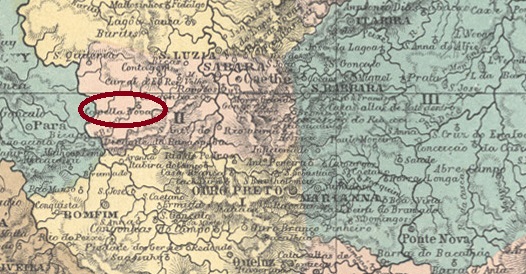
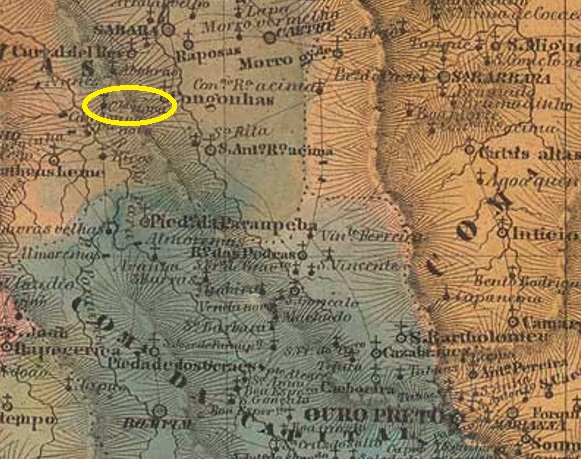
According to old traditions, this settlement was called Bandeirinha do Paraopeba, belonged to the Freguesia de Curral d’El-Rei (today’s metropolis of Belo Horizonte) in the area of the Vila de Sabará and was located on the south bank of the Paraopeba, 120 km northwest of the then provincial capital of Ouro Preto. The village became the Freguesia de N. Sra. do Carmo do Betim in September 1851, which was later assigned to the Vila de Sta. Quitéria. In September 1923, it was renamed the district of Capela Nova, which in December 1938 became the Município Betim, today a proud industrial city with over 400,000 inhabitants.
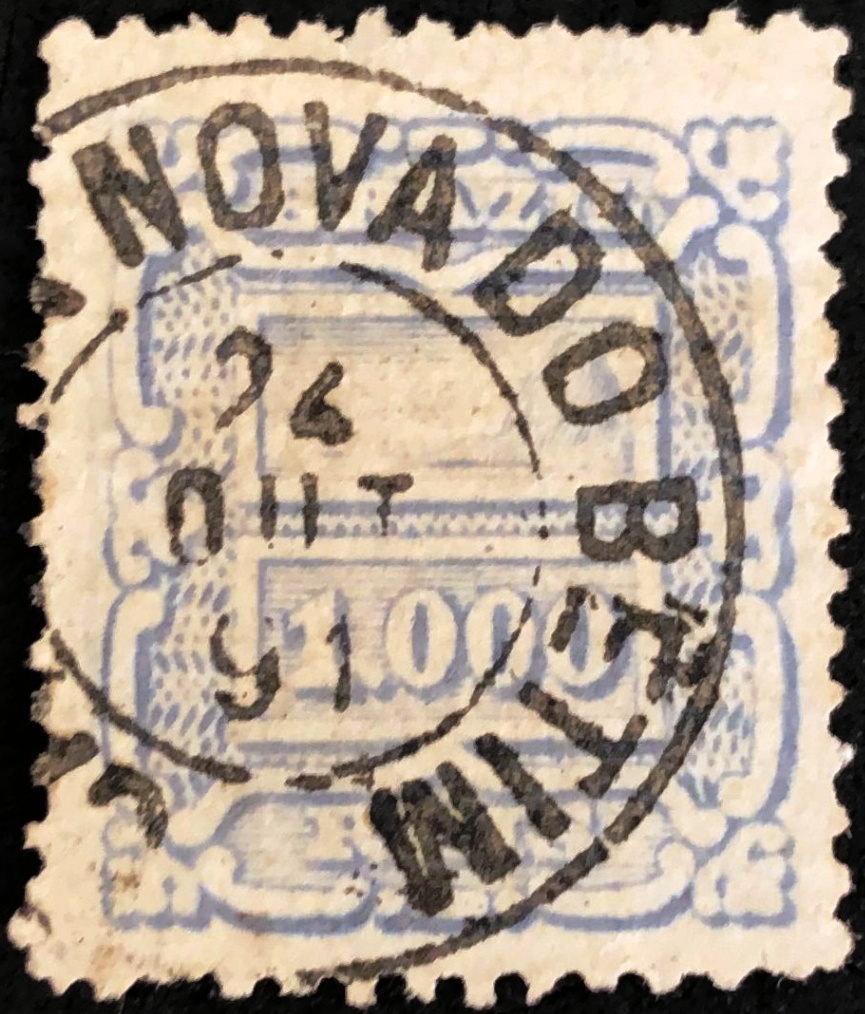
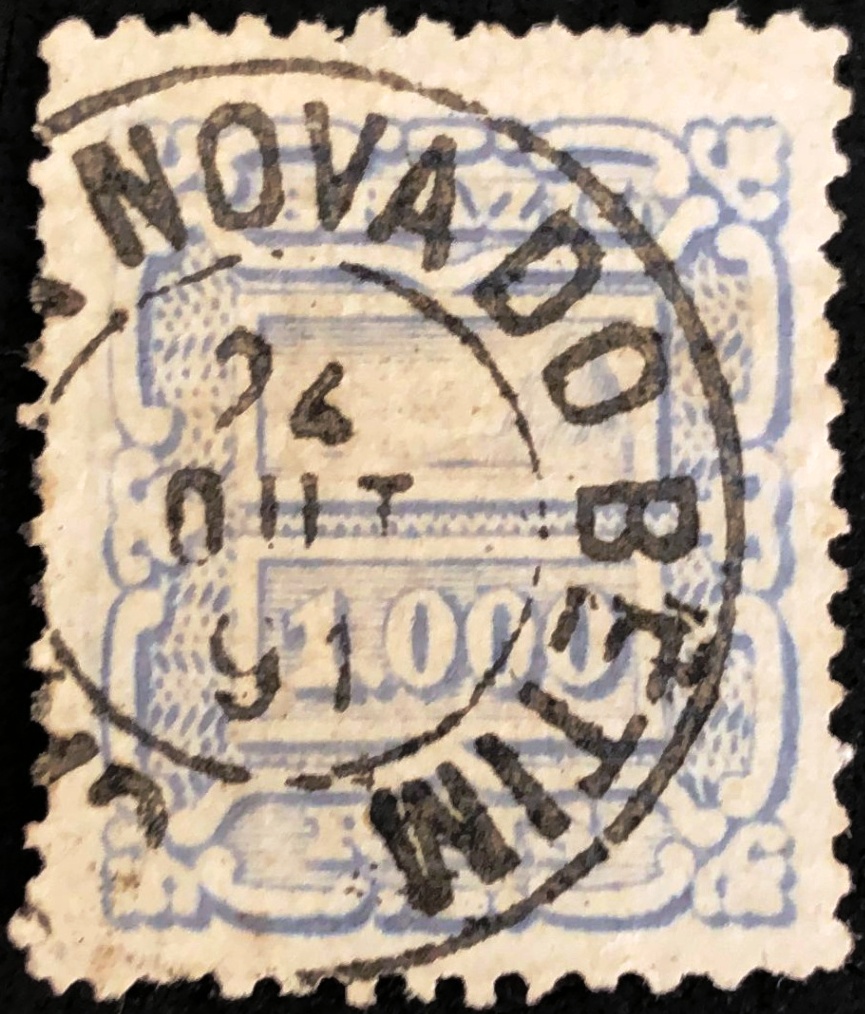
Again, Paula Sobrinho (História Postal de Minas Gerais, Belo Horizonte, 1997) and R. Koester (Carimbologia IX) agree that the local post office was founded in March 1879. The oldest postmark so far is the double circle CMG-0550a, seen with dates from 1887-1902 and mentioned by Koester (loc. cit.) without illustration. Here an image by Luiz C. Fritzen:
Andere Namen: Bandeirinha do Paraopeba, Capela Nova, Betim (1938)
Nach alten Überlieferungen hieß diese Siedlung Bandeirinha do Paraopeba, gehörte zur Freguesia de Curral d’El-Rei (der heutigen Millionenstadt Belo Horizonte) im Gebiet der Vila de Sabará und lag am Südufer des Paraopeba, 120 km nordwestlich der damaligen Provinzhauptstadt Ouro Preto. Der Ort wurde im September 1851 zur Freguesia de N. Sra. do Carmo do Betim, die später der Vila de Sta. Quitéria zugeordnet wurde. Im September 1923 erfolgte die Umbenennung in den Distrikt Capela Nova, der im Dezember 1938 zum Município Betim wurde, heute eine stolze Industriestadt mit über 400.000 Einwohnern.
Auch hier sind sich Paula Sobrinho (História Postal de Minas Gerais, Belo Horizonte, 1997) und R. Koester (Carimbologia IX) einig, dass das örtliche Postamt im März 1879 gegründet wurde. Der bisher älteste Poststempel ist der Doppelkreis CMG-0550a, der mit Daten von 1887-1902 gesehen wurde und von Koester (a.a.O.) ohne Abbildung erwähnt wird. Hier eine Abbildung von Luiz C. Fritzen:

 Carimbologia