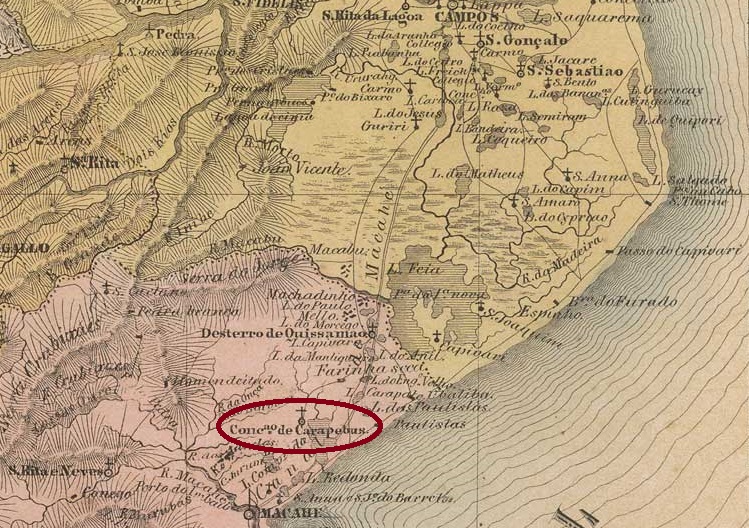
The Freguesia de N. Sra. da Conceição de Carapebus was founded in May 1842 and belonged to the Vila de Macaé, 210 km northeast of the capital Rio de Janeiro. It remained so until July 1995, when it was elevated to an independent município.
Around 1875, a railway station of the E.F. Macahe e Campos (Coastline) railway company was inaugurated there. The railway line passed to the E.F. Leopoldina around 1890 and belonged to Rede Ferroviária Federal S.A. (estacoesferroviarias.com.br) from 1975 until the line was closed in 1996.
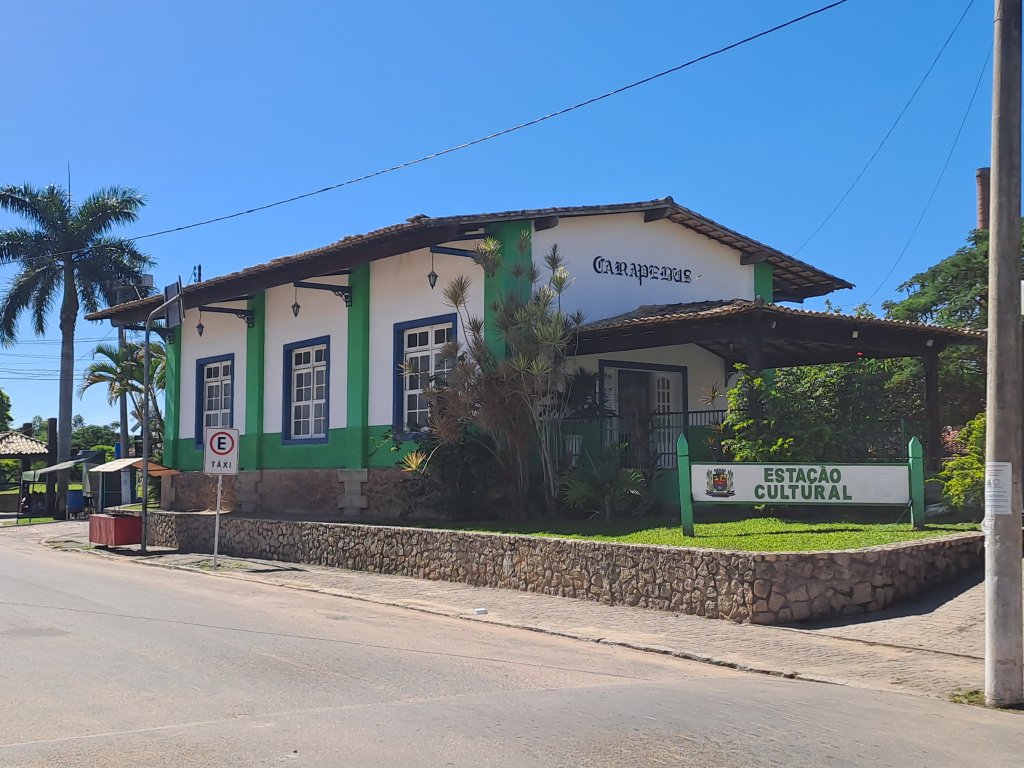
Today, the tracks are still there, and the restored station building is used as a municipal cultural centre:
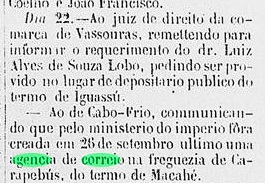
As the Rio Press reports, there has been a post office here since September 1857:
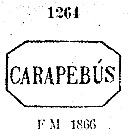
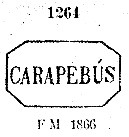
Paulo Novaes gives a date two months later for this in agenciaspostais.com.br, which is probably a transcription error. It is likely that the post office was moved there sometime after the inauguration of the station. The first cancel is CRJ-0305a, which also exists in dark purple and was already presented by Paulo Ayres in the Catálogo de Carimbos Brasil-Império (S. Paulo, 1937, 1942) under No. 1264:
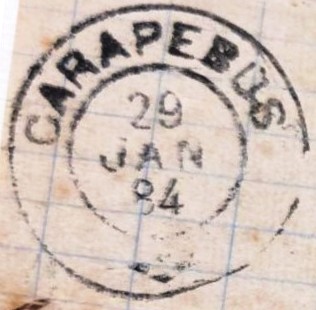
Of its successor CRJ-0305b, only one example from 1884 is known, from the Everaldo N. dos Santos collection:
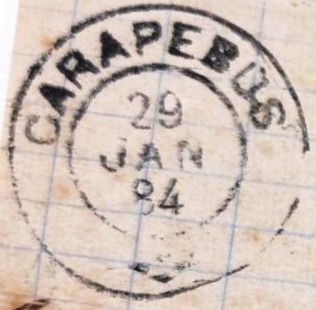
The last imperial postmark from Carapebus is CRJ-0305c (Ill. from the internet), which also exists in dark purple and, according to R. Koester (Carimbologia IX), bears also the inscription EST. DE. This would undoubtedly make it a station cancel.
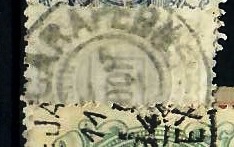
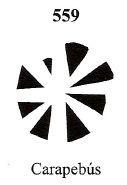
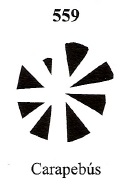
James Dingler and Klerman W. Lopes have found a mute postmark in Mute Cancellations of the Brazil Empire / Carimbos Mudos do Brasil Império (Brazil Philatelic Association, Rio de Janeiro, 2000) under no. 559, which is probably identical to no. 56 in Paulo Ayres’ (op. cit.):
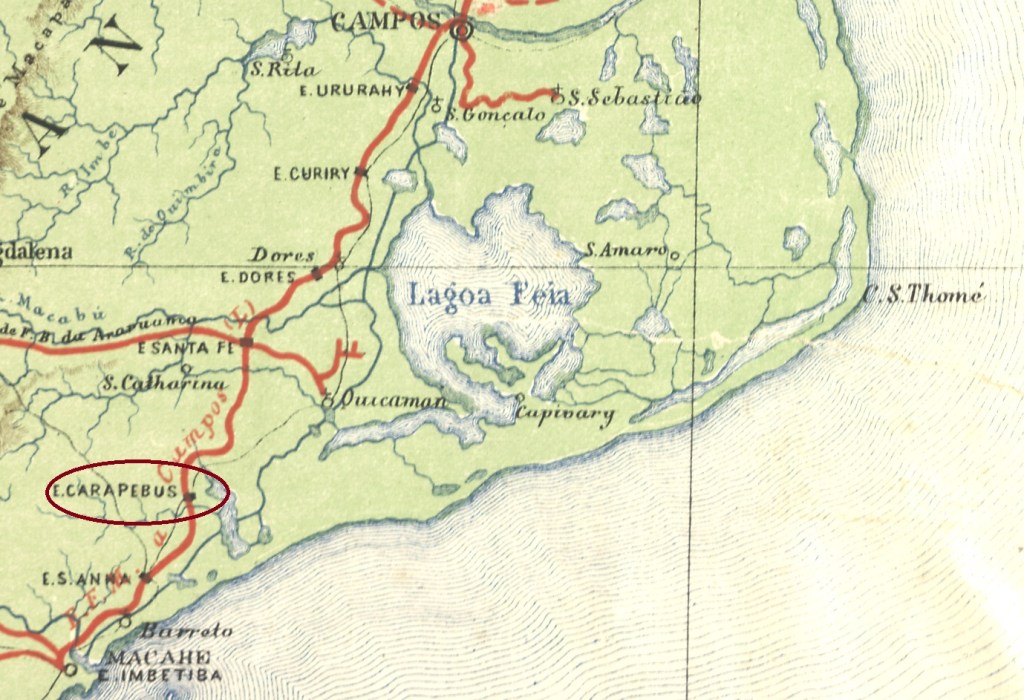
Die Freguesia de N. Sra. da Conceição de Carapebus wurde im Mai 1842 gegründet und gehörte zur Vila de Macaé, 210 km nordöstlich der Hauptstadt Rio de Janeiro. Dies blieb sie bis Juli 1995, als sie zu einem eigenständigen Município erhoben wurde.
Um 1875 wurde dort ein Bahnhof der Eisenbahngesellschaft E.F. Macahe e Campos (Küstenlinie) eingeweiht. Die Bahnlinie ging um 1890 an die E.F. Leopoldina über und gehörte von 1975 bis zur Stilllegung der Strecke 1996 der Rede Ferroviária Federal S.A. (estacoesferroviarias.com.br). Heute sind die Gleise noch vorhanden, das restaurierte Bahnhofsgebäude wird als kommunales Kulturzentrum genutzt:
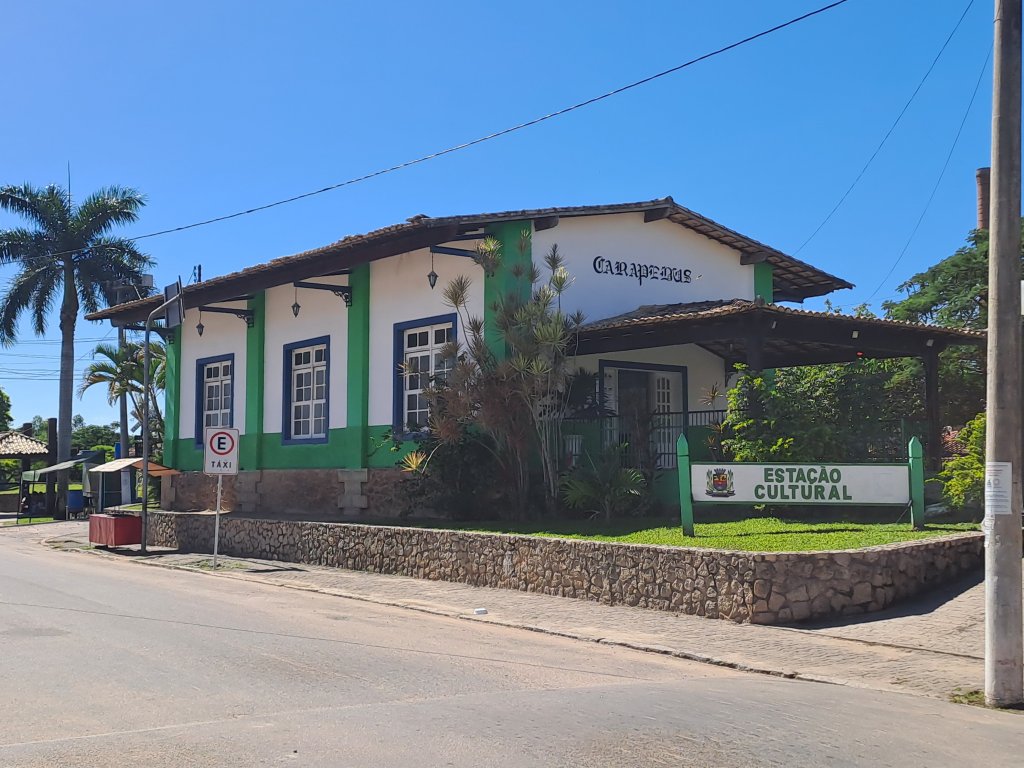
Wie die Rio-Presse berichtet, gab es hier seit September 1857 ein Postamt:

Paulo Novaes gab in agenciaspostais.com.br dafür ein zwei Monate späteres Datum an, was wahrscheinlich ein Abschreibfehler ist. Es ist anzunehmen, dass das Postamt irgendwann nach der Einweihung des Bahnhofs dorthin verlegt wurde. Der erste Stempel ist CRJ-0305a, den es auch in dunkelviolett gibt und der bereits von Paulo Ayres im Catálogo de Carimbos Brasil-Império (S. Paulo, 1937, 1942) unter der Nr. 1264 vorgestellt wurde:
Von seinem Nachfolger CRJ-0305b ist nur ein Exemplar von 1884 aus der Sammlung Everaldo N. dos Santos bekannt:
Der letzte kaiserliche Poststempel aus Carapebus ist CRJ-0306a (Abb. aus dem Internet), der auch in dunkelviolett existiert und nach R. Koester (Carimbologia IX) die Inschrift EST. DE trägt. Damit wäre er zweifellos ein Bahnhofsstempel.
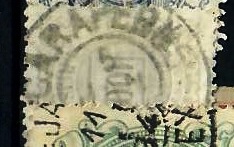
James Dingler und Klerman W. Lopes haben dazu in Mute Cancellations of the Brazil Empire / Carimbos Mudos do Brasil Império (Brazil Philatelic Association, Rio de Janeiro, 2000) unter Nr. 559 einen stummen Poststempel gefunden, der vermutlich mit Nr. 56 in Paulo Ayres’ (op. cit.) identisch ist:

 Carimbologia