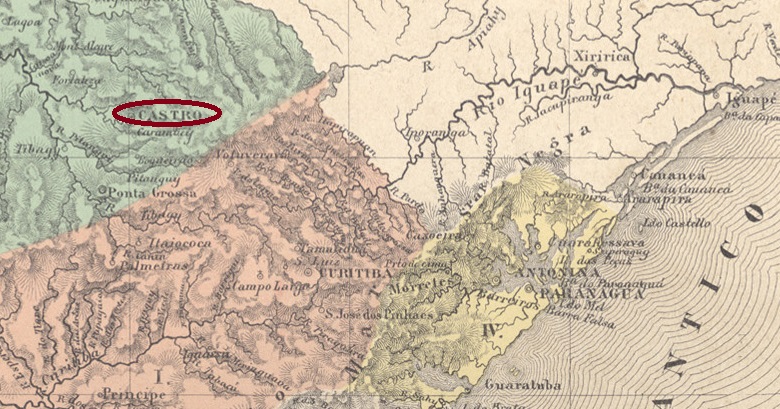
Other names: Sant’Anna de Iapó
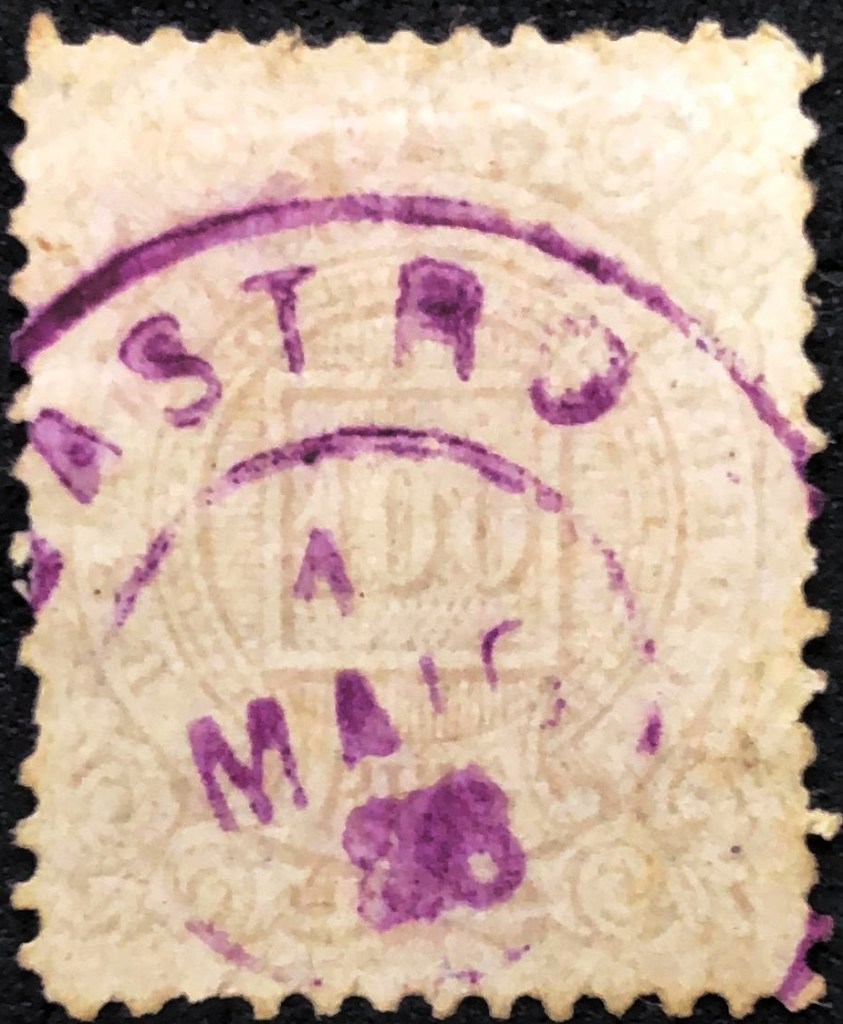
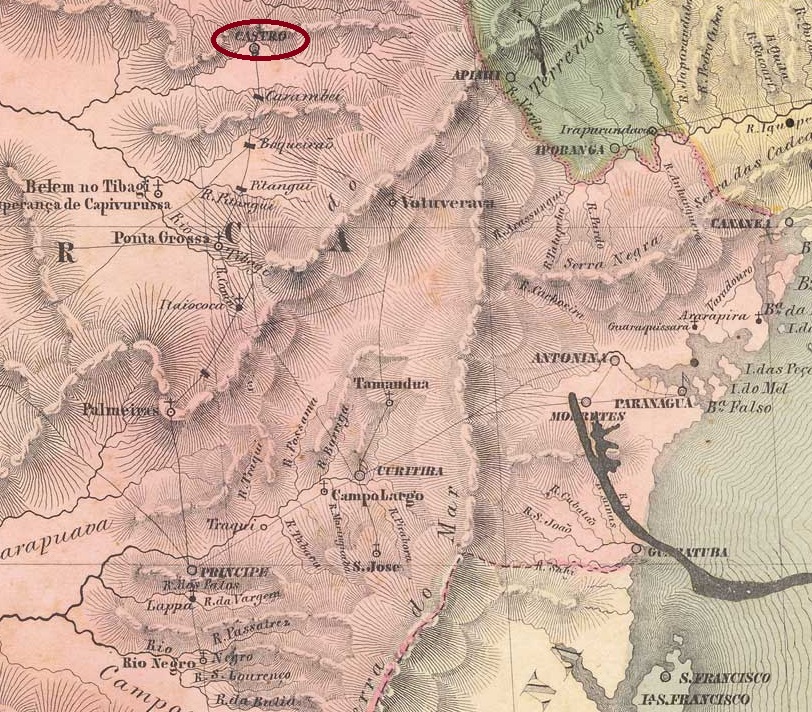
The Freguesia de Sant’Anna de Iapó was founded in March 1774, belonged to the Vila de Curitiba (then still in the Capitania de São Paulo) and was located on the south bank of the Iapó, 150 kilometres northwest of the later provincial capital of Curitiba. In September 1788, it was elevated to Vila Nova de Castro, which became a city in January 1857, this time in the new province of Paraná. Castro is considered the oldest city in this province. The name commemorates Martinho de Melo e Castro (1716-1795), a Portuguese diplomat and politician.
Nova Monteiro writes in Administrações e Agencias Postaes do Brasil Imperio (Brasil Filatelico/RJ, 1934-5; reprint SPP 1994-1999) that there had been a post office there since April 1828. According to the philatelist Mário Celso Orsi Jr., the first postmark was CPR-0040a, which was used from the beginning until around 1843:
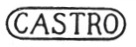
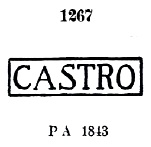
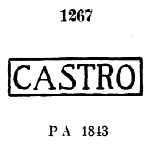
It was followed by its similar colleague CPR-0040b, which was used from 1836 to 1870 and was already made known by Paulo Ayres (Catálogo de Carimbos Brasil-Império, S. Paulo, 1937, 1942) with the no. 1267 and in the RHM catalogue (under P-SP-07):
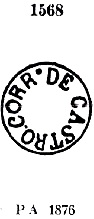
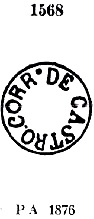
From around 1867, the archaic-looking CPR-0040c, also known through Paulo Ayres, appeared, this time under no. 1568:
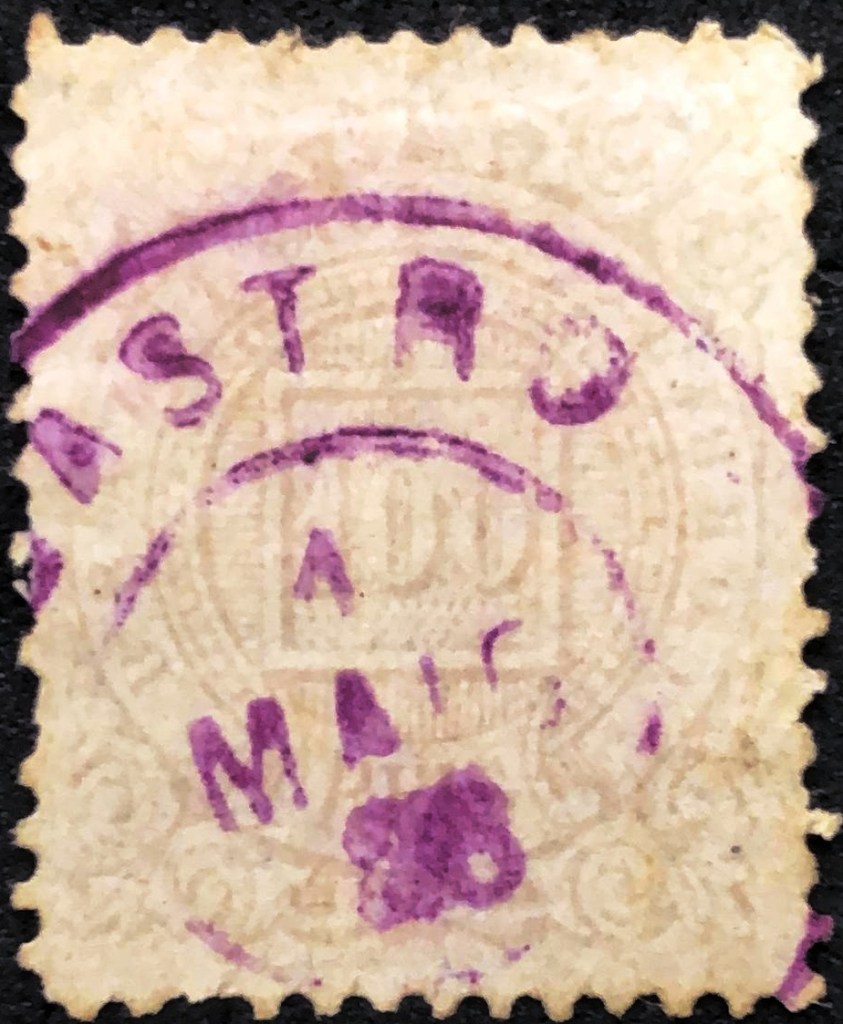
Towards the end of the Empire, CPR-0040d (illustrated by Roberto Assef Jr.) appeared, which also exists in dark violet:
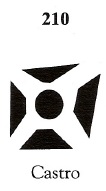
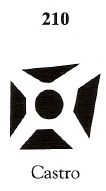
Two mute cancellations of the imperial Castro are known. First, James Dingler and Klerman W. Lopes in Mute Cancellations of the Brazil Empire / Carimbos Mudos do Brasil Império (Brazil Philatelic Association, Rio de Janeiro, 2000) show no. 210, which is identical to P. Ayres no. 453 (op. cit.):
Then Mario Celso Orsi Jr. has shown another mute cancel from Castro:

Andere Namen: Sant’Anna de Iapó
Die Freguesia de Sant‘Anna de Iapó wurde bereits im März 1774 gegründet, gehörte zur Vila de Curitiba (damals noch in der Capitania de São Paulo) und lag am Südufer des Iapó, 150 km nordwestlich der späteren Provinzhauptstadt Curitiba. Im September 1788 erfolgte die Ernennung zur Vila Nova de Castro, die im Januar 1857 zur Stadt erklärt wurde, diesmal in der neuen Provinz Paraná. Castro gilt als die älteste Stadt dieser Provinz. Der Name erinnert an Martinho de Melo e Castro (1716-1795), einen portugiesischen Diplomaten und Politiker.
Nova Monteiro schreibt in Administrações e Agencias Postaes do Brasil Imperio (Brasil Filatelico/RJ, 1934-5; Reprint SPP 1994-1999), dass es dort seit April 1828 ein Postamt gab. Nach Angaben des Philatelisten Mário Celso Orsi Jr. war der erste Poststempel CPR-0040a, der von der Eröffnung bis etwa 1843 verwendet wurde:
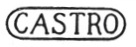
Ihm folgte sein ähnlicher Kollege CPR-0040b, der von 1836 bis 1870 verwendet wurde und bereits von Paulo Ayres (Catálogo de Carimbos Brasil-Império, S. Paulo, 1937, 1942) mit der Nr. 1267 und im RHM-Katalog (unter P-SP-07) bekannt gemacht wurde:
Ab ca. 1867 erschien der archaisch anmutende CPR-0040c, ebenfalls bekannt durch Paulo Ayres, diesmal mit der Nr. 1568:
Gegen Ende des Kaiserreichs erschien CPR-0040d (Abb. Roberto Assef Jr.), die es auch in dunkelviolett gibt:
Vom kaiserlichen Castro sind zwei stumme Entwertungen bekannt. Zunächst zeigen James Dingler und Klerman W. Lopes in Mute Cancellations of the Brazil Empire / Carimbos Mudos do Brasil Império (Brazil Philatelic Association, Rio de Janeiro, 2000) die Nr. 210, die mit P. Ayres Nr. 453 (op. cit.) identisch ist:
Dann hat Mario Celso Orsi Jr. einen anderen stummen Poststempel von Castro gezeigt:


 Carimbologia