Other names: Núcleo Colonial de Santa Cruz, Bocaiúva, Guaraná, Pau Gigante, Ibiraçu (1943)
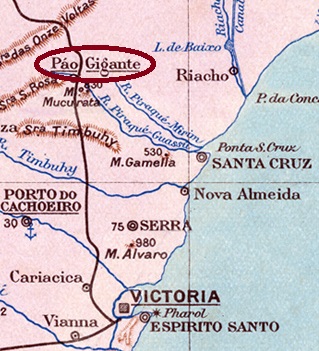
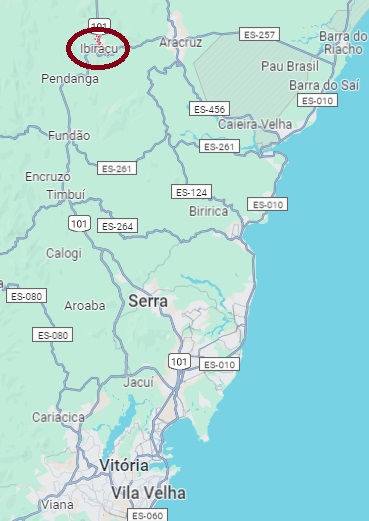
The village was founded in 1877 by Italian immigrants as the colony Conde d’Eu, belonged to the Vila de Santa Cruz (today: Aracruz) and was located a good 70 kilometres north of the provincial capital Vitória. It was renamed several times: around 1890 to Bocaiúva (as a district), in September 1891 to Município de Guaraná, in March 1892 to Pau Gigante (made a town in 1938) and finally in December 1943 to Ibiraçu.
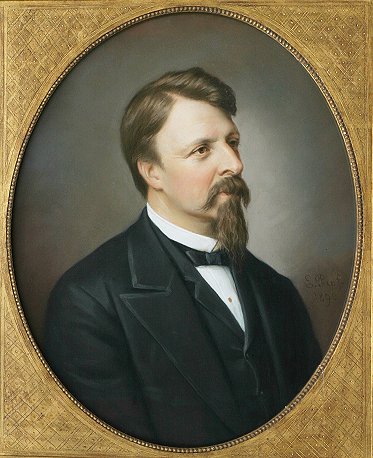
Gaston d’Orléans, Count d’Eu (1842-1922), the son-in-law of Emperor D. Pedro II, was not very popular among the Brazilians.
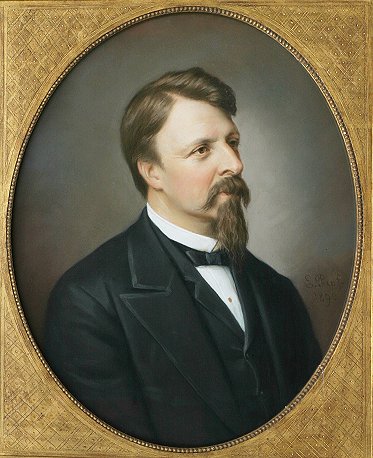
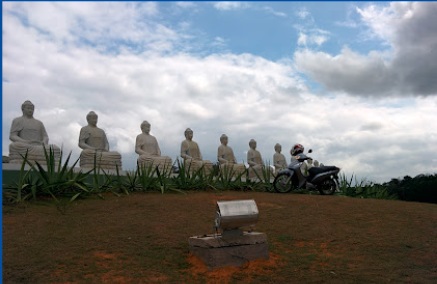
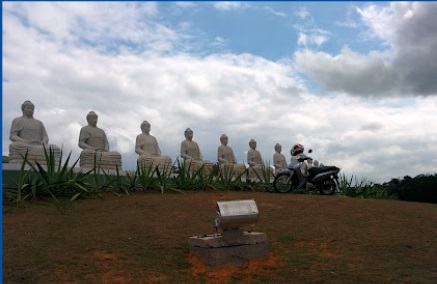
After the end of the empire, the name was changed to Bocaiúva, probably in homage to the republican Quintino Bocaiúva (1836-1912). The strange-sounding name Guaraná was intended to commemorate Aristides Arminio Guaraná (1843-1927), a veteran of the Paraguay War who was appointed chief administrator of the colony. Pau Gigante (Giant Trunk) commemorates a 60 metre high tree nearby that was the symbol of the settlement. And Ibiraçu translates it into the Indian language tupi. Today, a Buddhist monastery is the town’s main attraction.
As Paulo Novaes writes in agenciaspostais.com.br, there should be a post office there since July 1885, but it only started operating by 1887. No imperial postmarks from Conde d’Eu have yet been found.
Andere Namen: Núcleo Colonial de Santa Cruz, Bocaiúva, Guaraná, Pau Gigante, Ibiraçu (1943)
Der Ort wurde 1877 von italienischen Einwanderern als Kolonie Conde d’Eu gegründet, gehörte zur Vila de Santa Cruz (heute: Aracruz) und lag gut 70 km nördlich der Provinzhauptstadt Vitória. Es folgten mehrere Umbenennungen: um 1890 in Bocaiúva (als Distrikt), im September 1891 in Município de Guaraná, im März 1892 in Pau Gigante (1938 zur Stadt ernannt) und schließlich im Dezember 1943 in Ibiraçu.
Gaston d’Orléans, Graf d’Eu (1842-1922), war der bei den Brasilianern wenig beliebte Schwiegersohn des Kaisers D. Pedro II.
Nach dem Ende des Kaiserreichs folgte die Umbenennung in Bocaiúva, wohl eine Hommage an den Republikaner Quintino Bocaiúva (1836-1912). Der seltsam klingende Name Guaraná sollte an Aristides Arminio Guaraná (1843-1927) erinnern, einen Veteranen des Paraguay-Krieges, der zum Hauptverwalter der Kolonie ernannt wurde. Pau Gigante (Riesenstamm) erinnert an einen 60 Meter hohen Baum der Gegend, der als Wahrzeichen der Siedlung galt. Und Ibiraçu heißt es übersetzt in der Indianersprache Tupi. Heute ist ein buddhistisches Kloster die Hauptattraktion des Städtchens.
Wie Paulo Novaes in agenciaspostais.com.br schreibt, soll es dort seit Juli 1885 ein Postamt gegeben haben, das aber erst 1887 seinen Betrieb aufnahm. Bisher wurden keine kaiserlichen Poststempel von Conde d’Eu gefunden.

 Carimbologia