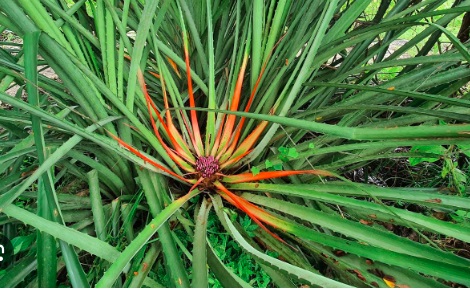
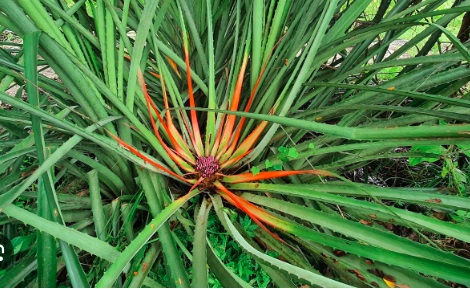
Coroatá, Caraguatá or Gravatá are Brazilian names for various bromeliads such as Bromelia pinguin:
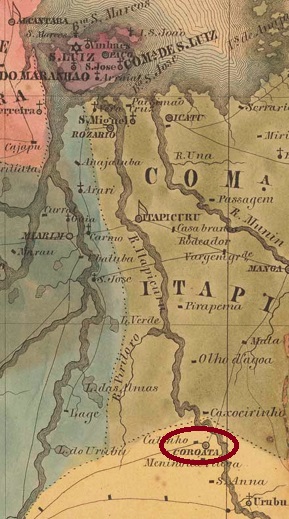
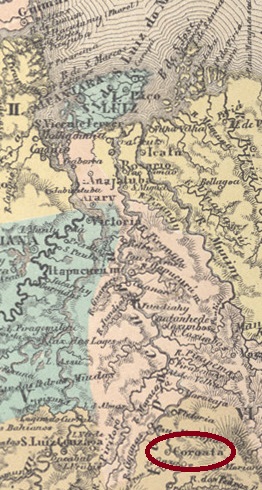
N. Sra. da Piedade de Coroatá was a freguesia of the Vila de Caxias on the Itapicuru River, 250 km south of the later provincial capital S. Luís do Maranhão. In November 1843, it was elevated to a vila and in April 1920 to a town.
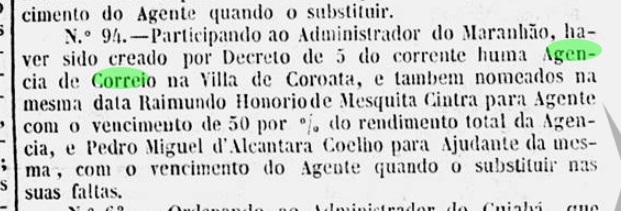
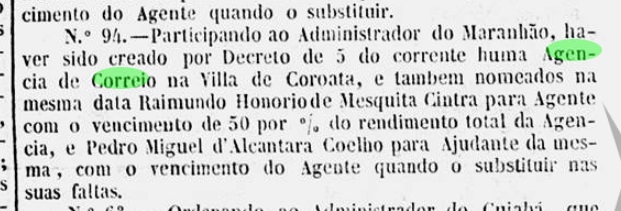
According to Rio’s official press, there had been a post office there since November 1846
According to R. Koester (Carimbologia XIV), CMA-0105a was the first postmark, which it is said to be very rare:

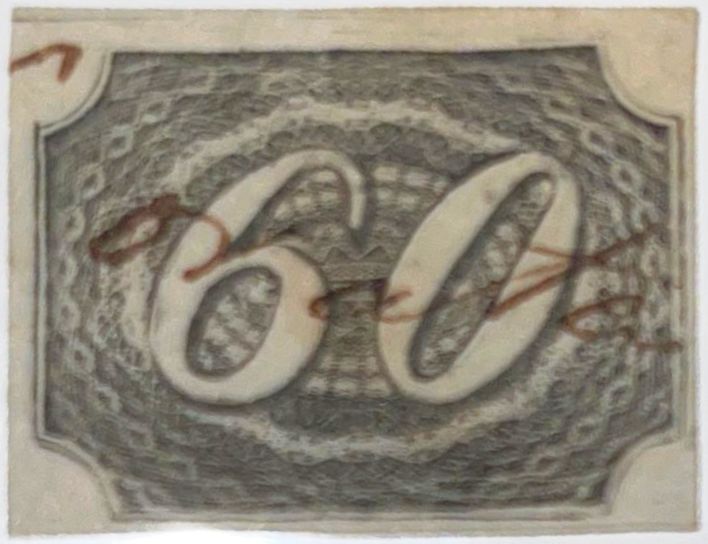
It is possible that this postmark quickly became unusable, as the stamps were soon cancelled by hand:
The next cancellation is CMA-0105b (ill. José A. Junges), in the form typical for Maranhão:

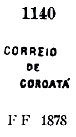
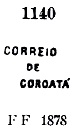
It was followed by CMA-0105c, which was given the no. 1140 by P. Ayres (Catálogo de Carimbos Brasil-Império, S. Paulo, 1937, 1942):
R. Koester (op. cit.) describes the next cancellation CMA-0105d as a double circle, which appeared from about 1880, unfortunately without illustration.
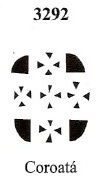
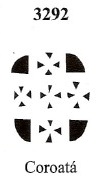
There is also a mute cancellation from the imperial Coroatá, which was given the no. 3292 by James Dingler and Klerman W. Lopes (Mute Cancellations of the Brazil Empire / Carimbos Mudos do Brasil Império, Brazil Philatelic Association, Rio de Janeiro, 2000):
Coroatá, Caraguatá oder auch Gravatá sind brasilianische Bezeichnungen für verschiedene Bromeliengewächse wie z.B. Bromelia pinguin:
N. Sra. da Piedade de Coroatá war eine Freguesia der Vila de Caxias am Itapicuru-Fluss, 250 km südlich der späteren Provinzhauptstadt S. Luís do Maranhão. Im November 1843 wurde es zur Vila und im April 1920 zur Stadt erhoben.
Wie aus der offiziellen Presse von Rio hervorgeht, gab es dort seit November 1846 ein Postamt
Nach R. Koester (Carimbologia XIV) war CMA-0105a der erste Poststempel, der sehr selten sein soll:

Möglicherweise wurde dieser Stempel schnell unbrauchbar, da die Marken bald von Hand entwertet wurden:
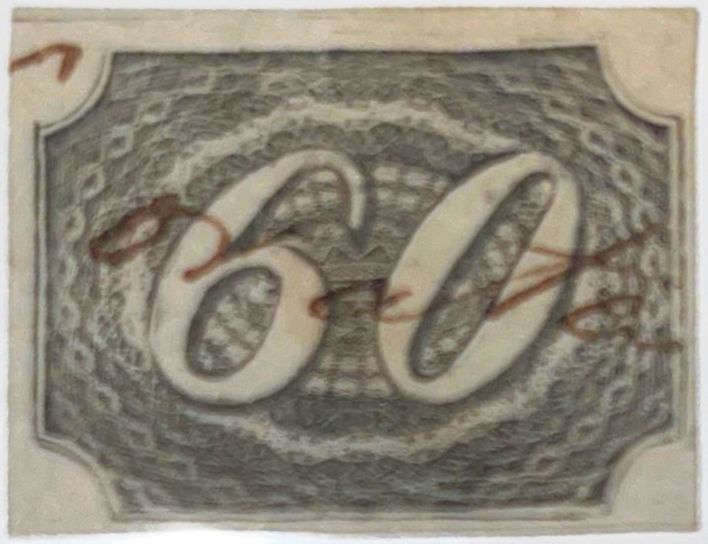
Der nächste Stempel ist CMA-0105b (Abb. José A. Junges), in der für Maranhão typischen Form:

Ihm folgte CMA-0105c, der von P. Ayres (Catálogo de Carimbos Brasil-Império, S. Paulo, 1937, 1942) die Nr. 1140 erhielt:
R. Koester (op. cit.) beschreibt den nächsten Stempel CMA-0105d als einen Doppelkreis, der ab ca. 1880 auftrat, leider ohne Abbildung.
Aus dem kaiserlichen Coroatá stammt auch ein stummer Stempel, der von James Dingler und Klerman W. Lopes (Mute Cancellations of the Brazil Empire / Carimbos Mudos do Brasil Império, Brazil Philatelic Association, Rio de Janeiro, 2000) die Nr. 3292 erhielt:

 Carimbologia