
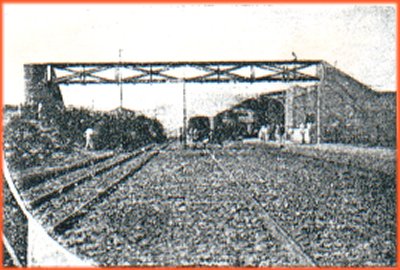
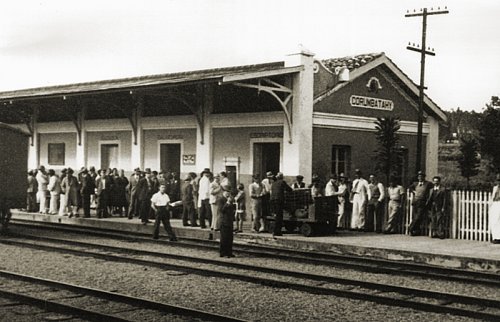
Corumbatahy station was opened in October 1884 by the railway company E.F. do Rio Claro (Analandia branch) and was located on the west bank of the Corumbatahy in the Município de Rio Claro, 210 km north-west of the provincial capital of São Paulo. The line was handed over to the Cia. Paulista de Estradas de Ferro in 1892 and closed in 1966. Today, the tracks and the station building have been demolished.
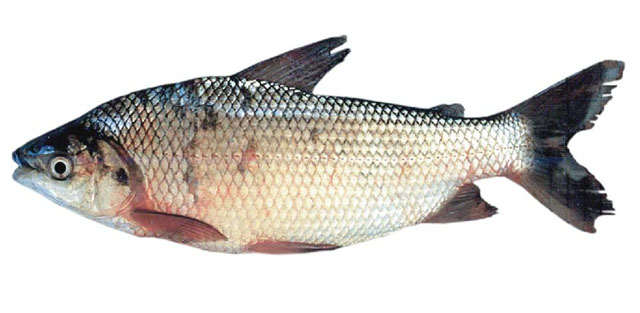
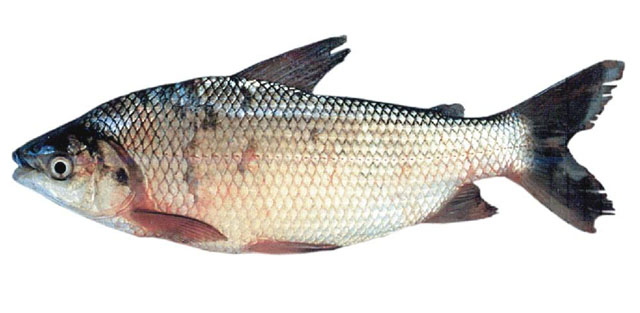
The area around the railway station became a district of the municipality of Rio Claro in November 1919 and has been Município de Corumbataí, in its current spelling, since December 1948. The name comes from the Tupi-Guarani language and means River of the Curimbatás. This name refers to fish from the barbel family (Prochilodontidae), which are found throughout Brazil and are also called curimatã or grumatã:
As R. Koester writes in Carimbologia XIV, there has been a post office at the railway station since January 1886. The imperial postmark is CSP-0385a (collect. Fuad Ferreira Fo.):

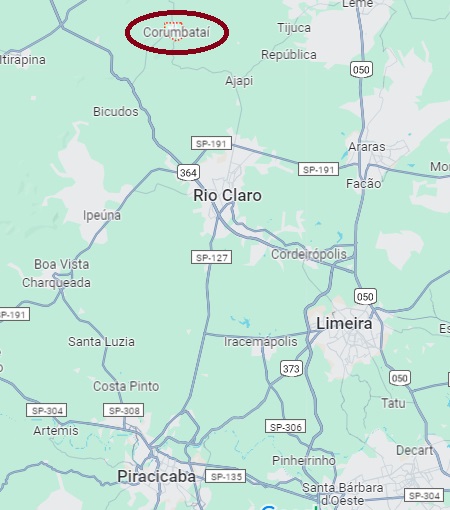
Der Bahnhof Corumbatahy wurde im Oktober 1884 von der Eisenbahngesellschaft E.F. do Rio Claro (Abzweig Analandia) eröffnet und lag am Westufer des Corumbatahy im Município de Rio Claro, 210 km nordwestlich der Provinzhauptstadt São Paulo. Die Strecke wurde 1892 an die Cia. Paulista de Estradas de Ferro übergeben und 1966 stillgelegt. Heute sind die Gleise und das Bahnhofsgebäude abgerissen.
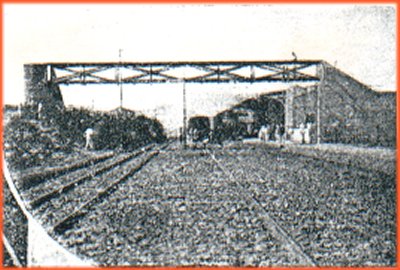
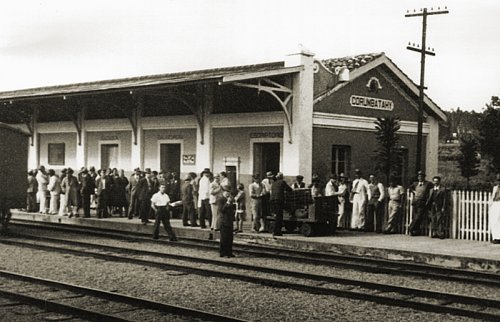
Das Gebiet um den Bahnhof wurde im November 1919 ein Bezirk der Gemeinde Rio Claro und ist seit Dezember 1948 Município de Corumbataí, in der heutigen Schreibweise. Der Name stammt aus der Tupi-Guarani-Sprache und bedeutet Fluss der Curimbatás. Dieser Name bezieht sich auf Fische aus der Familie der Barbensalmler (Prochilodontidae), die in ganz Brasilien vorkommen und auch curimatã oder grumatã genannt werden:
Wie R. Koester in Carimbologia XIV schreibt, gab es am Bahnhof ein Postamt seit Januar 1886. Der kaiserliche Poststempel ist CSP-0385a (Samml. Fuad Ferreira Fo.):


 Carimbologia