Other names: Ramiz Galvão (1939)
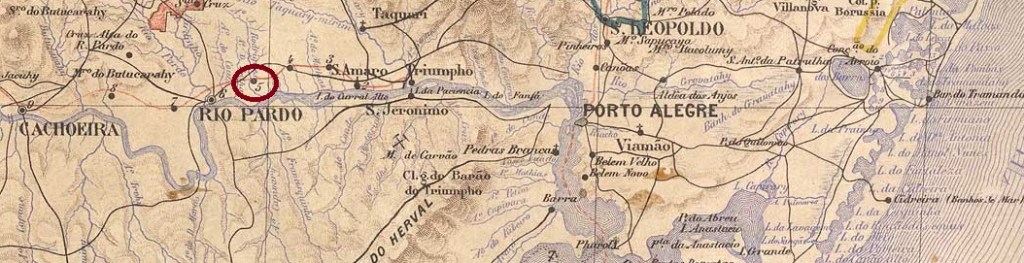
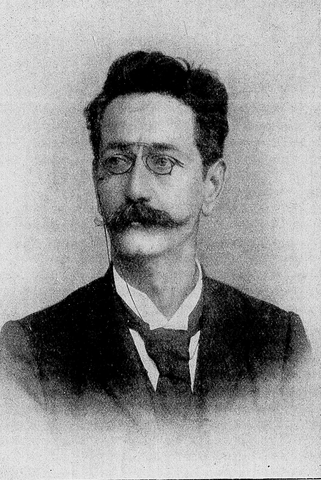
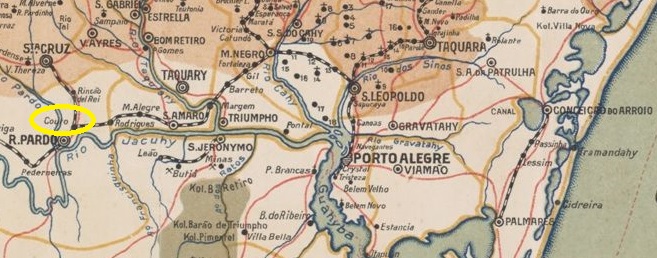
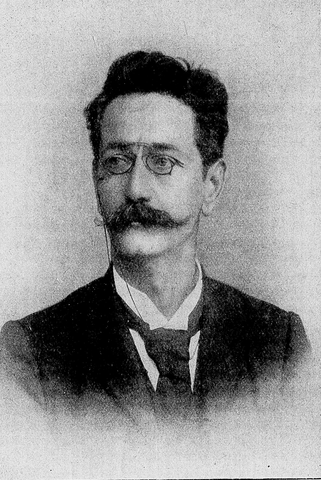
Couto station was opened in March 1883 by the railway company E.F. Porto Alegre a Uruguayana and was located on the west bank of the Jacuí in the Município de Rio Pardo, 150 km west of the provincial capital Porto Alegre. The railway line was transferred to the Cie. Auxiliaire des Chemins de Fer au Brésil in 1898, to Viação Férrea Rio Grande do Sul in 1920 and belonged to Rede Ferroviária Federal S.A. from 1975 until its closure in 1996 (estacoesferroviarias.com.br). In 1939, the station was renamed Ramiz Galvão in memory of Benjamin Ramiz Galvão (1846-1938), a doctor, philologist and historian born in Rio Pardo.
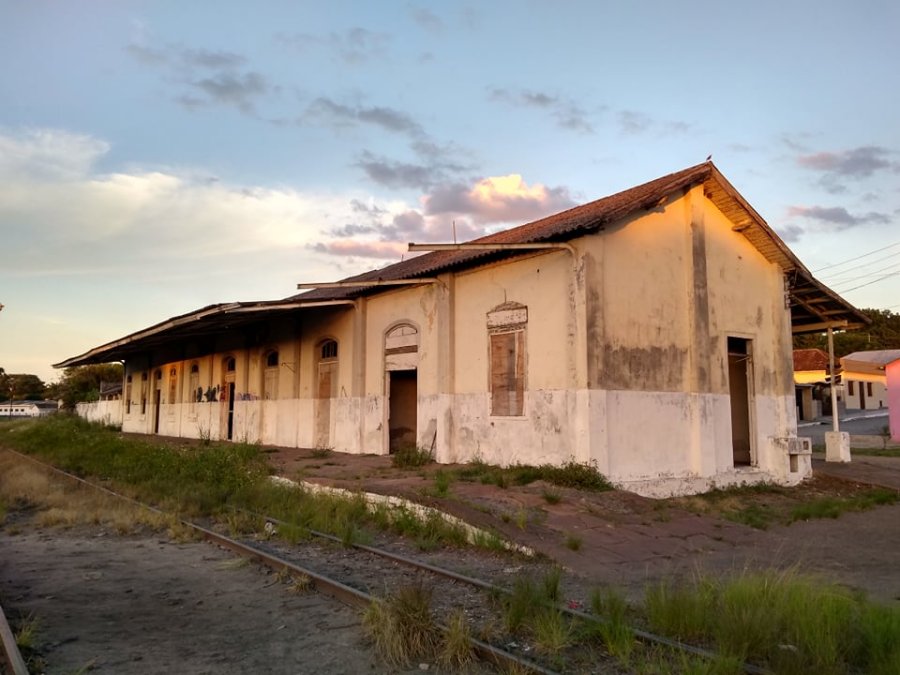
Today the tracks are still there, the station building looks abandoned.

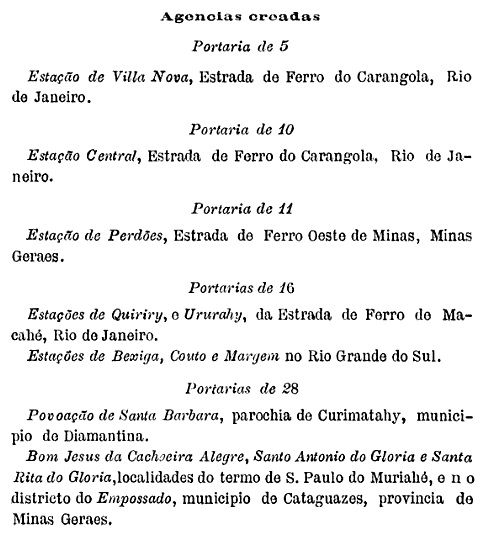
According to the postal bulletin (Boletim Postal) from October 1889, the station post office was opened in September 1889:

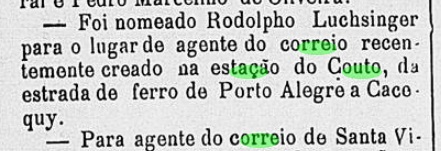
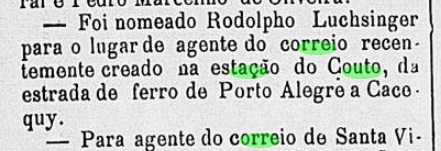
The first postal employee was soon introduced in the regional press:
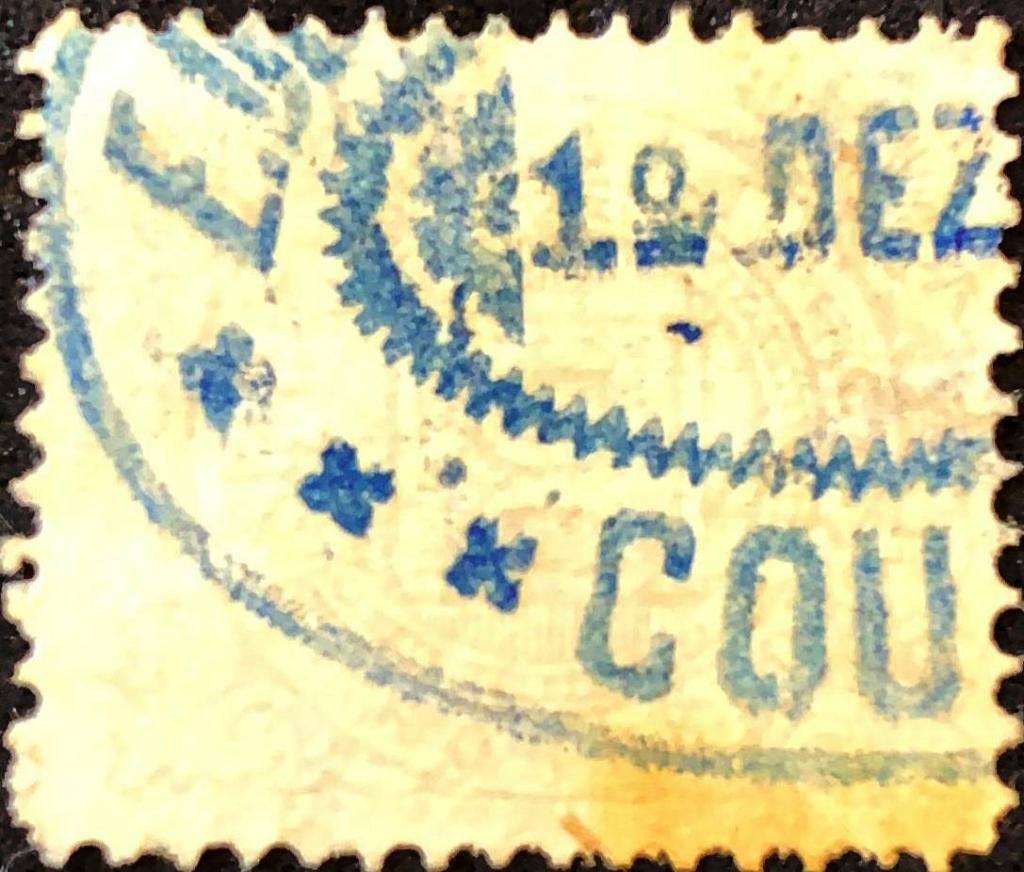
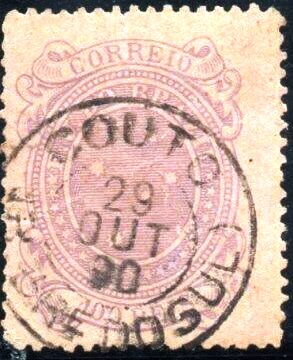
R. Koester writes in Carimbologia XIV, however, that the postal agency only started work in December, i.e. already in the Republic. His assessment is confirmed by the fact that the first postmark CRS-0130a (illustration from the Internet) does not yet show any dates from the imperial period:
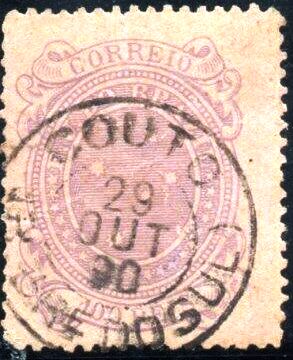
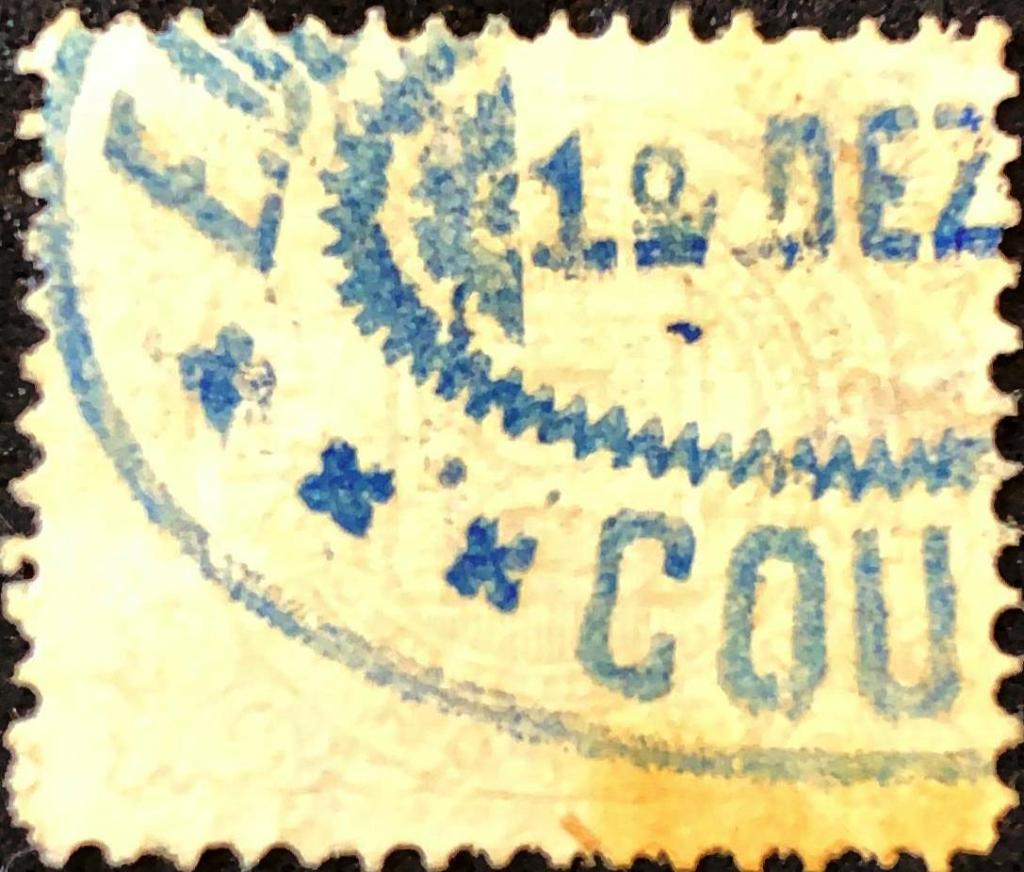
The Couto railway station is also known to have an ambulant postmark CRS-0130b (ill. Roberto Assef Jr.):
Andere Namen: Ramiz Galvão (1939)
Der Bahnhof Couto wurde im März 1883 von der Eisenbahngesellschaft E.F. Porto Alegre a Uruguayana eröffnet und lag am Westufer des Jacuí im Município de Rio Pardo, 150 km westlich der Provinzhauptstadt Porto Alegre. Die Bahnlinie ging 1898 an die Cie. Auxiliaire des Chemins de Fer au Brésil, 1920 an die Viação Férrea Rio Grande do Sul und gehörte von 1975 bis zu ihrer Schließung 1996 der Rede Ferroviária Federal S.A. (estacoesferroviarias.com.br). 1939 wurde der Bahnhof in Ramiz Galvão umbenannt, in Erinnerung an den in Rio Pardo geborenen Arzt, Philologen und Historiker Benjamin Ramiz Galvão (1846-1938).
Heute sind die Gleise noch da, das Bahnhofsgebäude wirkt verlassen.
Wie aus dem Postbulletin (Boletim Postal) vom Oktober 1889 hervorgeht, wurde das Bahnhofspostamt im September 1889 ins Leben gerufen:
Der erste Postangestellte wurde bald in der regionalen Presse vorgestellt:
R. Koester schreibt jedoch in Carimbologia XIV, dass die Postagentur erst im Dezember ihre Arbeit aufnahm, also bereits in der Republik. Seine Einschätzung wird dadurch bestätigt, dass der erste Poststempel CRS-0130a (Abb. aus dem Internet) noch keine Daten aus der Kaiserzeit aufweist:
Vom Bahnhof Couto ist auch der ambulante Poststempel CRS-0130b (Abb. Roberto Assef Jr.) bekannt:

 Carimbologia