Text updated on July 21, 2024
Other names: Bauru (1896)
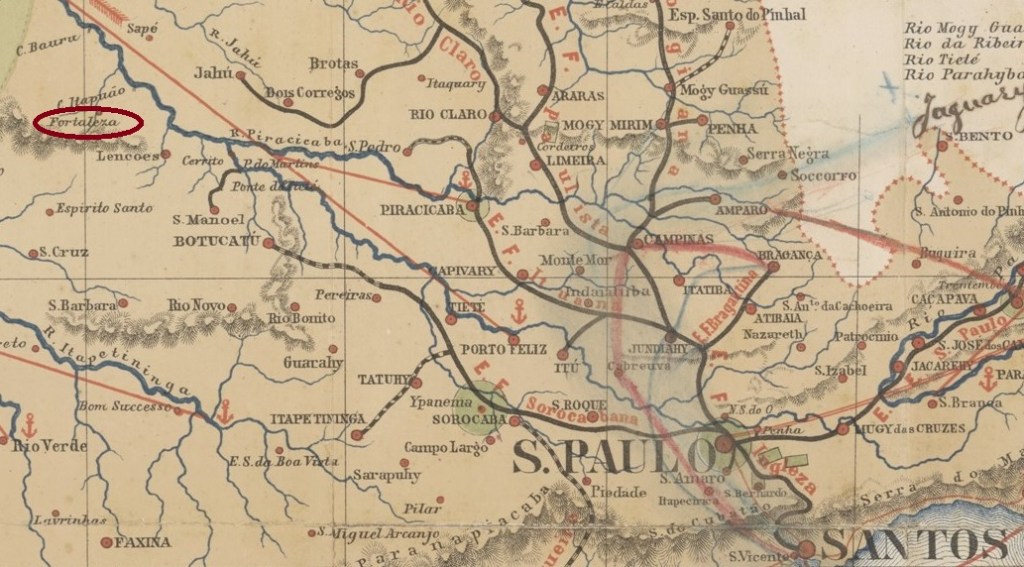
From April 1880, Espírito Santo da Fortaleza was a freguesia of the Vila de Lençóis on the south bank of the river Itapuão, 330 kilometres northwest of the provincial capital São Paulo. The village was elevated to a Vila in April 1887 and renamed Bauru in August 1896. Bauru has been a city since December 1906. The name from the Tupi-Guarani language can mean both wild waters and fruit basket (which seems less likely here).
As the press in Rio reported, there had been a post office there since June 1883:
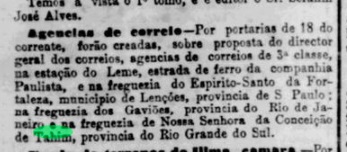
R. Koester writes in Carimbologia XVIII that the agency was closed in June 1900 and replaced by the nearby Borebi railway station post office. This is unlikely, as the Borebi railway station was only opened in 1917 by the E.F. Sorocabana railway company. The imperial postmark is ESP-0475a (illus. Carlos Aldir):

Andere Namen: Bauru (1896)
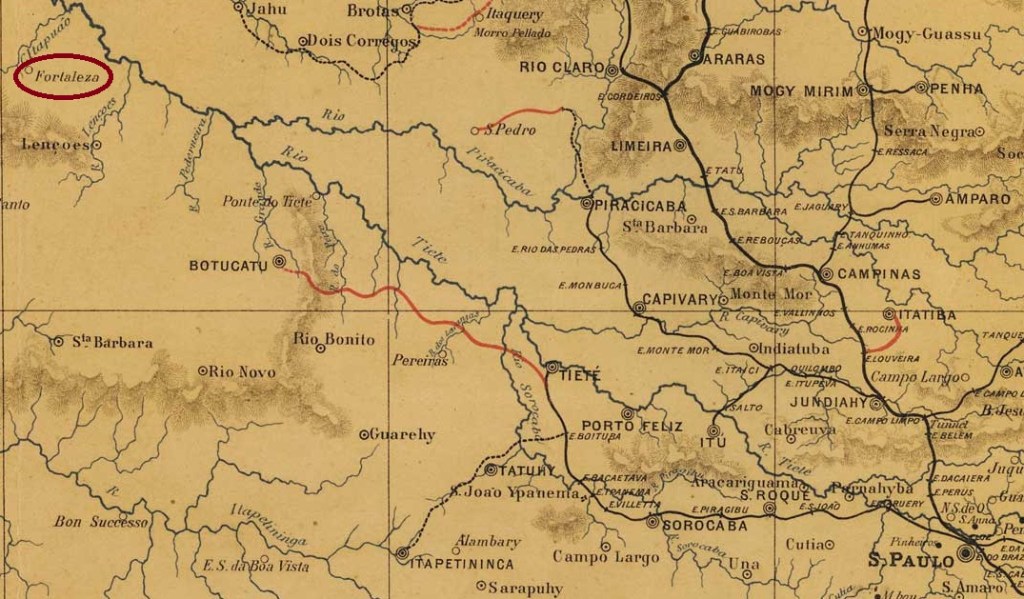
Seit April 1880 war Espírito Santo da Fortaleza eine Freguesia der Vila de Lençóis am Südufer des Flusses Itapuão, 330 km nordwestlich der Provinzhauptstadt São Paulo. Der Ort wurde im April 1887 zur Vila erhoben und im August 1896 in Bauru umbenannt. Seit Dezember 1906 ist Bauru eine Stadt. Der Name aus der Tupi-Guarani-Sprache kann sowohl wilde Gewässer als auch Fruchtkorb bedeuten (was hier weniger wahrscheinlich erscheint).
Wie die Presse in Rio berichtete, gab es dort seit Juni 1883 ein Postamt:
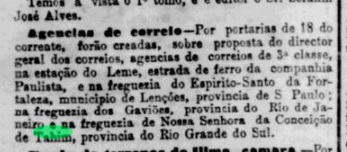
R. Koester schreibt in Carimbologia XVIII, dass die Agentur im Juni 1900 geschlossen und durch das nahe gelegene Bahnhofspostamt Borebi ersetzt wurde. Dies ist unwahrscheinlich, da der Bahnhof Borebi erst 1917 von der Eisenbahngesellschaft E.F. Sorocabana eingeweiht wurde. Der kaiserliche Poststempel ist ESP-0475a (Abb. Carlos Aldir):


 Carimbologia