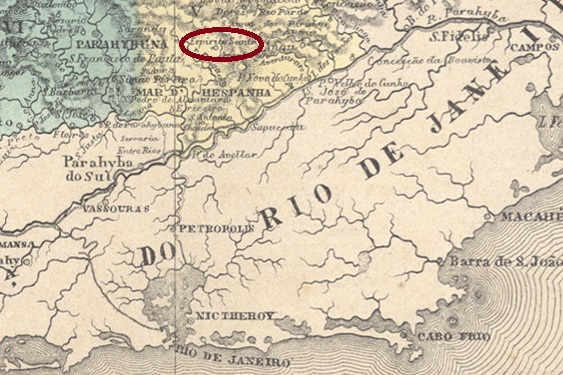
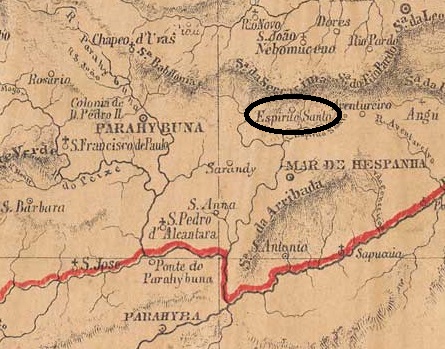
Other names: Espirito Santo do Guarará, Guarará (1891)
From 1839, Divino Espirito Santo was a distrito of the Vila de Barbacena, which lay 260 kilometres south of the provincial capital of Ouro Preto. In January 1868 it became a freguesia of the Vila de Mar d’Hespanha and in December 1890 an independent Vila. Since January 1891 it has been called Municipio Guarará. The name from the Tupi-Guarani language is said to refer to an indigenous drum.
Both Paula Sobrinho (História Postal de Minas Gerais, Belo Horizonte, 1997) and R. Koester (Carimbologia XVIII) write that there has been a post office there since April 1861. However, its creation was already reported as to February of that year by the Rio press:

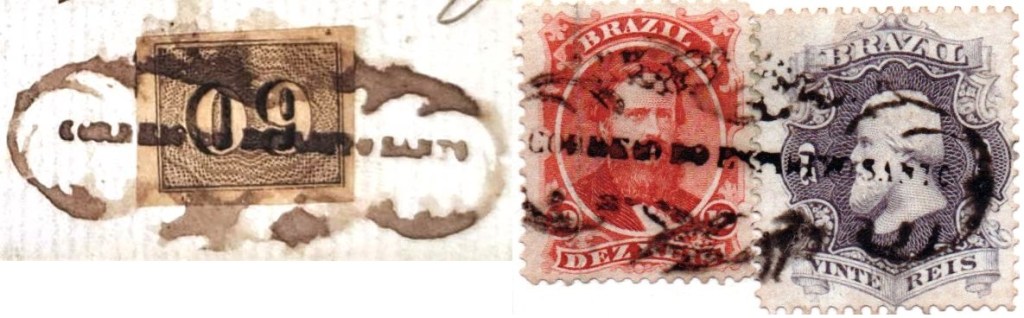
The oldest postmark is EMG-1145a (fig. C. Papazoglou and José A. Junges), which is often mistakenly assumed to be from the province of Espirito Santo:
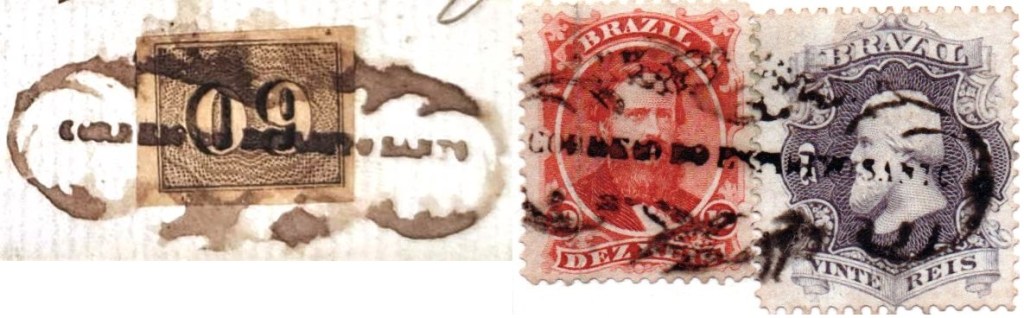
Its successor is EMG-1145b (image from the Internet):

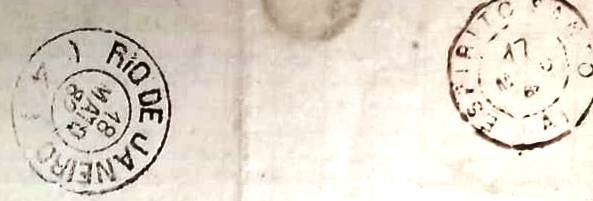
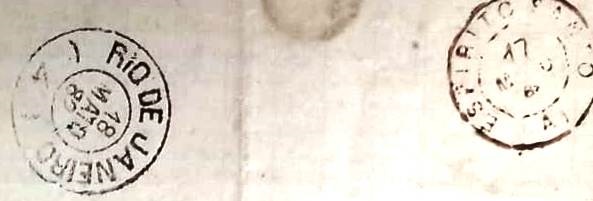
This postmark could also not be assigned for a very long time. Only thanks to a letter from the Fuad Ferreira Filho collection do we know that it comes from Espirito Santo do Mar d’Hespanha. The letter was written in 1882 in the neighbouring parish of S. Sebastião do Córrego do Meio and took one day to travel from Espirito Santo to Rio de Janeiro, as its postmarks tell us:
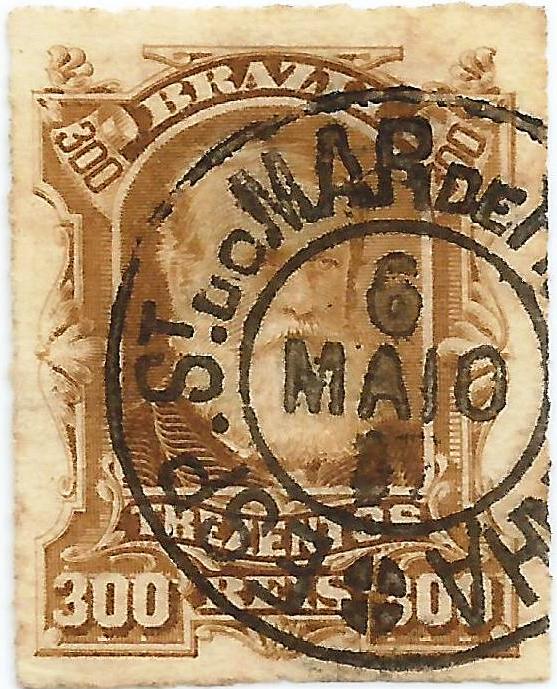
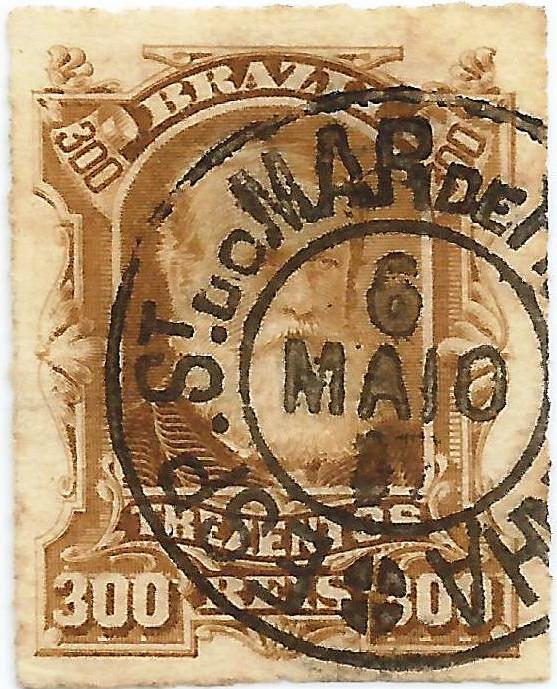
The last imperial postmark is EMG-1145c (Klerman Lopes collection):
Andere Namen: Espirito Santo do Guarará, Guarará (1891)
Seit 1839 war Divino Espirito Santo ein Distrito der Vila de Barbacena, 260 km südlich der Provinzhauptstadt Ouro Preto. Im Januar 1868 wurde es eine Freguesia der Vila de Mar d’Hespanha und im Dezember 1890 eine eigenständige Vila. Seit Januar 1891 heißt das Municipio Guarará. Der Name stammt aus der Tupi-Guarani-Sprache und soll eine indigene Trommel bezeichnen.
Sowohl Paula Sobrinho (História Postal de Minas Gerais, Belo Horizonte, 1997) als auch R. Koester (Carimbologia XVIII) schreiben, dass es dort seit April 1861 ein Postamt gab. Die Gründung wurde jedoch bereits zum Februar desselben Jahres in der Presse von Rio bekannt gegeben:

Der älteste Poststempel ist EMG-1145a (Abb. C. Papazoglou und José A. Junges), der oft fälschlicherweise für einen Stempel aus der Provinz Espirito Santo gehalten wird:
Sein Nachfolger ist EMG-1145b (Bild aus dem Internet):

Auch dieser Stempel konnte lange Zeit nicht zugeordnet werden. Erst durch einen Brief aus der Sammlung Fuad Ferreira Filho wissen wir, dass er aus Espirito Santo do Mar d’Hespanha stammt. Der Brief wurde 1882 in der Nachbargemeinde S. Sebastião do Córrego do Meio geschrieben und brauchte einen Tag von Espirito Santo nach Rio de Janeiro, wie die Poststempel belegen:
Es folgte EMG-1145c (Samml. Klerman Lopes):

 Carimbologia