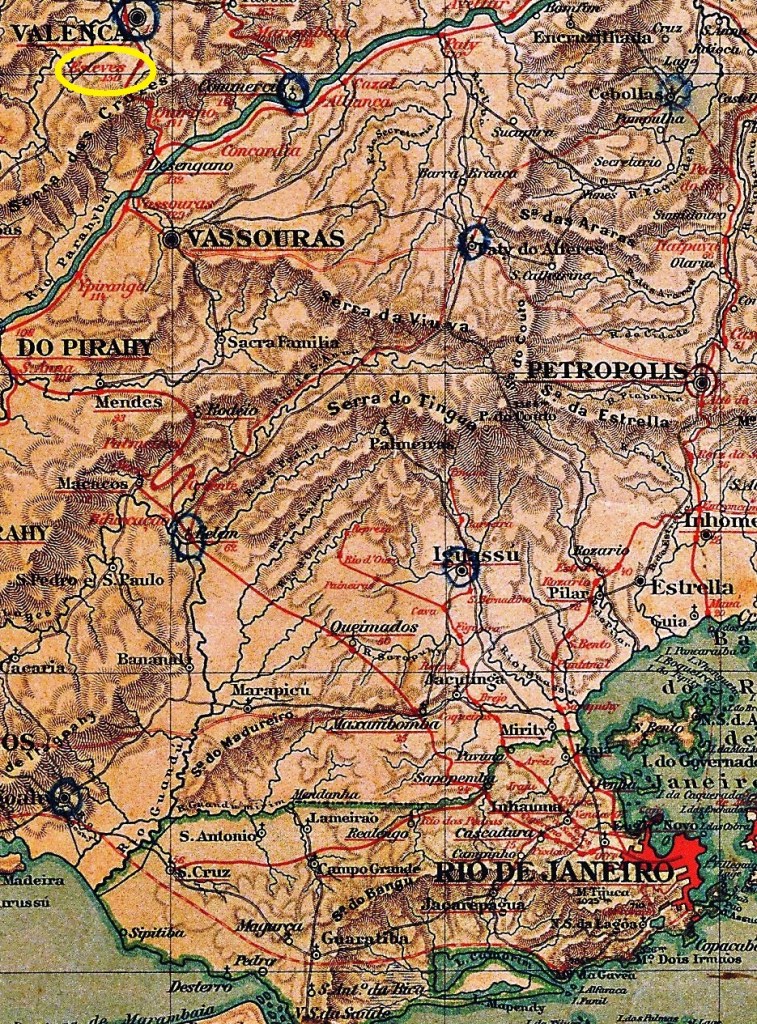
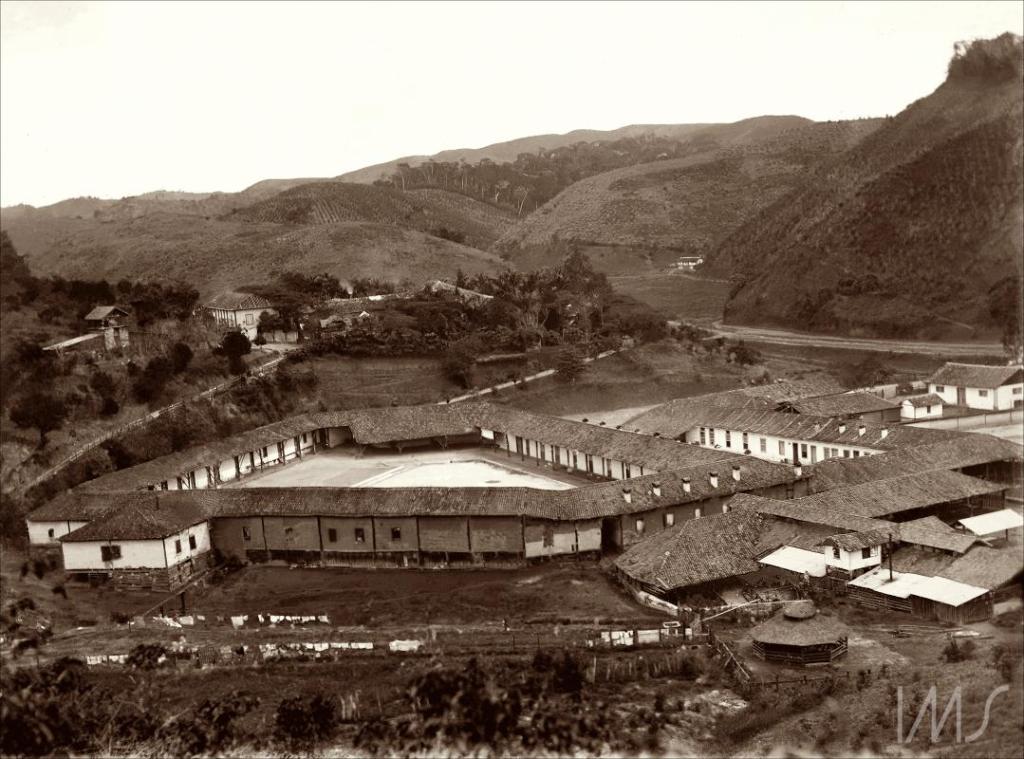
Esteves station was opened in May 1871 by the railway company E.F. União Valenciana (Jacutinga branch) in the Vila de Valença region, 150 km north-west of the capital Rio de Janeiro. The line belonged to E.F. Central do Brasil (estacoesferroviarias.com.br) from 1910 until its closure in 1970.
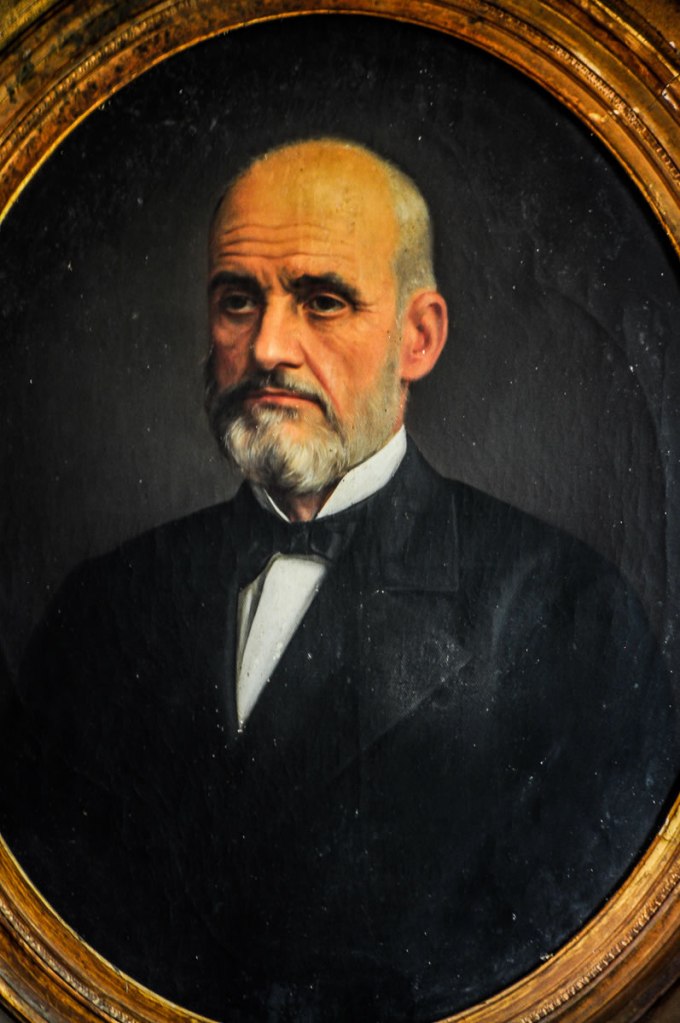
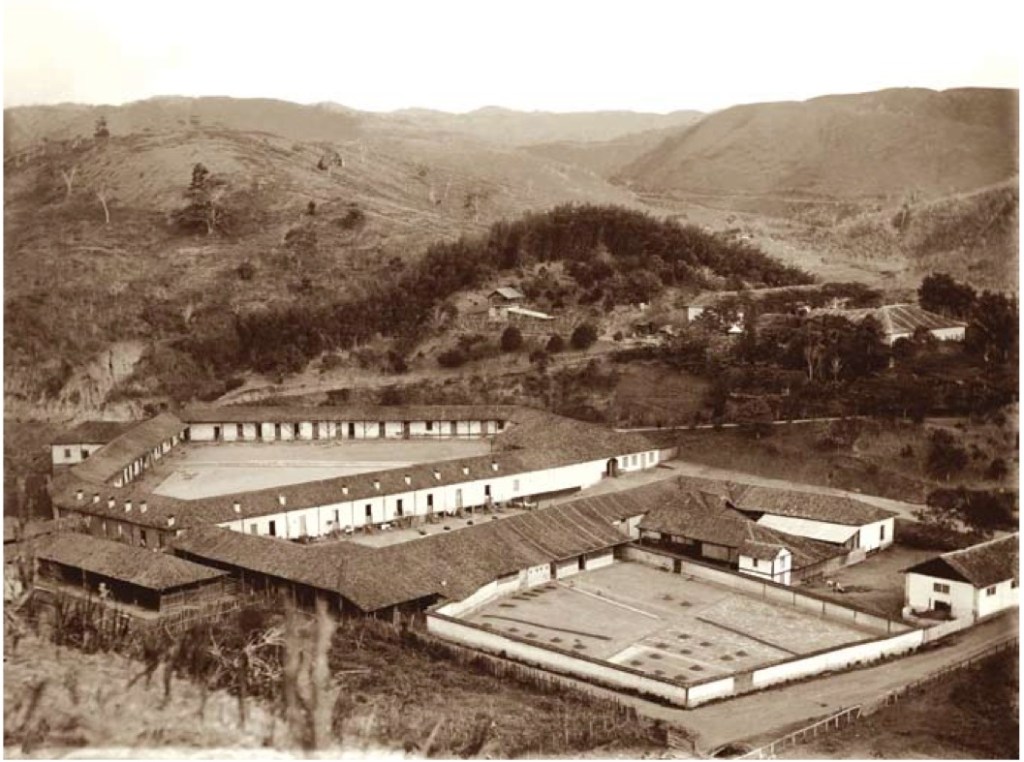
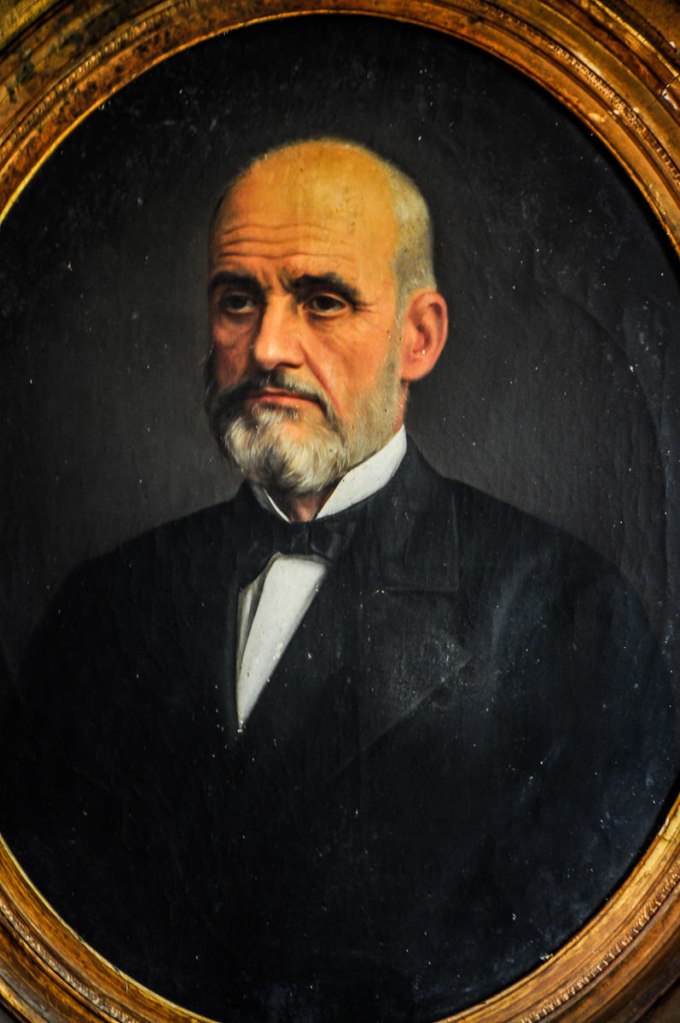
The station was named after the Portuguese coffee baron Manuel Antonio Esteves (1813-1879), whose Fazenda Santo Antonio do Paiol now belongs to a Catholic order of priests. Manuel Esteves not only had his railway station built, but also financed the construction of the railway line.
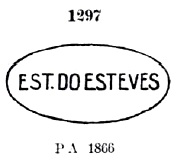
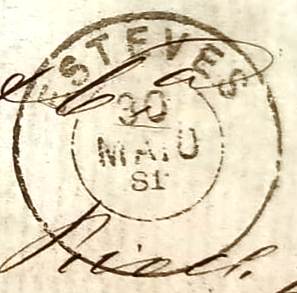
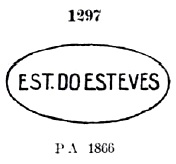
As Paulo Novaes writes on agenciaspostais.com.br, there was a post office at the railway station from October 1871. The oldest postmark is ERJ-0520a, also known from P. Ayres Catálogo de Carimbos Brasil-Império (S. Paulo, 1937, 1942) under no. 1297:
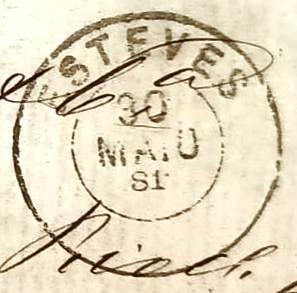
This was followed by ERJ-0520b (Abb. Márcio Duarte):
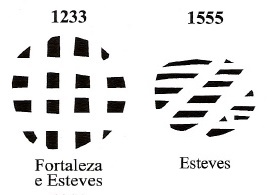
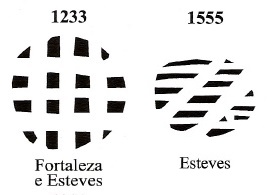
In Mute Cancellations of the Brazil Empire / Carimbos Mudos do Brasil Império (Brazil Philatelic Association, Rio de Janeiro, 2000), James Dingler and Klerman W. Lopes have also presented two mute cancellations of the station post office under the numbers 1233 and 1555:
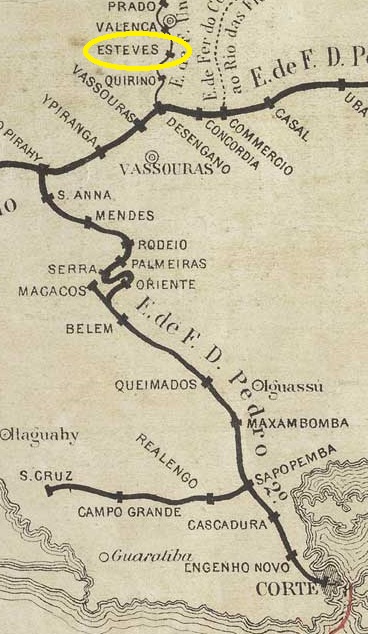
Der Bahnhof Esteves wurde im Mai 1871 von der Eisenbahngesellschaft E.F. União Valenciana (Abzweig Jacutinga) eröffnet und liegt in der Region Vila de Valença, 150 km nordwestlich der Hauptstadt Rio de Janeiro. Die Strecke gehörte von 1910 bis zu ihrer Stilllegung 1970 der E.F. Central do Brasil (estacoesferroviarias.com.br).
Benannt wurde der Bahnhof nach dem portugiesischen Kaffeebaron Manuel Antonio Esteves (1813-1879), dessen Fazenda Santo Antonio do Paiol heute einem katholischen Priesterorden gehört. Manuel Esteves ließ nicht nur seinen Bahnhof bauen, sondern finanzierte auch den Bau der Eisenbahnstrecke.
Wie Paulo Novaes auf agenciaspostais.com.br schreibt, gab es ab Oktober 1871 ein Postamt am Bahnhof. Der älteste Poststempel ist ERJ-0520a, auch bekannt durch P. Ayres Catálogo de Carimbos Brasil-Império (S. Paulo, 1937, 1942) mit Nr. 1297:
Es folgte ERJ-0520b (Abb. Márcio Duarte):
James Dingler und Klerman W. Lopes haben in Mute Cancellations of the Brazil Empire / Carimbos Mudos do Brasil Império (Brazil Philatelic Association, Rio de Janeiro, 2000) unter den Nummern 1233 und 1555 auch zwei stumme Abstempelungen des Bahnhofspostamtes vorgestellt:

 Carimbologia