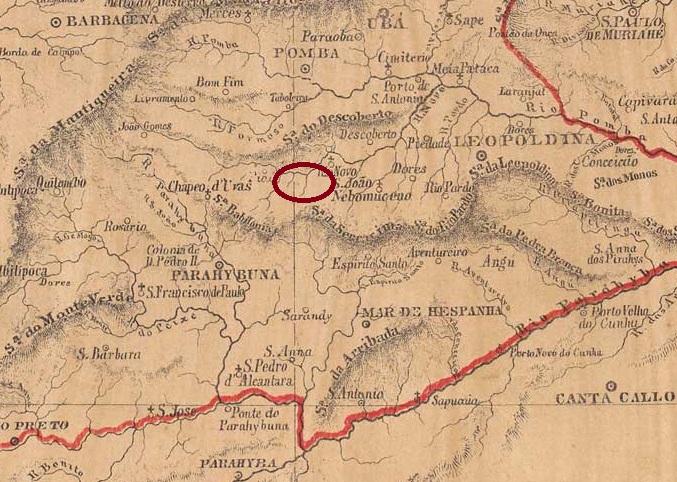
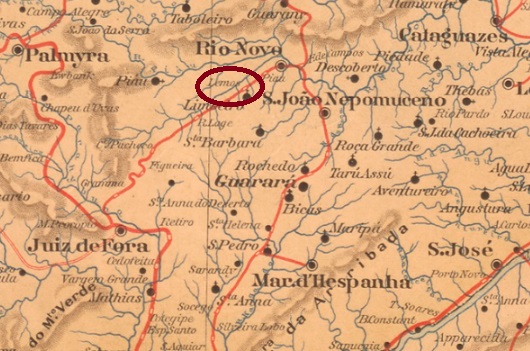
Other names: Fortaleza do Rio Novo, Assentamento Denis Gonçalves (2013)
Around 1811, the Fazenda da Fortaleza do Rio Novo was founded 230 kilometres south of the later provincial capital Ouro Preto. Shortly afterwards, it belonged to Lieutenant José Joaquim de Santana, a large landowner of the so-called Zona da Mata region, whose land holdings were estimated at up to 46 km2. After his death in April 1845, the estate – then known as Fortaleza de Sant’anna – passed to his widowed daughter Maria José, who later became Baroness de Santana.
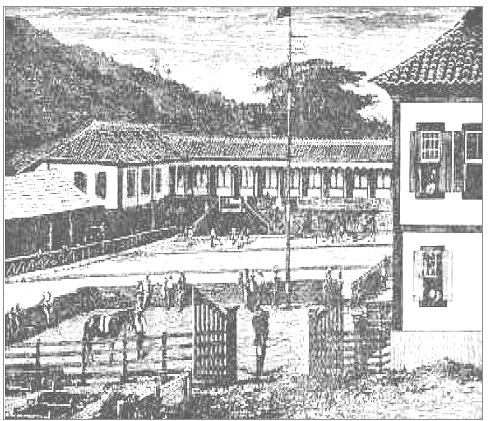
Maria José’s first-born son, Mariano Procópio Ferreira Lage (1821-1872), an aspiring politician, industrialist and entrepreneur, took over the fazenda and immediately integrated it into his main endeavour: the construction of a road from Rio de Janeiro to Minas Gerais through his own company, Cia. União e Industria.

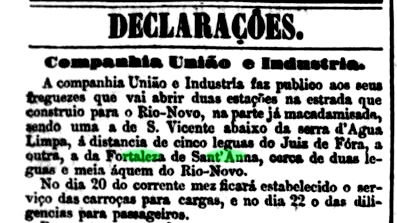
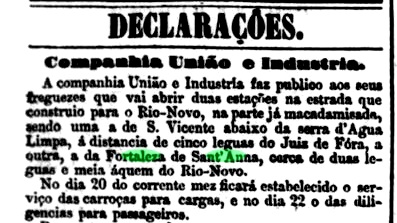
In October 1870, Cia. União e Industria announced the construction of an estação (carriage stop) on its road in Fortaleza de Sant’Anna (Juiz de Fora – Rio Novo Route):
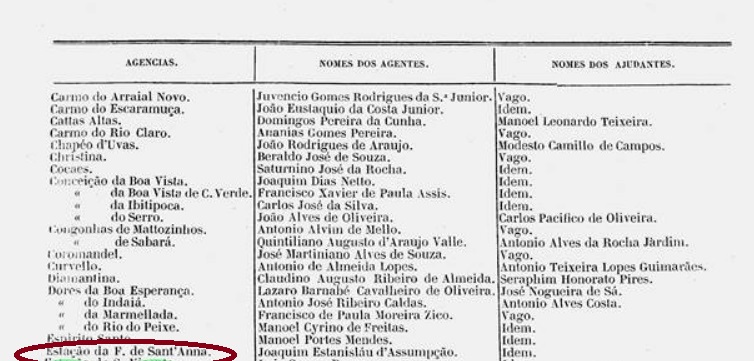
However, the early death of Ferreira Lage in 1872 signalled the decline of the fazenda and the road project. Nevertheless, shortly afterwards a still undiscovered post office was set up in Fortaleza de Sant’Anna on the important postal route from Ouro Preto to Rio de Janeiro. The regional press introduced the postal agent at the end of 1873:

The postal agency was not in operation for long, as it is not mentioned in the imperial postal guide (Guia Postal do Imperio, Rio de Janeiro, 1880). No postmark of the Fortaleza de Sant’Anna has yet been seen; it must be very rare, if it exists at all.
The proud road construction project of the Cia. União e Industria has been forgotten since the appearance of the E.F. de Juiz de Fora e Piau railway line. Two railway stations on this line remember the ruling family from the fazenda: Sant’Anna (later Faria Lemos, latterly Ferreira Lage, see FMG-0970) and Campello (formerly Capim, later Goianá, see CMG-0500).
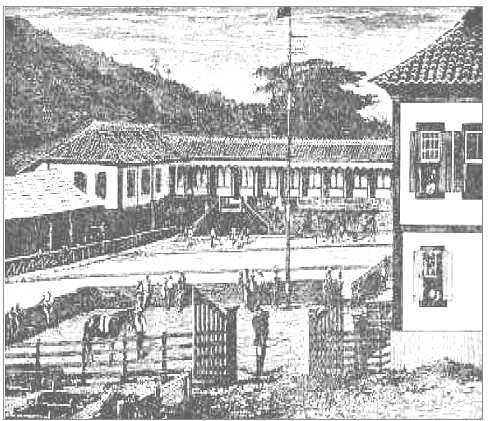
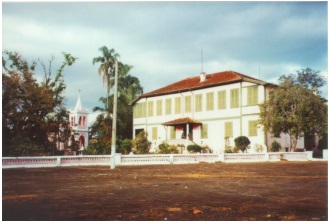
The Fazenda da Fortaleza de Sant’Anna also experienced a long decline due to the end of the coffee industry in the region, debts and decades of inheritance disputes. The main building was still good-looking in 2000:
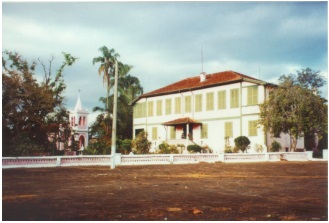
The following year, a fire destroyed the main building in the Município Goianá. From 2010, the former fazenda, which is now spread over 4 municípios, was occupied by landless farmers from the Movimento dos Sem-Terras (MST). Today, around 300 families live on the formerly fallow farmland. The settlement is now called Assentamento Denis Gonçalves, in memory of a young MST farmer who died in an accident.
Andere Namen: Fortaleza do Rio Novo, Assentamento Denis Gonçalves (2013)
Um 1811 wurde 230 km südlich der späteren Provinzhauptstadt Ouro Preto die Fazenda da Fortaleza do Rio Novo gegründet. Sie gehörte kurz darauf dem Leutnant José Joaquim de Santana, einem Großgrundbesitzer der sogenannten Zona da Mata, dessen Landbesitz auf bis zu 46 km2 geschätzt wurde. Nach seinem Tod im April 1845 ging das Gut – nun unter dem Namen Fortaleza de Sant’anna – an seine bereits verwitwete Tochter Maria José, die spätere Baronin von Santana, über.
Maria Josés erstgeborener Sohn, Mariano Procópio Ferreira Lage (1821-1872), ein aufstrebender Politiker, Industrieller und Unternehmer, übernahm die Fazenda und integrierte sie sofort in sein Hauptanliegen: den Bau einer Fernstraße von Rio de Janeiro nach Minas Gerais durch seine eigene Firma Cia. União e Industria.

Im Oktober 1870 kündigte die Cia. União e Industria die Einrichtung einer Haltestelle an ihrer Fernstraße in Fortaleza de Sant’Anna (Strecke Juiz de Fora – Rio Novo) an:
Der frühe Tod von Ferreira Lage im Jahre 1872 leitete jedoch den Niedergang der Fazenda und des Straßenprojekts ein. Immerhin wurde kurz darauf in Fortaleza de Sant‘Anna an der wichtigen Postroute von Ouro Preto nach Rio de Janeiro ein Postamt eingerichtet, von dem bisher nirgendwo zu lesen war. Die regionale Presse stellte den Postagenten Ende 1873 vor:
Die Postagentur war nicht lange in Betrieb, da sie im kaiserlichen Postführer (Guia Postal do Imperio, Rio de Janeiro, 1880) nicht erwähnt wird. Bisher wurde noch kein Poststempel der Fortaleza de Sant’Anna gesehen, er muss sehr selten sein, wenn er überhaupt existiert.
Das stolze Straßenbauprojekt der Cia. União e Industria ist seit der Inbetriebnahme der Eisenbahnlinie E.F. de Juiz de Fora e Piau in Vergessenheit geraten. Zwei Bahnhöfe an dieser Strecke erinnern an die Herrscherfamilie der Fazenda: Sant’Anna (später Faria Lemos, zuletzt Ferreira Lage, siehe FMG-0970) und Campello (früher Capim, später Goianá, siehe CMG-0500).
Auch die Fazenda da Fortaleza de Sant’Anna erlebte einen langen Niedergang, bedingt durch das Ende der Kaffeewirtschaft in der Region, Schulden und jahrzehntelange Erbstreitigkeiten. Das Hauptgebäude war im Jahr 2000 noch ansehnlich:
Im folgenden Jahr zerstörte ein Brand das Hauptgebäude im Município Goianá. Ab 2010 wurde die ehemalige Fazenda, deren Areal sich heute auf 4 Municípios verteilt, von landlosen Bauern des Movimento dos Sem-Terras (MST) besetzt. Heute leben ca. 300 Familien auf dem ehemals brachliegenden Hofgelände. Die Siedlung heißt nun Assentamento Denis Gonçalves, in Erinnerung an einen verunglückten Bauernjungen des MST.

 Carimbologia