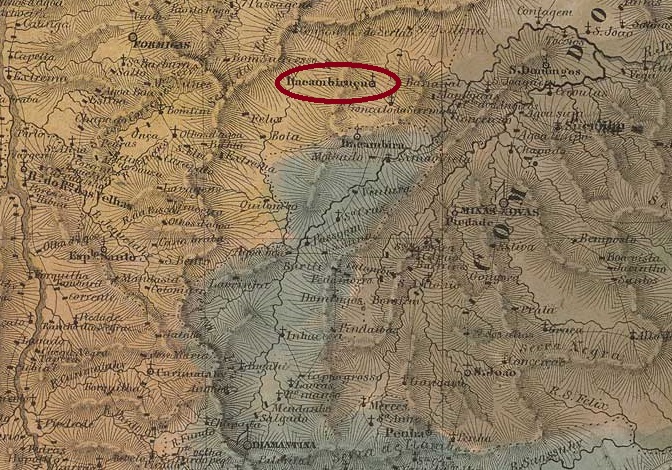
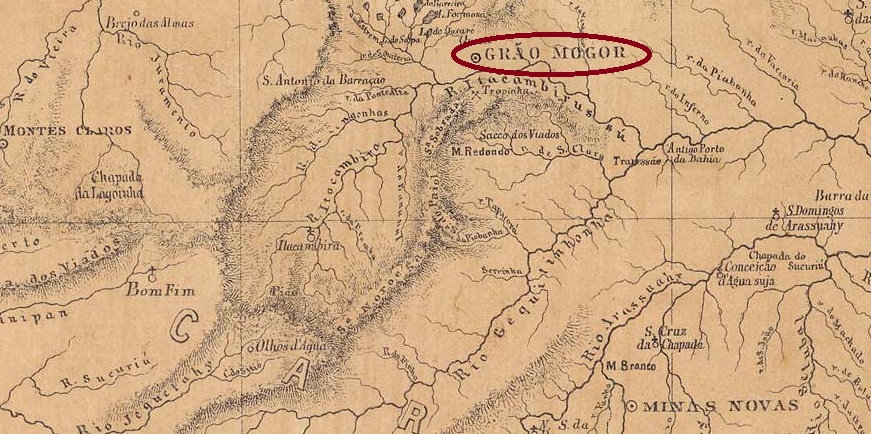
Other names: Serrinha, Sto. Antonio do Itacambirussú da Serra do Grão Mogor, Grão Mogol
The village was called Serrinha from around 1781, belonged to the Vila do Príncipe (later: Serro) and was located on the west bank of the Ribeirão do Inferno, 660 km north of the later provincial capital Ouro Preto. In April 1840, it was granted to the Vila de Montes Claros as a freguesia with the impressive name of Santo Antonio do Itacambirassu da Serra de Grão Mogol. In March 1849, Grão Mogor became an independent Vila and in May 1858 a town, which today is spelt Grão Mogol.
The reasons for this place name are not officially documented. However, as the region was known and sought after for its large diamond deposits (around 1890, the population was around twice as high as it is today), a connection with the legendary diamond Great Mogul, which was found in India around 1650, is obvious.
Two dates have been found for the creation of the local post office: Both Paula Sobrinho (História Postal de Minas Gerais, Belo Horizonte, 1997) and R. Koester (Carimbologia XX) give January 1846, but the Directory of Imperial Post Offices (Tabella das Agencias do Correio do Imperio, Rio de Janeiro, 1885) gives the year 1845.
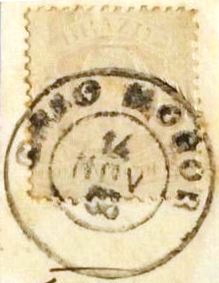
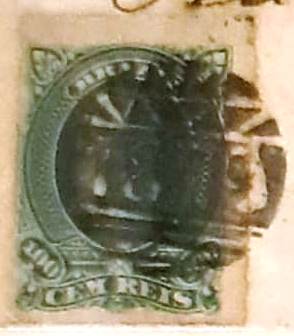
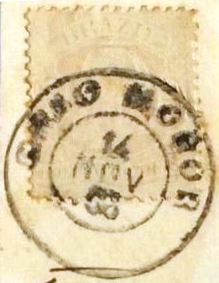
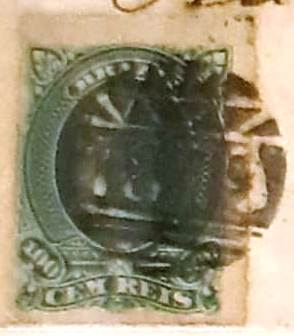
Unfortunately, the oldest postmark to date is not the first. GMG-1270b (illustration from the Internet) is known with dates from 1878 to at least 1894:
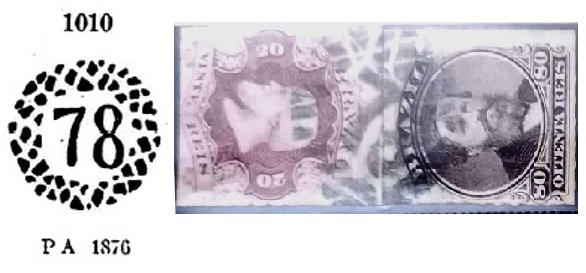
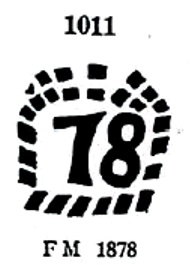
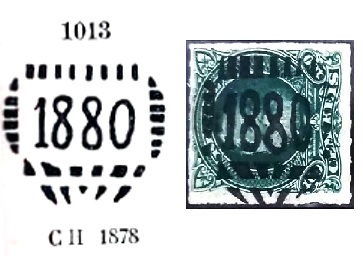
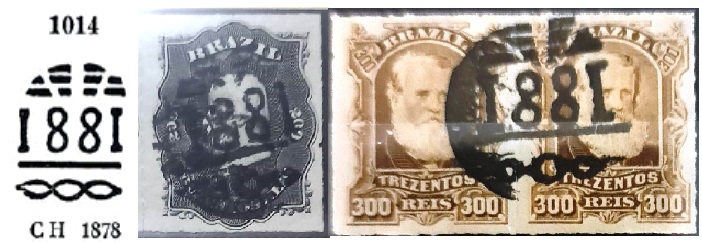
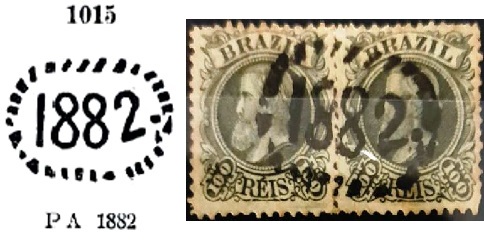
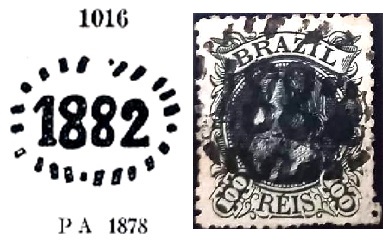
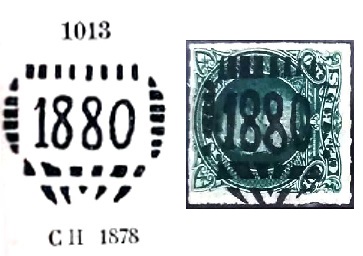
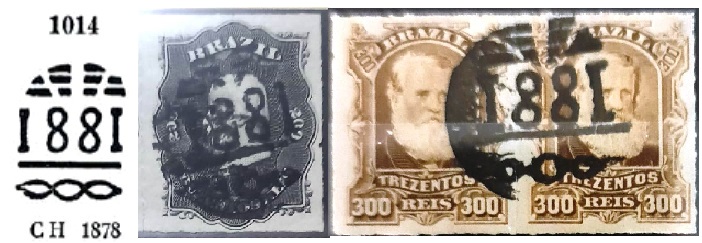
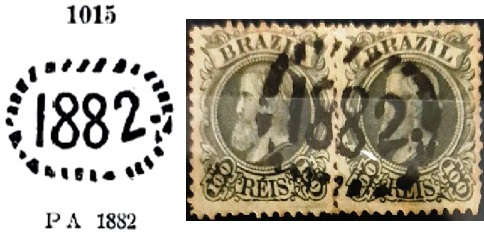
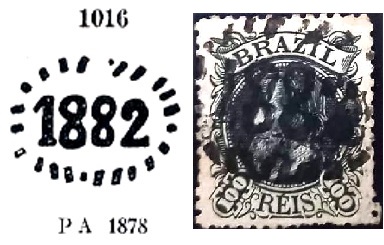
Grão Mogor produced a beautiful series of not so mute cancellations, that indicate the respective year of use:
Andere Namen: Serrinha, Sto. Antonio do Itacambirussú da Serra do Grão Mogor, Grão Mogol
Der Ort hieß ab ca. 1781 Serrinha, gehörte zur Vila do Príncipe (später: Serro) und lag am Westufer des Ribeirão do Inferno, 660 km nördlich der späteren Provinzhauptstadt Ouro Preto. Im April 1840 wurde sie der Vila de Montes Claros als Freguesia mit dem eindrucksvollen Namen Santo Antonio do Itacambirassu da Serra de Grão Mogol zugesprochen. Im März 1849 wurde Grão Mogor eine unabhängige Vila und im Mai 1858 eine Stadt, die heute Grão Mogol geschrieben wird.
Die Gründe für diesen Ortsnamen sind nicht offiziell belegt. Da die Region jedoch für ihre großen Diamantenvorkommen bekannt und begehrt war (um 1890 war die Einwohnerzahl etwa doppelt so hoch wie heute), liegt ein Zusammenhang mit dem legendären Diamanten Großmogul nahe, der um 1650 in Indien gefunden wurde.
Für die Gründung des örtlichen Postamtes sind zwei Daten gefunden worden: Sowohl Paula Sobrinho (História Postal de Minas Gerais, Belo Horizonte, 1997) als auch R. Koester (Carimbologia XX) geben Januar 1846 an, das Verzeichnis der kaiserlichen Postämter (Tabella das Agencias do Correio do Imperio, Rio de Janeiro, 1885) nennt jedoch das Jahr 1845.
Der bisher älteste Poststempel ist leider nicht der erste. GMG-1270b (Abb. aus dem Internet) ist mit Daten von 1878 bis mindestens 1894 bekannt:
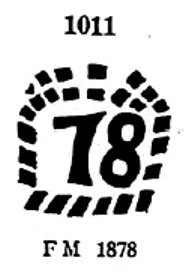
Aus Grão Mogor stammt eine schöne Reihe von halbstummen Stempeln, die auf das jeweilige Verwendungsjahr hinweisen:


 Carimbologia