Other names: Parahyba
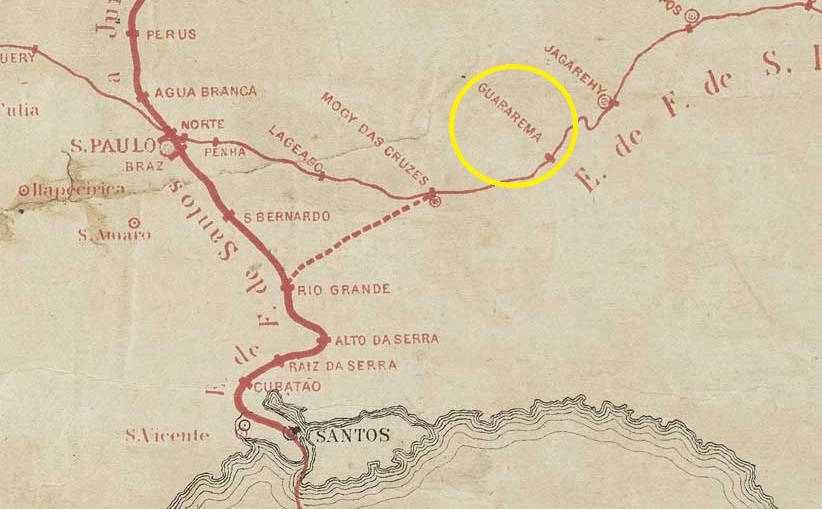
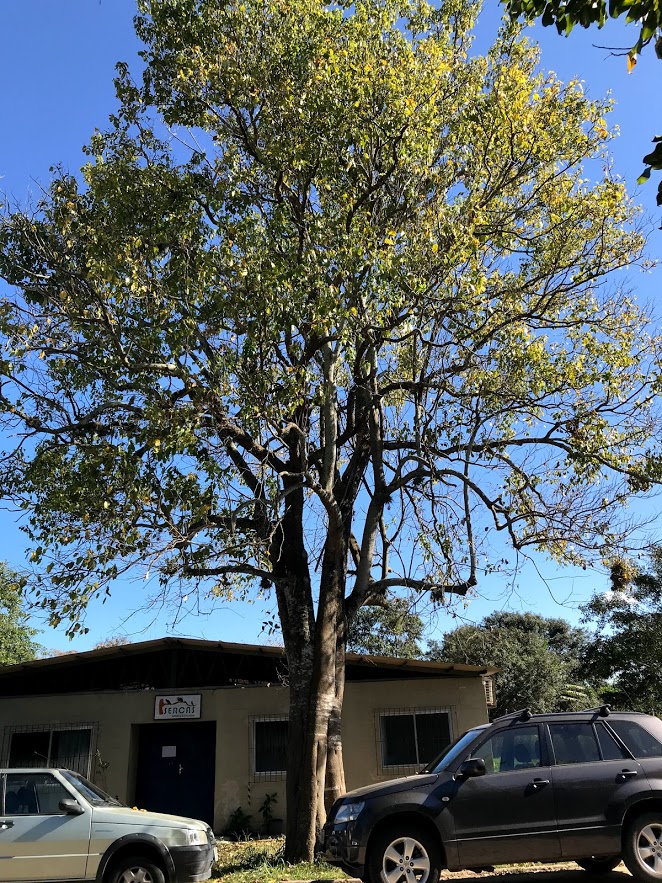
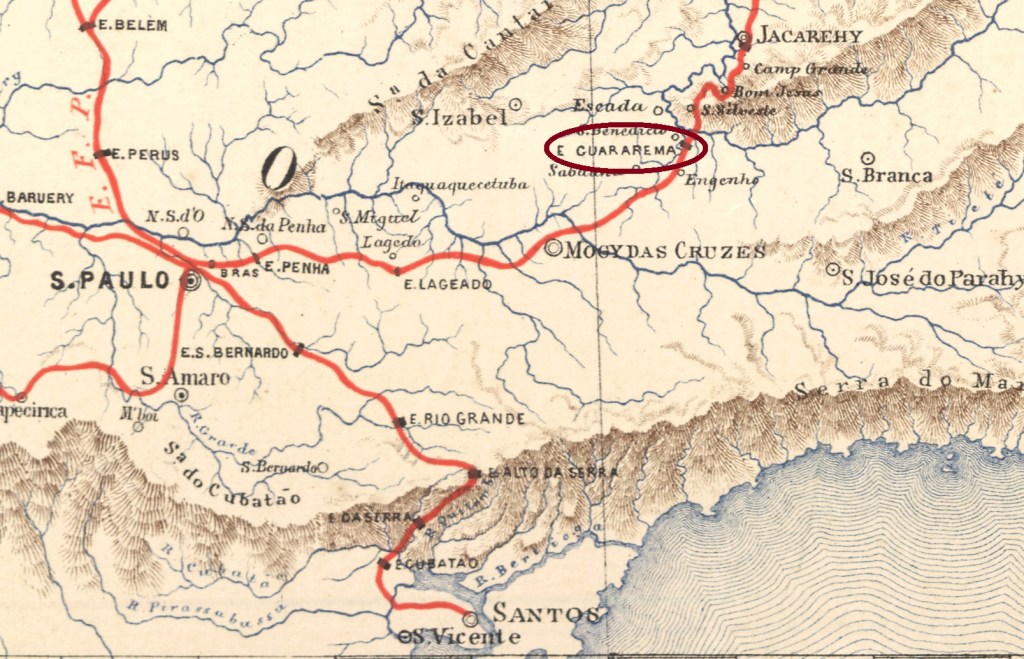
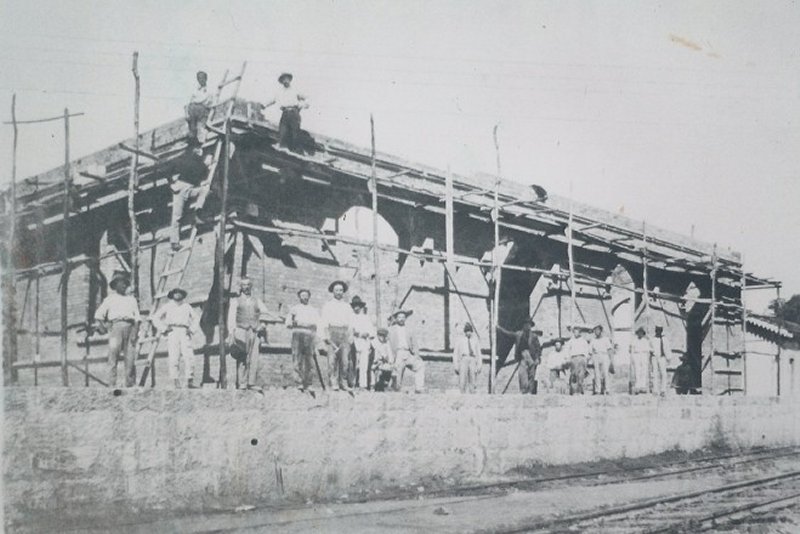
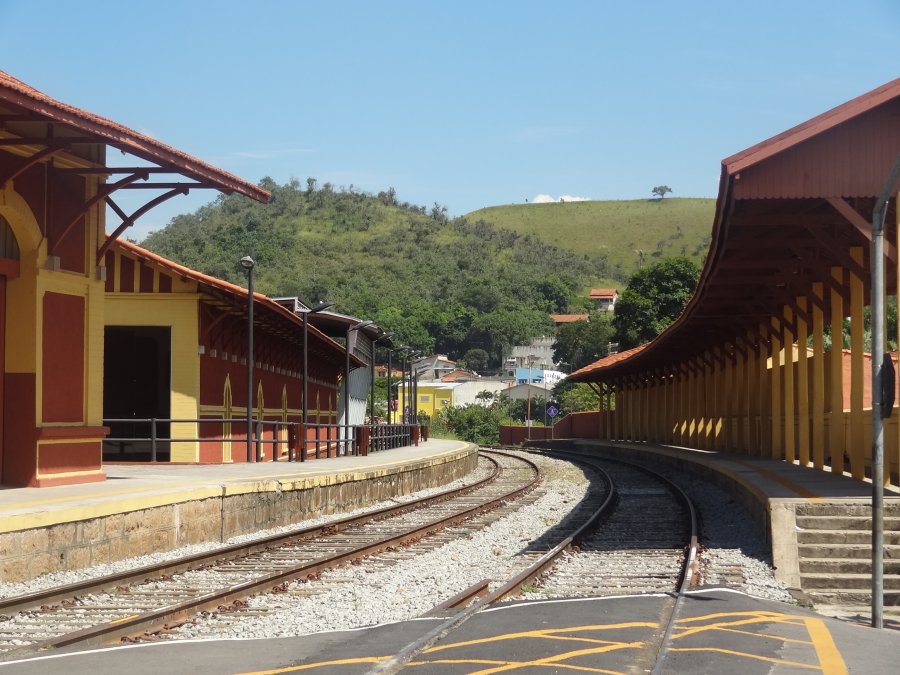
Opened in April 1876 by the E.F. do Norte railway company, the station was originally called Parahyba and was located on the south bank of the river of the same name in the Vila de Mogi das Cruzes region, 80 km east of the provincial capital of São Paulo. A year later, the station was renamed Guararema, the name comes from the Tupi and means stinking tree. This refers to the garlic tree or Pau d’Alho (Gallesia integrifolia, Spreng.), which is now the town’s landmark:
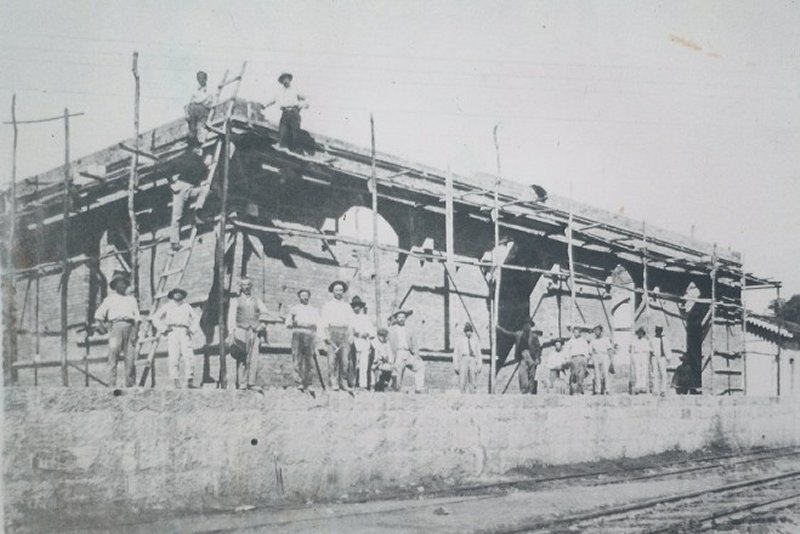
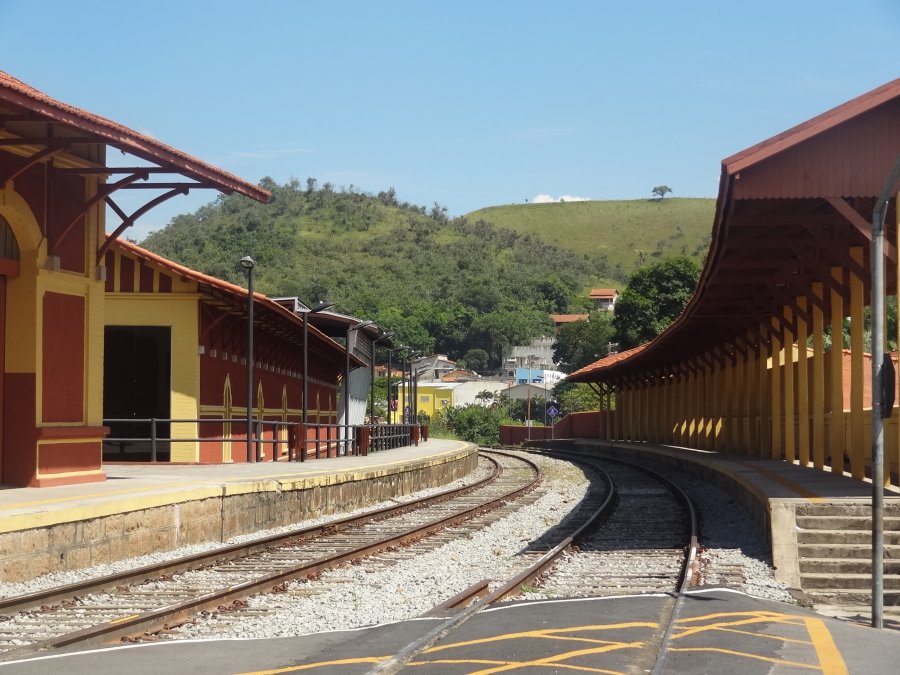
The railway line was taken over by E.F. Central do Brasil in 1889 and belonged to Rede Ferroviária Federal S.A. from 1975 to 1998 (estacoesferroviarias.com.br). Today, the tracks still exist and the station building serves as a local history museum for the municipality of Guararema, which was created in June 1898.
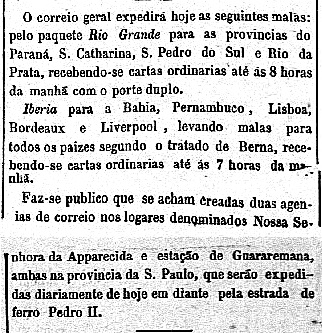
Three dates of creation have been found for the station post office. The first in September 1877, as reported in the regional press:

The Rio press reported on a new post office in Guararema station the following December:
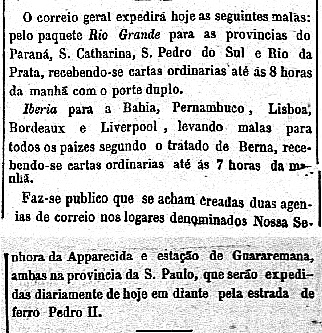
The third opening date was announced in August 1879 and confirmed by the Imperial Postal Guide (Guia Postal do Imperio, Rio de Janeiro, 1880):

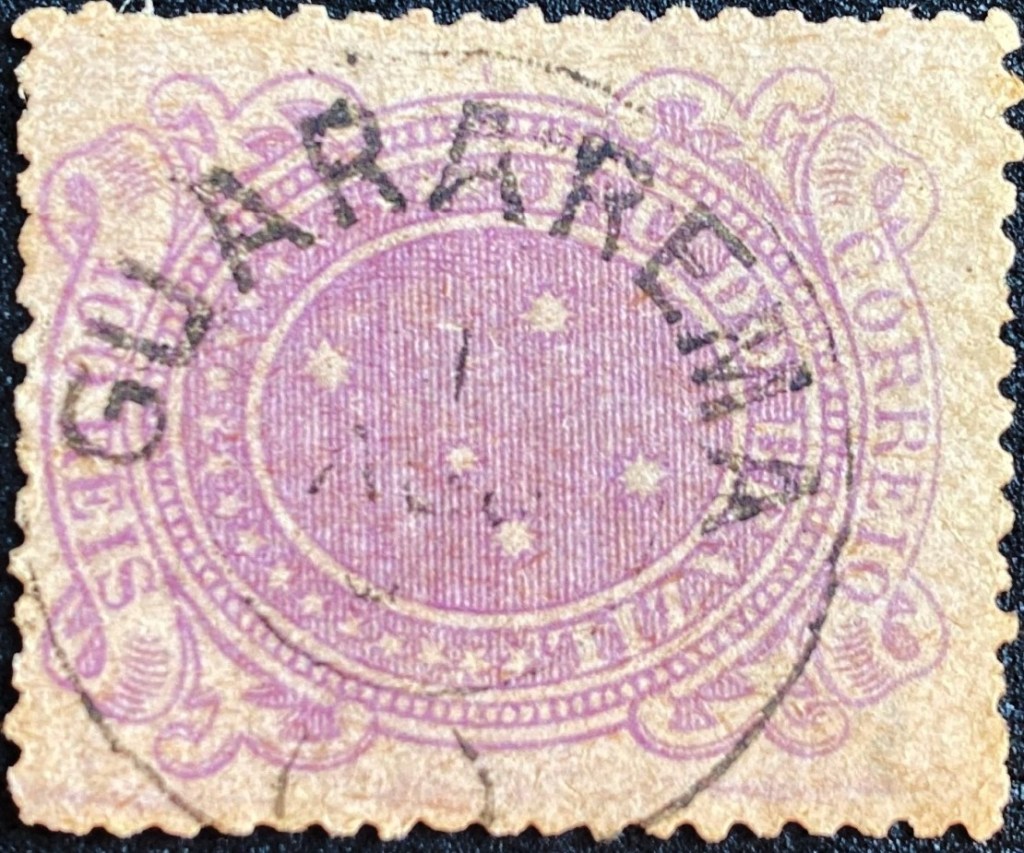
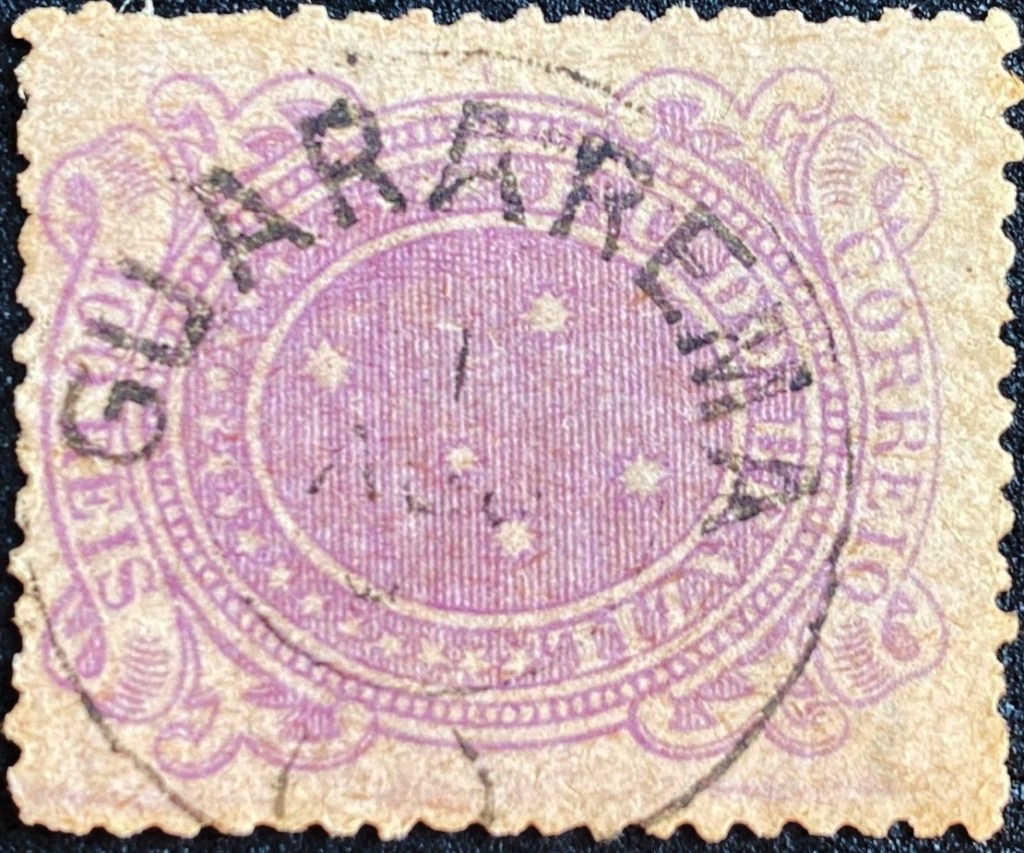
It follows from this that the post office at the railway station was closed at least once in the meantime. The oldest postmark to date is the French type GSP-0565a (Klerman W. Lopes collection):

It was followed at the beginning of the Republic by GSP-0565b (fig. Felipe Piccinini):
Andere Namen: Parahyba
Der im April 1876 von der Eisenbahngesellschaft E.F. do Norte eröffnete Bahnhof hieß ursprünglich Parahyba und lag am Südufer des gleichnamigen Flusses in der Region Vila de Mogi das Cruzes, 80 km östlich der Provinzhauptstadt São Paulo. Ein Jahr später wurde die Station in Guararema umbenannt, der Name stammt aus dem Tupi und bedeutet stinkender Baum. Gemeint ist der Knoblauchbaum oder Pau d’Alho (Gallesia integrifolia, Spreng.), der heute das Wahrzeichen des Ortes ist:

Die Bahnlinie wurde 1889 von der E.F. Central do Brasil übernommen und gehörte von 1975 bis 1998 der Rede Ferroviária Federal S.A. (estacoesferroviarias.com.br). Heute sind die Gleise noch vorhanden, das Bahnhofsgebäude dient als Heimatmuseum der seit Juni 1898 bestehenden Gemeinde Guararema.
Für das Bahnhofspostamt wurden drei Entstehungsdaten gefunden. Das erste im September 1877, wie die regionale Presse berichtete:

Die Presse von Rio berichtete im darauffolgenden Dezember über ein neues Postamt in Guararema:
Der dritte Eröffnungstermin wurde im August 1879 bekannt gegeben und vom Kaiserlichen Postführer bestätigt (Guia Postal do Imperio, Rio de Janeiro, 1880):

Daraus folgt, dass das Postamt am Bahnhof zwischenzeitlich mindestens einmal geschlossen war. Der bisher älteste Poststempel ist der französische Typ GSP-0565a (Samml. Klerman W. Lopes):

Ihm folgte zu Beginn der Republik GSP-0565b (Abb. Felipe Piccinini):

 Carimbologia