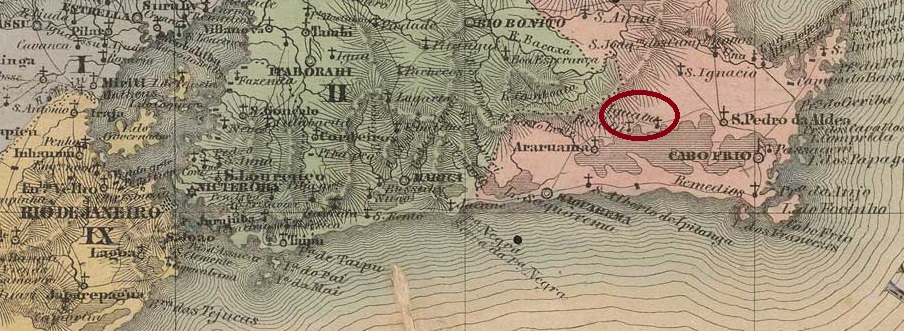
The settlement of N. Sra da Conceição da Iguaba Grande has existed since around 1795. It belonged to the Freguesia de S. Pedro da Aldeia in the Vila de Cabo Frio area and was located on the northern shore of Lake Araruama, 130 kilometres east of the capital Rio de Janeiro. In 1890, the village was incorporated into the newly founded Município de Sapiatiba and in June 1954 became a district of the Município de S. Pedro da Aldeia. Iguaba Grade has been an independent município since June 1995.
As Nova Monteiro writes in Administrações e Agencias Postaes do Brasil Imperio (Brasil Filatelico/RJ, 1934-5; reprint SPP 1994-1999), there was a post office there since July 1855. The first postmark is IRJ-1045a, which also exists in red and dark violet and which was given the no. 1314 by P. Ayres in Catálogo de Carimbos Brasil-Império (S. Paulo, 1937, 1942):

This was followed by IRJ-1045b (fig. agenciaspostais.com.br):
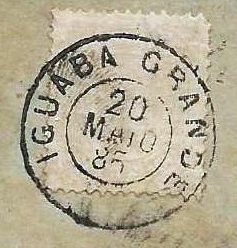
It was followed by IRJ-1045c (illus. from the internet):
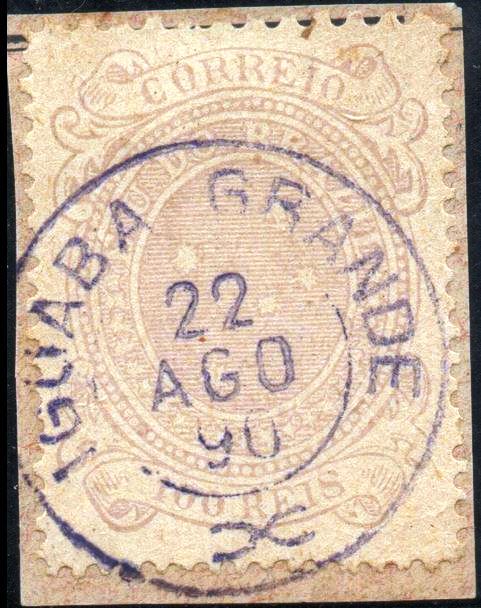
Two postmarks with the imperial seal were found from there. The first is IRJ-1045d (fig. R. Koester in Carimbologia XXII – Marcio Duarte)

The second is IRJ-1045e (fig. Koester):

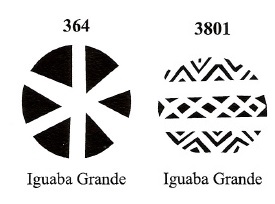
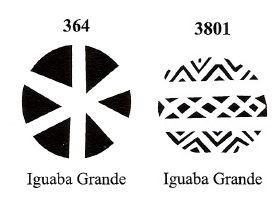
James Dingler and Klerman W. Lopes have included two mute cancellations from Iguaba Grande in Mute Cancellations of the Brazil Empire/ Carimbos Mudos do Brasil Império (Brazil Philatelic Association, Rio de Janeiro, 2000):
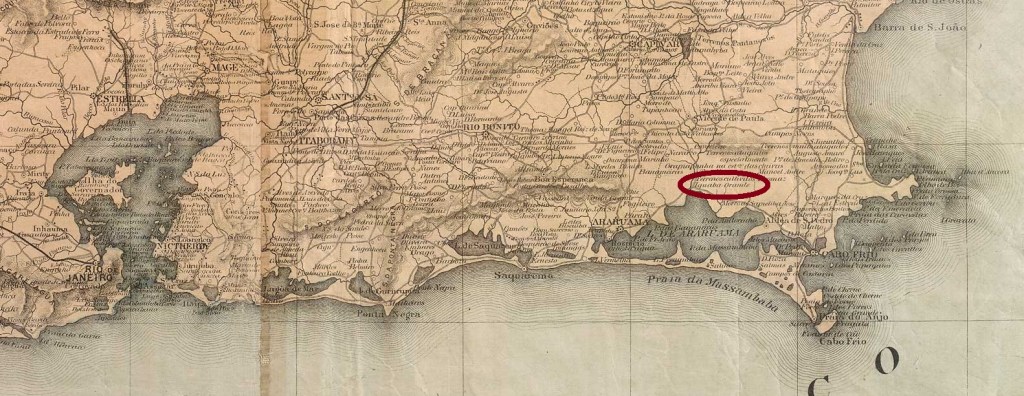
Die Siedlung N. Sra da Conceição da Iguaba Grande bestand seit ca. 1795. Sie gehörte zur Freguesia de S. Pedro da Aldeia im Gebiet der Vila de Cabo Frio und lag am Nordufer des Araruama-Sees, 130 km östlich der Hauptstadt Rio de Janeiro. Im Jahre 1890 wurde der Ort in das neu gegründete Município de Sapiatiba eingegliedert und im Juni 1954 ein Distrito des Município de S. Pedro da Aldeia. Seit Juni 1995 ist Iguaba Grade ein selbständiges Município.
Wie Nova Monteiro in Administrações e Agencias Postaes do Brasil Imperio (Brasil Filatelico/RJ, 1934-5; Reprint SPP 1994-1999) schreibt, gab es dort ein Postamt seit Juli 1855. Der erste Poststempel ist IRJ-1045a, den es auch in rot und dunkelviolett gibt und der von P. Ayres in Catálogo de Carimbos Brasil-Império (S. Paulo, 1937, 1942) die Nr. 1314 erhielt:

Es folgte IRJ-1045b (Abb. agenciaspostais.com.br):
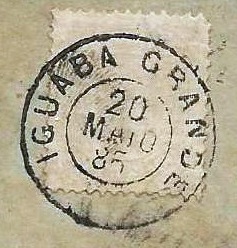
Ihm folgte IRJ-1045c (Abb. aus dem Internet):
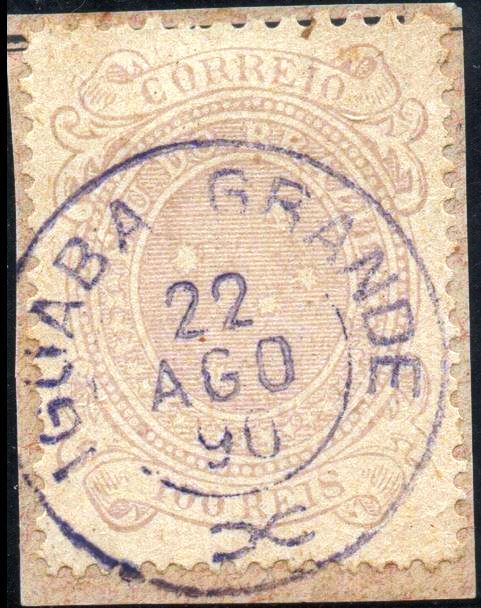
Zwei Poststempel mit dem kaiserlichen Siegel wurden von dort gefunden. Der erste ist IRJ-1045d (Abb. R. Koester in Carimbologia XXII – Marcio Duarte)

Der zweite ist IRJ-1045e (Abb. Koester):

James Dingler und Klerman W. Lopes haben zwei stumme Abstempelungen aus Iguaba Grande in Mute Cancellations of the Brazil Empire/ Carimbos Mudos do Brasil Império (Brazil Philatelic Association, Rio de Janeiro, 2000) aufgenommen:

 Carimbologia