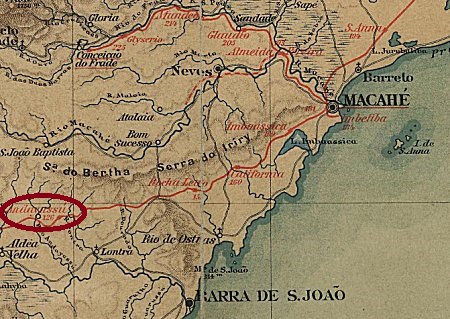
Other names: Casimiro de Abreu (1925)
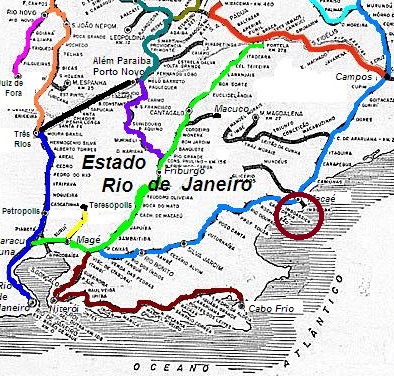
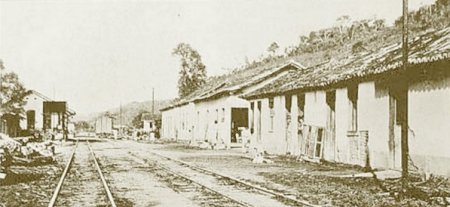
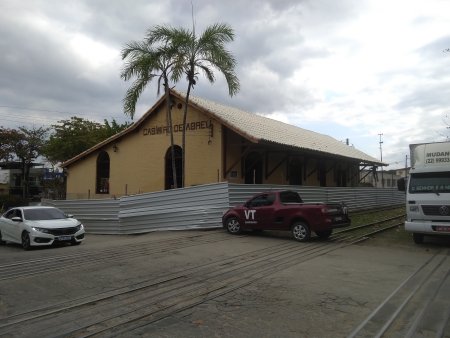
The Indayassú (Great Palm, in Tupi-Guarani) station was opened in July 1888 by the E.F. Leopoldina railway company, Rio Bonito branch, and was located in the Vila de Barra de S. João area, 140 km north-east of the capital Rio de Janeiro. The line was transferred to E.F. Leopoldina around 1890 and belonged to Rede Ferroviária Federal S.A. from 1975 until it was closed down. Today, the tracks still exist and the station building is a cultural centre for the municipality (estacoesferroviarias.com.br).
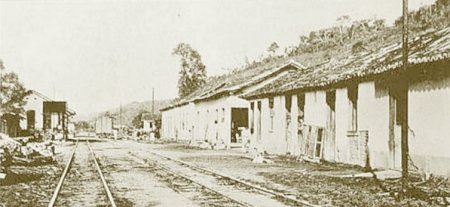
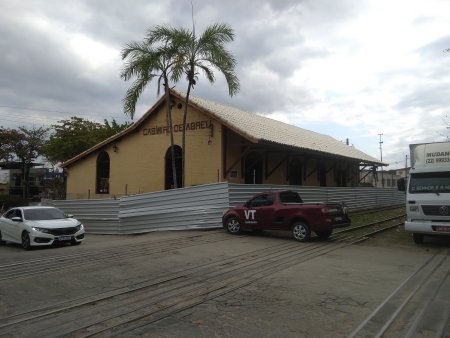
Indayassú became a municipality in August 1890 and Casimiro de Abreu municipality in December 1925, in memory of the poet born here (1839-1860).

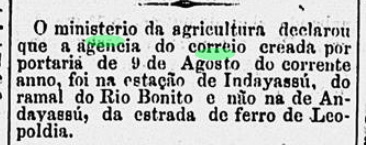
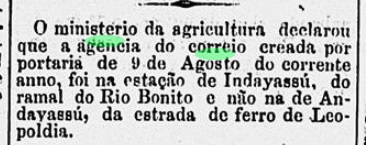
As the Rio press reported, there had been a post office at the railway station since August 1888:
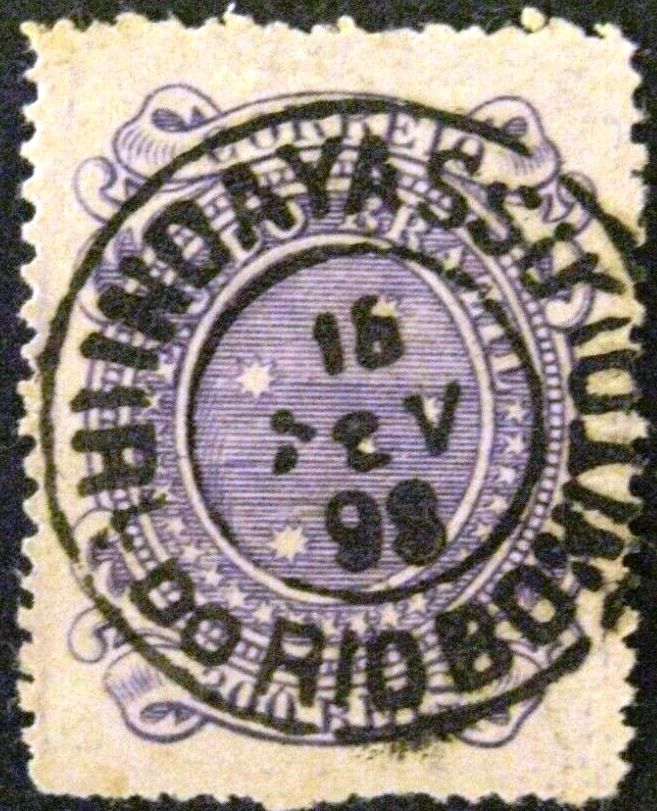
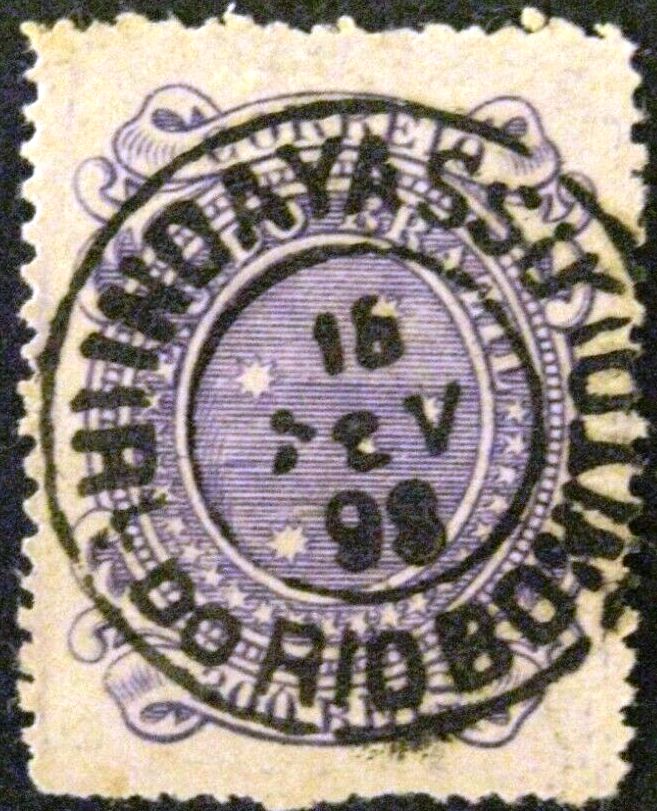
The imperial postmark is IRJ-0630a (image from the Internet):
Andere Namen: Casimiro de Abreu (1925)
Der Bahnhof Indayassú (Große Palme, in Tupi-Guarani) wurde im Juli 1888 von der Eisenbahngesellschaft E.F. Leopoldina, Rio Bonito-Zweig, eröffnet und lag im Gebiet der Vila de Barra de S. João, 140 km nordöstlich der Hauptstadt Rio de Janeiro. Die Strecke ging um 1890 an die E.F. Leopoldina über und gehörte von 1975 bis zur Stilllegung der Rede Ferroviária Federal S.A. Heute sind die Gleise noch vorhanden, das Bahnhofsgebäude ist ein Kulturzentrum der Gemeinde (estacoesferroviarias.com.br).
Im August 1890 wurde Indayassú zum Munizip und im Dezember 1925 zum Munizip Casimiro de Abreu, in Erinnerung an den hier geborenen Dichter (1839-1860).

Wie die Presse aus Rio berichtete, gab es seit August 1888 ein Postamt am Bahnhof:
Der kaiserliche Poststempel ist IRJ-0630a (Abbildung aus dem Internet):

 Carimbologia