Other names: Engenho Morgado,
See also Guarabira (GPB-0135)
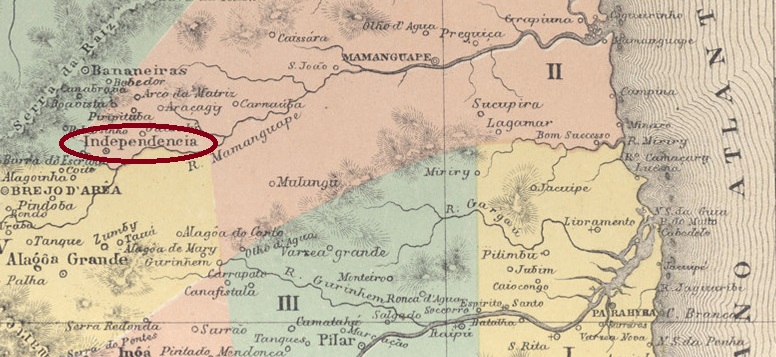
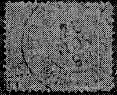
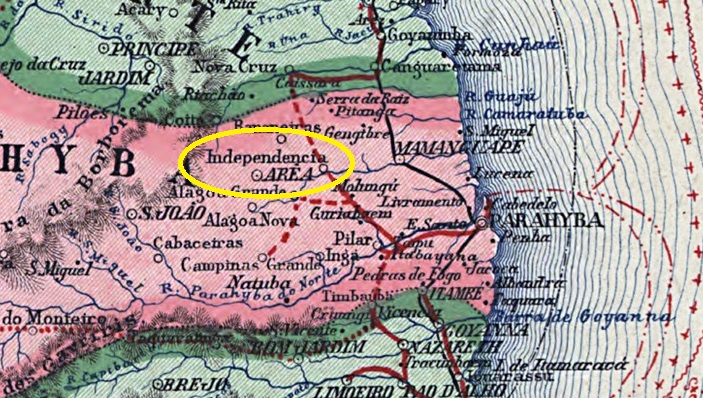
The Engenho Morgado has existed since 1694 as a sugar cane processing plant in the area 90 kilometres northwest of the later provincial capital Paraíba do Norte (today: João Pessoa). The settlement around the Engenho continued to grow as Povoação de Guarabira (the indigenous word means home of the herons) and became Villa da Independência in April 1837, in retrospective memory of Brazil’s independence in 1822. Since November 1877, the official name has been Cidade de N. Sra. da Luz de Guarabira.
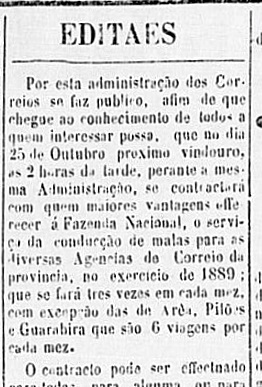
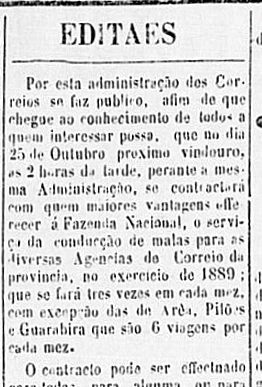
As Nova Monteiro writes in Administrações e Agencias Postaes do Brasil Imperio (Brasil Filatelico/RJ, 1934-5; reprint SPP 1994-1999), there had been a post office in Vila de Independencia since January 1838, and postmarks with Independencia (see IPB-0135) were used until at least 1891, according to R. Koester (Carimbologia XXII). It is therefore unlikely that there are imperial postmarks with Guarabira. A Guarabira postal agency first appeared in the regional press around 1888:
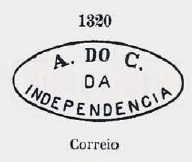
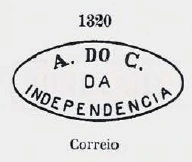
We know of 3 imperial postmarks with Independencia and believe that they belong here, as this town was much larger and more prosperous than the one of the same name in the province of Piauí (or later: Ceará). However, if no evidence is available, the cancels are presented here without code number. Beginning with no. 1320 in P. Ayres’ Catálogo de Carimbos Brasil-Império (S. Paulo, 1937, 1942):
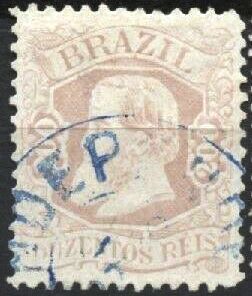
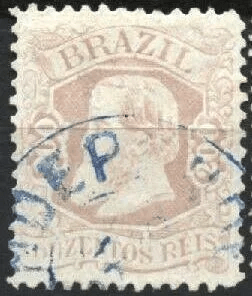
Then a postmark (illustration from the Internet) with large letters and an ornament at the bottom, which appears in blue:
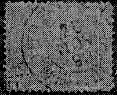
And finally a cancel with a (2) at the bottom, illustrated in Koester’s Carimbologia XXII:
Andere Namen: Engenho Morgado
Siehe auch Guarabira (GPB-0135)
Seit 1694 existierte der Engenho Morgado als Zuckerrohrverarbeitungsbetrieb im Gebiet 90 km nordwestlich der späteren Provinzhauptstadt Paraíba do Norte (heute: João Pessoa). Die Siedlung um den Engenho wuchs als Povoação de Guarabira (das indigene Wort bedeutet Heimat der Reiher) weiter und wurde im April 1837 zur Villa da Independência, in nachträglicher Erinnerung an die Unabhängigkeit Brasiliens 1822. Seit November 1877 ist der offizielle Name Cidade de N. Sra. da Luz de Guarabira.
Wie Nova Monteiro in Administrações e Agencias Postaes do Brasil Imperio (Brasil Filatelico/RJ, 1934-5; Reprint SPP 1994-1999) schreibt, gab es in der Vila de Independencia seit Januar 1838 ein Postamt, und Poststempel mit Independencia (siehe IPB-0135) wurden laut R. Koester (Carimbologia XXII) bis mindestens 1891 verwendet. Es ist daher unwahrscheinlich, dass es kaiserliche Poststempel mit Guarabira gibt. Eine Postagentur Guarabira erschien erstmals um 1888 in der regionalen Presse:
Wir kennen 3 kaiserliche Poststempel mit Independencia und glauben, dass sie eher hierher gehören, da dieser Ort viel größer und wohlhabender war als der gleichnamige in der Provinz Piauí (bzw. später: Ceará). Solange jedoch keine Beweise vorliegen, werden die Stempel hier ohne Codenummer vorgestellt. Beginnend mit Nr. 1320 in P. Ayres‘ Catálogo de Carimbos Brasil-Império (S. Paulo, 1937, 1942):
Dann ein Stempel (Abb. aus dem Internet) mit großen Buchstaben und einem Ornament unten, der in Blau erscheint:
Und zuletzt ein Stempel mit einer (2) unten, abgebildet in Koesters Carimbologia XXII:

 Carimbologia