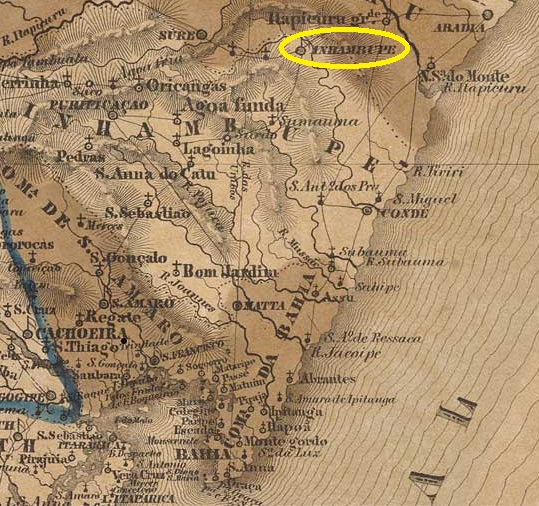
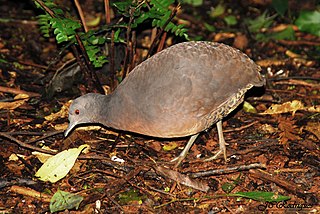
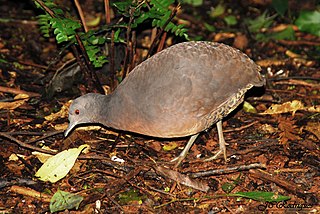
The village on the south bank of the Inhambupe, 170 kilometres north of the colonial capital Salvador da Bahia, first became a Vila (in April 1728) and only later (in November 1816) the Freguesia do Divino Espírito Santo de Inhambupe, a rather unusual development. Inhambupe has been a town since August 1896. The name comes from the Tupi-Guarani and means river of the Inhambus. The latter is a bird from the Tinamidae family:
Nova Monteiro writes in Administrações e Agencias Postaes do Brasil Imperio (Brasil Filatelico/RJ, 1934-5; reprint SPP 1994-1999) that there had been a post office there since May 1832, while the directory of imperial post offices (Tabella das Agencias do Correio do Imperio, Rio de Janeiro, 1885) gives the year 1861. It is not known when the agency was closed in the meantime, but it was in operation at the end of 1856.
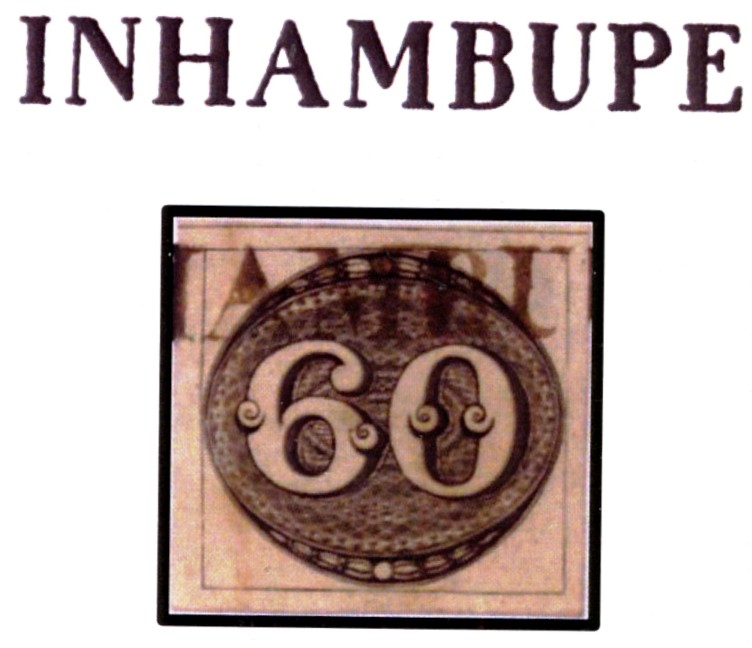
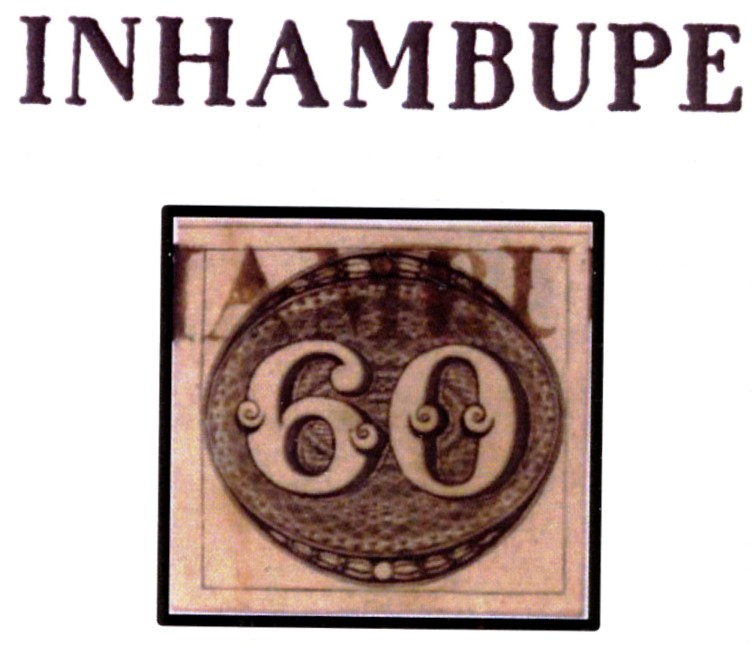
The oldest postmark is IBA-0400a, which also exists in brown and was given the number 1142 by P. Ayres in the Catálogo de Carimbos Brasil-Império (S. Paulo, 1937, 1942). Here also an illustration by Henrique B. Ferreira (Catálogo ilustrado dos carimbos sobre os olhos-de-boi, 4a. ed, Porto Alegre, 2017):
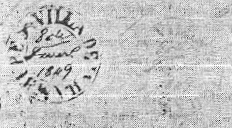
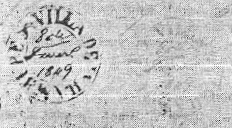
This was followed by IBA-0400b (fig. R. Koester, in Carimbologia XXII):
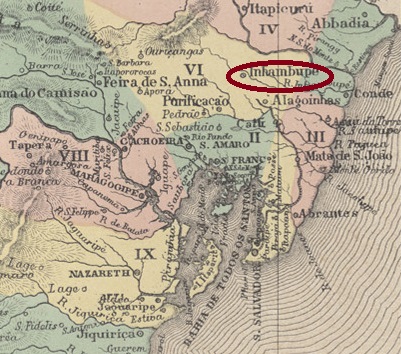
Der Ort am Südufer des Inhambupe, 170 km nördlich der Kolonialhauptstadt Salvador da Bahia, wurde zunächst (im April 1728) eine Vila und erst später (im November 1816) die Freguesia do Divino Espírito Santo de Inhambupe, eine eher ungewöhnliche Entwicklung. Seit August 1896 ist Inhambupe eine Stadt. Der Name stammt aus dem Tupi-Guarani und bedeutet Fluss des Inhambus. Letzteres ist ein Vogel aus der Familie Tinamidae:
Nova Monteiro schreibt in Administrações e Agencias Postaes do Brasil Imperio (Brasil Filatelico/RJ, 1934-5; Reprint SPP 1994-1999), dass es dort seit Mai 1832 ein Postamt gab, während im Verzeichnis der kaiserlichen Postämter (Tabella das Agencias do Correio do Imperio, Rio de Janeiro, 1885) das Jahr 1861 angegeben ist. Es ist nicht bekannt, wann die Agentur in der Zwischenzeit geschlossen wurde, aber sie war Ende 1856 in Betrieb.
Der älteste Poststempel ist IBA-0400a, der auch in braun existiert und von P. Ayres die Nr. 1142 im Catálogo de Carimbos Brasil-Império (S. Paulo, 1937, 1942) erhielt. Hier auch eine Illustration von Henrique B. Ferreira (Catálogo ilustrado dos carimbos sobre os olhos-de-boi, 4a. ed, Porto Alegre, 2017):
Es folgte IBA-0400b (Abb. R. Koester, in Carimbologia XXII):

 Carimbologia