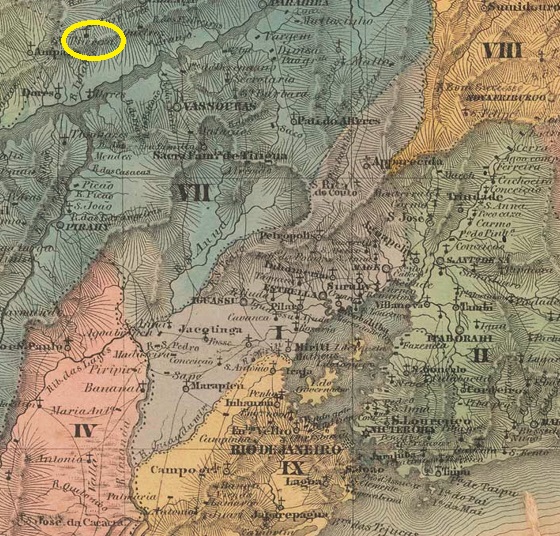
Other names: Piedade das Ipiabas
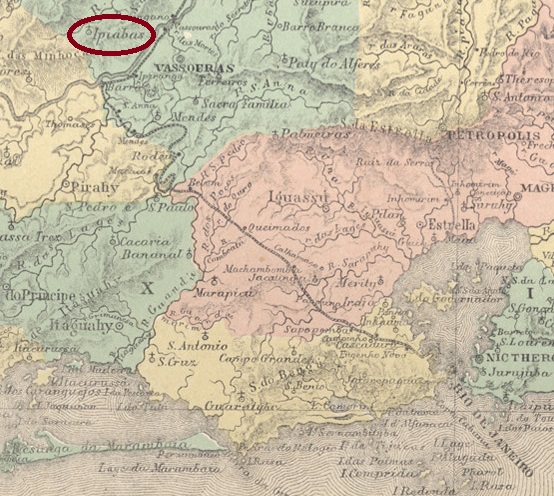
From May 1849, N. Sra. da Piedade das Ipiabas was the curato of the Vila de Valença, located on the south bank of the Rio das Flores, 140 kilometres northwest of the capital Rio de Janeiro. In September 1852, Ipiabas was elevated to a freguesia and since December 1943 it has been a distrito in the Município de Barra do Piraí. There are two versions of the term from the Tupi-guarani. Either it means ‘with spotted skin’ or ‘with dammed water’.
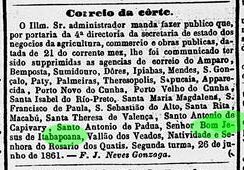
As Nova Monteiro writes in Administrações e Agencias Postaes do Brasil Imperio (Brasil Filatelico/RJ, 1934-5; reprint SPP 1994-1999), there had been a post office there since February 1853. This was closed in July 1861, as reported in the press:
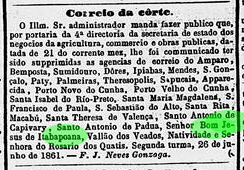
According to Nova Monteiro (op. cit.), the next opening of the post office took place in August 1869 under Piedade das Ipiabas.
The oldest postmark of Ipiabas seems to exist in two versions. First IRJ-0650a, which was given the number 1322 by Paulo Ayres (Catálogo de Carimbos Brasil-Império, S. Paulo, 1937, 1942):

The other version IRJ-0650b was given the number 1323 by P. Ayres and has an additional line in the centre:

Three cancellations as double circles followed, beginning with IRJ-0650c (fig. Felipe Piccinini):
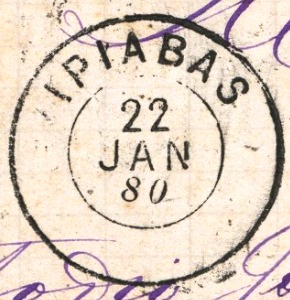
Then came IRJ-0650d (fig. agenciaspostais.com.br):

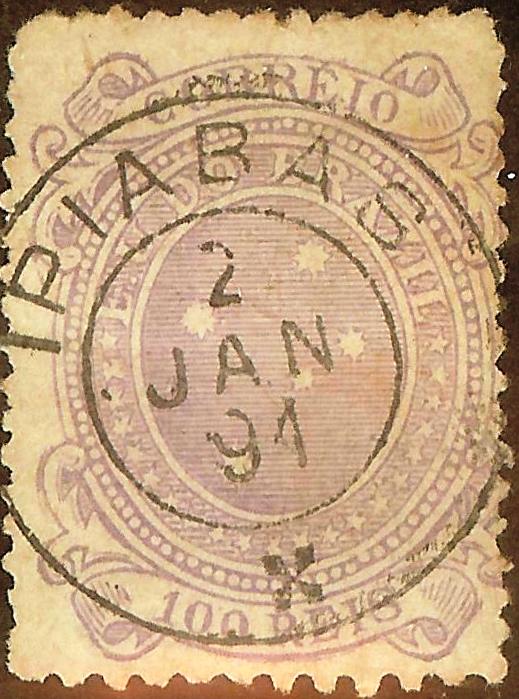
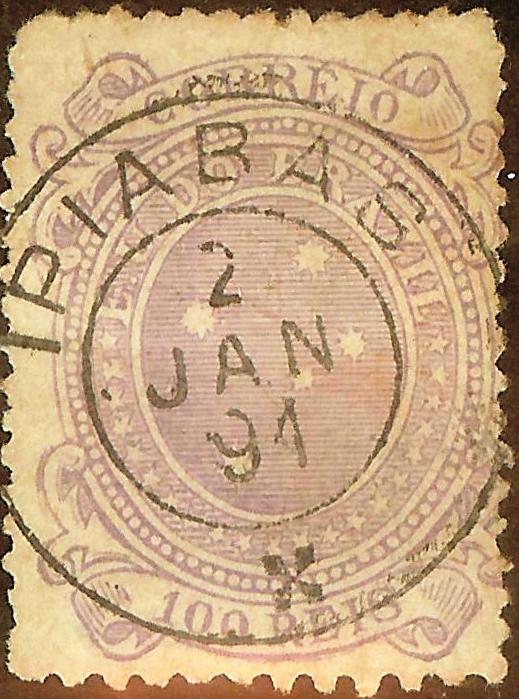
Towards the end of the century, IRJ-0650e also appeared (illustration from the Internet):
Andere Namen: Piedade das Ipiabas
Seit Mai 1849 war N. Sra. da Piedade das Ipiabas Curato der Vila de Valença, gelegen am Südufer des Rio das Flores, 140 km nordwestlich der Hauptstadt Rio de Janeiro. Im September 1852 erfolgte die Erhebung zur Freguesia und seit Dezember 1943 ist Ipiabas ein Distrito im Município de Barra do Piraí. Es gibt zwei Versionen des Begriffs aus dem Tupi-guarani. Entweder bedeutet es „mit gefleckter Haut“ oder „mit gestautem Wasser“.
Wie Nova Monteiro in Administrações e Agencias Postaes do Brasil Imperio (Brasil Filatelico/RJ, 1934-5; Reprint SPP 1994-1999) schreibt, gab es dort seit Februar 1853 ein Postamt. Dieses wurde im Juli 1861 geschlossen, wie die Presse berichtete:
Laut Nova Monteiro (a.a.O.) fand die nächste Eröffnung des Postamtes im August 1869 unter Piedade das Ipiabas statt.
Der älteste Poststempel von Ipiabas scheint in zwei Versionen zu existieren. Zuerst IRJ-0650a, der von Paulo Ayres (Catálogo de Carimbos Brasil-Império, S. Paulo, 1937, 1942) die Nummer 1322 erhielt:

Die andere Version IRJ-0650b erhielt die Nr. 1323 von P. Ayres und hat einen zusätzlichen Strich in der Mitte:

Es folgten drei Stempel als Doppelkreise, beginnend mit IRJ-0650c (Abb. Felipe Piccinini):
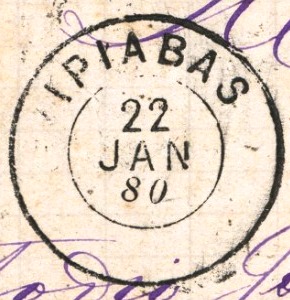
Dann kam IRJ-0650d (Abb. agenciaspostais.com.br):

Gegen Ende des Jahrhunderts erschien auch IRJ-0650e (Abb. aus dem Internet):

 Carimbologia