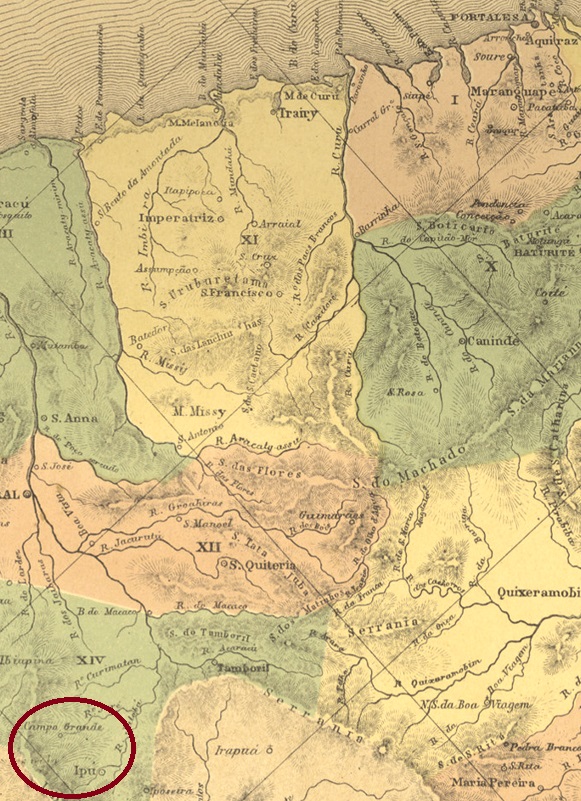
Other names: Villa Nova, Campo Grande, Inhussu, Guaraciaba do Norte (1951)
See also Campo Grande (CCE-0075), Villa Nova d’El-Rey (VCE-0373)
Here we have another old village with a confused history. It began in 1760 with the construction of the chapel of Nossa Sra. dos Prazeres, which was located on the eastern slope of the Serra da Ibiapaba (or Serra Grande), barely 300 km west of the later provincial capital Fortaleza. In May 1791, the growing village called Campo Grande was elevated to Villa Nova d’El-Rey. After the colonial period, the royal name was no longer welcome, so in August 1840 the local administration changed to the neighbouring village of Ipu – now called Villa Nova do Ipú Grande. There must have been a strong rivalry between the two places, because immediately in January 1841 the old Villa Nova d’El-Rey became politically independent again, now as Villa de Campo Grande. This independence did not last long: in December 1842 Campo Grande was downgraded to the district of Ipu. And it remained so until January 1879, when the Vila of Campo Grande was created once again. After that, the place name changed twice: in December 1943 to Inhussu and in November 1951 to Guaraciaba do Norte, which is still current today. The name Guaraciaba has Indian origins and is said to mean golden hair.
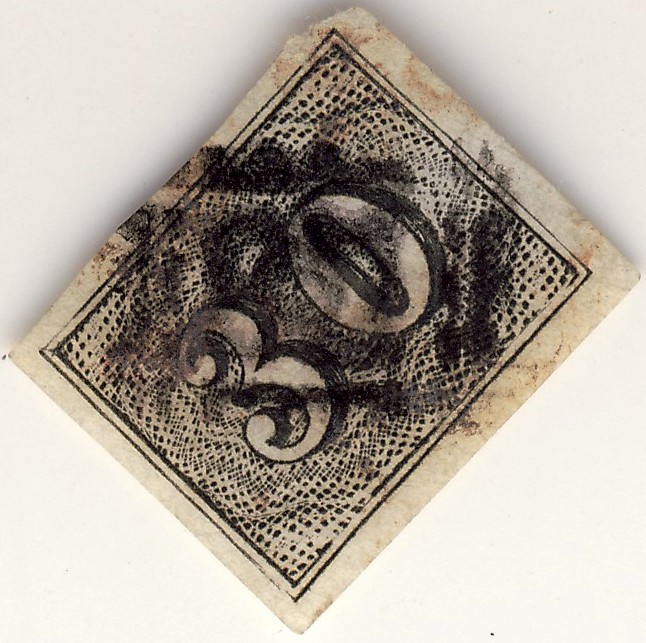
The local post office was established in February 1832, as R. Koester writes in Carimbologia XXII. The year is confirmed in the Directory of Imperial Post Offices (Tabella das Agencias do Correio do Imperio, Rio de Janeiro, 1885). The oldest postmark with this place name so far is ICE-0175a (coll. Dieter Kerkhoff):

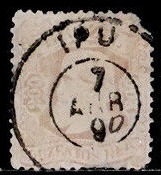
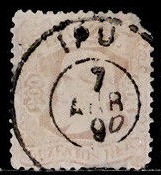
Towards the end of the Empire, ICE-0175b (fig. Felipe Piccinini) can also be found:
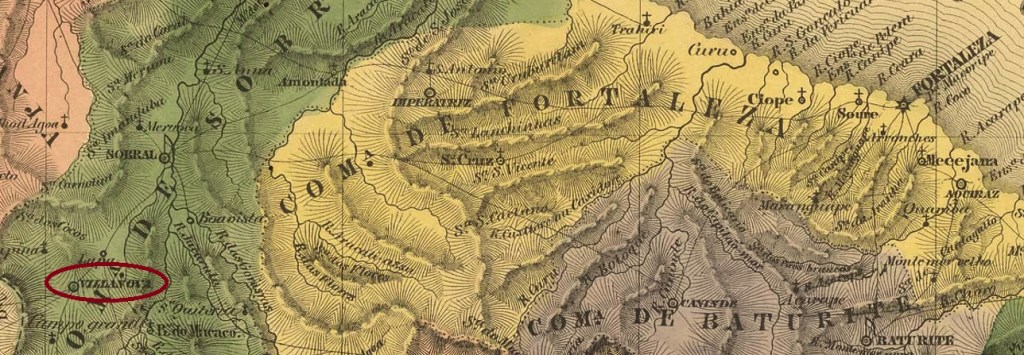
Andere Namen: Villa Nova, Campo Grande, Inhussu, Guaraciaba do Norte (1951)
Siehe auch Campo Grande (CCE-0075), Villa Nova d’El-Rey (VCE-0373)
Hier haben wir wieder eine alte Ortschaft mit konfuser Geschichte. Diese fing 1760 mit der Errichtung der Kapelle Nossa Sra. dos Prazeres an, die am Osthang der Serra da Ibiapaba (oder auch Serra Grande) lag, knapp 300 km westlich der späteren Provinzhauptstadt Fortaleza entfernt. Im Mai 1791 wurde der wachsende Ort namens Campo Grande zur Villa Nova d’El-Rey erhoben. Nach der Kolonialzeit war der Königsname nicht mehr erwünscht, also wechselte im August 1840 die Ortsverwaltung zum Nachbarort Ipu – nun unter dem Namen Villa Nova do Ipú Grande. Es musste eine starke Rivalität zwischen beiden Orten vorhanden sein, denn gleich im Januar 1841 wurde die alte Villa Nova d’El-Rey wieder politisch selbständig, jetzt als Villa de Campo Grande. Diese Selbständigkeit dauerte nicht lange: im Dezember 1842 wurde Campo Grande zum Distrikt von Ipu herabgestuft. Und so blieb es bis Januar 1879, als die Vila von Campo Grande abermals ins Leben gerufen wurde. Danach wechselte der Ortsname zweimal: im Dezember 1943 zu Inhussu und im November 1951 zum heute noch aktuellen Guaraciaba do Norte. Der Name Guaraciaba hat indianischen Ursprung und soll goldene Haare bedeuten.
Das örtliche Postamt entstand im Februar 1832, wie R. Koester in Carimbologia XXII schreibt. Das Jahr wird im Verzeichnis der kaiserlichen Postämter (Tabella das Agencias do Correio do Imperio, Rio de Janeiro, 1885) bestätigt. Der bisher älteste Poststempel mit diesem Ortsnamen ist ICE-0175a (Samml. Dieter Kerkhoff):
Gegen Ende des Kaiserreichs findet sich auch ICE-0175b (Abb. Felipe Piccinini):

 Carimbologia