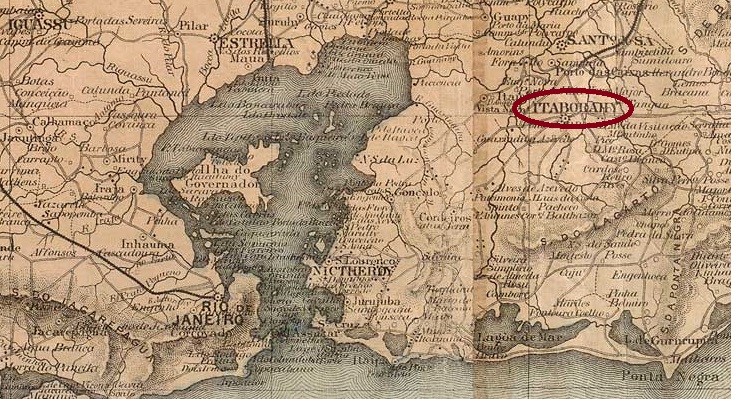
The settlement was founded in 1672 with the construction of the chapel of S. João Baptista de Itaborahy (also written Itaboray) on the east bank of the Rio da Vargem, 50 kilometres north-east of the future capital Rio de Janeiro. In June 1696, it was declared the Freguesia de S. João Baptista de Itaborahy, which belonged to the Vila de Sto. Antonio de Sá. In May 1833 it became a Vila and in January 1890 a town.
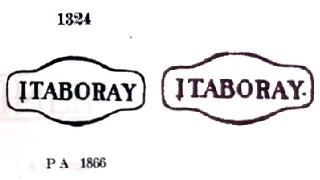
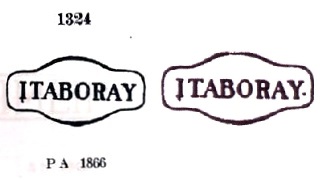
Nova Monteiro writes in Administrações e Agencias Postaes do Brasil Imperio (Brasil Filatelico/RJ, 1934-5; reprint SPP 1994-1999) that there had been a post office there since August 1829. The oldest postmark to date is IRJ-0665a, which was given the number 1324 by Paulo Ayres in Catálogo de Carimbos Brasil-Império (S. Paulo, 1937, 1942). However, the dot at the bottom right is missing in his illustration, as can be seen in the Catálogo ilustrado dos carimbos sobre os olhos-de-boi (4a. ed., Porto Alegre, 2017) by Henrique B. Ferreira:
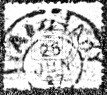
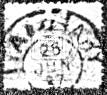
This was followed by the double circle IRJ-0665b (ill. R. Koester, in Carimbologia XXIII):
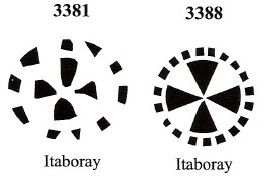
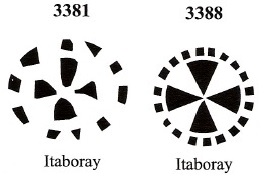
Two mute cancellations by James Dingler and Klerman W. Lopes are also known from Itaborahy (Mute Cancellations of the Brazil Empire / Carimbos Mudos do Brasil Império, Brazil Philatelic Association, Rio de Janeiro, 2000):
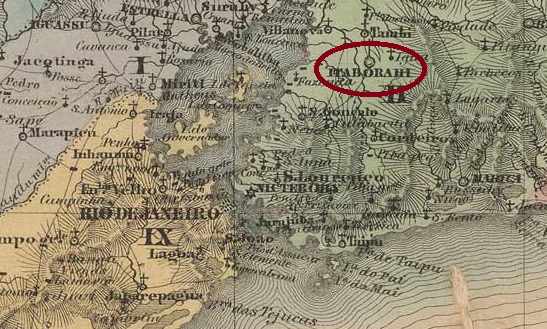
Die Siedlung entstand 1672 mit dem Bau der Kapelle S. João Baptista de Itaborahy (auch Itaboray geschrieben) am Ostufer des Rio da Vargem, 50 km nordöstlich der späteren Hauptstadt Rio de Janeiro. Im Juni 1696 wurde sie zur Freguesia de S. João Baptista de Itaborahy erklärt, die zur Vila de Sto. Antonio de Sá gehörte. Im Mai 1833 wurde es zur Vila und im Januar 1890 zur Stadt erhoben.
Nova Monteiro schreibt in Administrações e Agencias Postaes do Brasil Imperio (Brasil Filatelico/RJ, 1934-5; Reprint SPP 1994-1999), dass es dort seit August 1829 ein Postamt gab. Der bisher älteste Poststempel ist IRJ-0665a, der von Paulo Ayres in Catálogo de Carimbos Brasil-Império (S. Paulo, 1937, 1942) die Nummer 1324 erhielt. Allerdings fehlt in seiner Abbildung der Punkt rechts unten, wie man dem Catálogo ilustrado dos carimbos sobre os olhos-de-boi (4a. ed., Porto Alegre, 2017) von Henrique B. Ferreira entnehmen kann:
Es folgte der Doppelkreis IRJ-0665b (Abb. R. Koester, in Carimbologia XXIII):
Aus Itaborahy sind auch zwei stumme Abstempelungen von James Dingler und Klerman W. Lopes bekannt (Mute Cancellations of the Brazil Empire / Carimbos Mudos do Brasil Império, Brazil Philatelic Association, Rio de Janeiro, 2000):

 Carimbologia