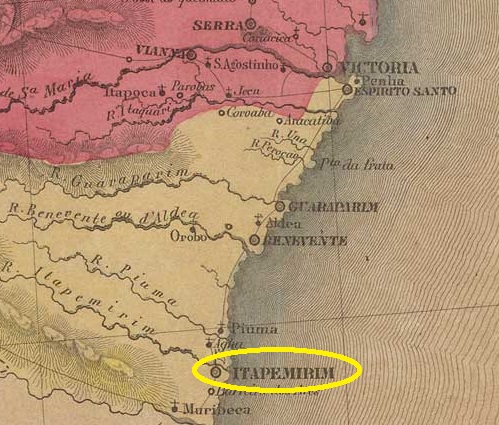
Other names: Itapemirim
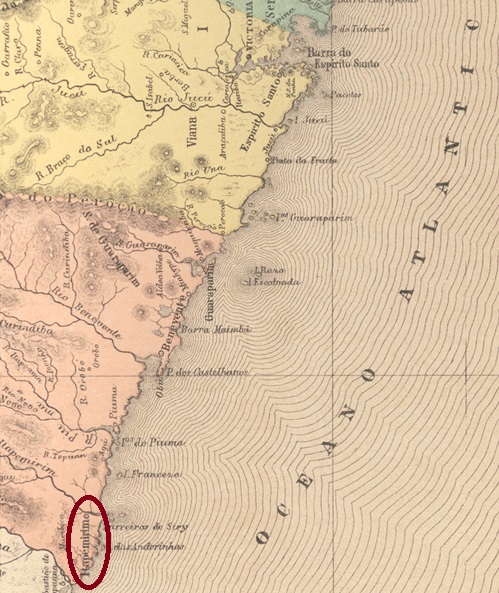
The Freguesia de N. Sra. do Patrocínio, founded in 1771, belonged to the Vila de Guarapary and was located on the south bank of the Itapemirim estuary, 100 kilometres south of the later provincial capital Vitória. In July 1813 it became the Freguesia de N.Sra. do Amparo do Itapemerim (now spelt Itapemirim) and two years later a Vila.
As Nova Monteiro writes in Administrações e Agencias Postaes do Brasil Imperio (Brasil Filatelico/RJ, 1934-5; reprint SPP 1994-1999), there had already been a post office there since October 1831.
The oldest postmark to date is IES-0095a, which was given the no. P-ES-02 in the RHM catalogue. However, the illustration shows clear differences to the specimens found, as can be seen in the picture (Fig. Wady Vidal):

This was followed by IES-0095b (ill. Henrique B. Ferreira in Catálogo ilustrado dos carimbos sobre os olhos-de-boi, Porto Alegre, 2017)

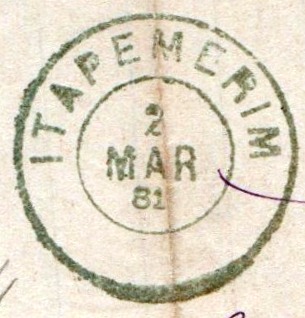
Then came IES-0095c, which was given the no. 1575 by P. Ayres in Catálogo de Carimbos Brasil-Império (S. Paulo, 1937, 1942), here in an illustration by Wady Vidal:
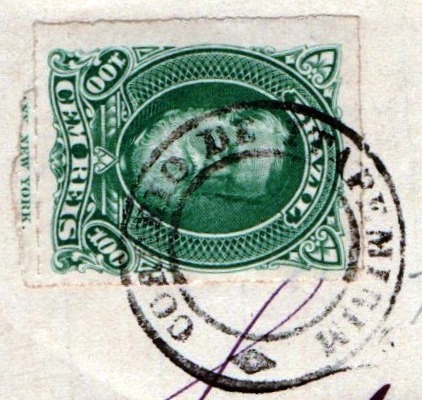
The last postmark of the imperial era is the double circle IES-0095d (illustration by Wady Vidal), which also exists in blue:
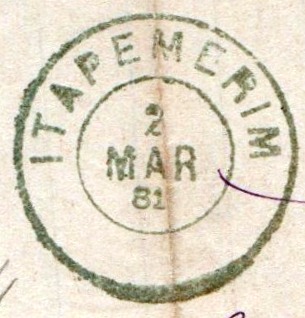
Itapemerim also produced a mute cancellation in blue (fig. agenciaspostais.com.br):

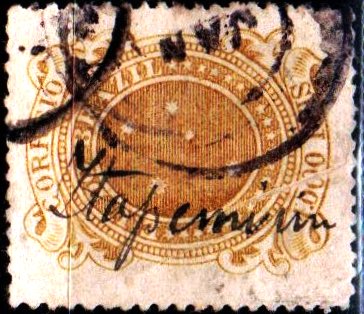
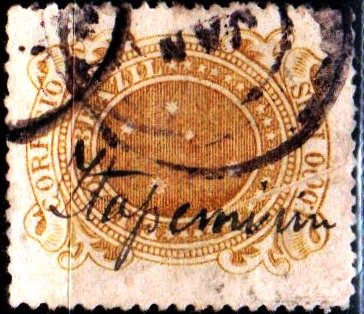
Wady Vidal also shows a handwritten cancellation from the beginning of the Republic:
Andere Namen: Itapemirim
Die 1771 gegründete Freguesia de N. Sra. do Patrocínio gehörte zur Vila de Guarapary und lag am Südufer der Mündung des Itapemirim, 100 km südlich der späteren Provinzhauptstadt Vitória. Im Juli 1813 wurde sie zur Freguesia de N.Sra. do Amparo do Itapemerim (heute Itapemirim geschrieben) und zwei Jahre später zur Vila.
Wie Nova Monteiro in Administrações e Agencias Postaes do Brasil Imperio (Brasil Filatelico/RJ, 1934-5; Reprint SPP 1994-1999) schreibt, gab es dort bereits seit Oktober 1831 ein Postamt.
Der bisher älteste Poststempel ist IES-0095a, der im RHM-Katalog die Nr. P-ES-02 erhielt. Die Abbildung zeigt jedoch deutliche Unterschiede zu den gefundenen Exemplaren, wie man auf dem Bild (Abb. Wady Vidal) erkennen kann:

Es folgte IES-0095b (Abb. Henrique B. Ferreira in Catálogo ilustrado dos carimbos sobre os olhos-de-boi, Porto Alegre, 2017)

Danach kam IES-0095c, der von P. Ayres in Catálogo de Carimbos Brasil-Império (S. Paulo, 1937, 1942) die Nr. 1575 erhielt, hier in einer Abbildung von Wady Vidal:
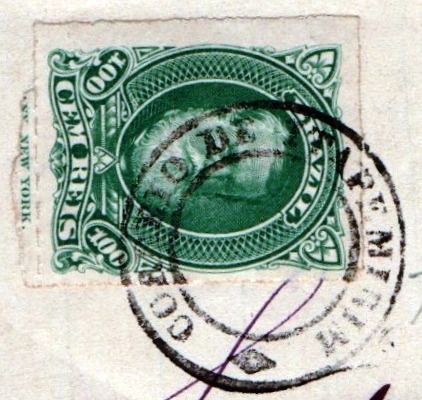
Der letzte Poststempel der Kaiserzeit ist der Doppelkreis IES-0095d (Abb. Wady Vidal), den es auch in blau gibt:
Aus Itapemerim kommt auch ein stummer Stempel in blau (Abb. agenciaspostais.com.br):

Wady Vidal zeigt auch eine handschriftliche Entwertung vom Beginn der Republik:

 Carimbologia