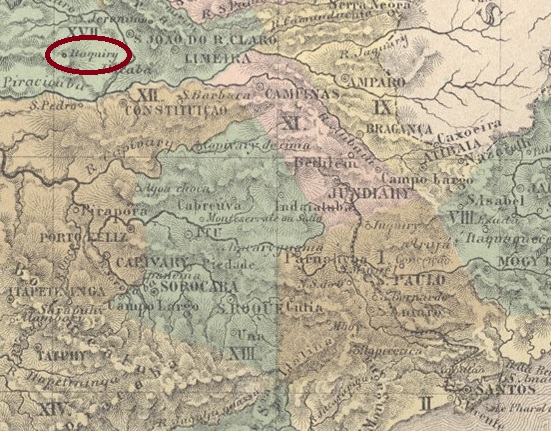
Other names: Itaquiry, Itaquery de Cima, Itaquery da Serra (1903)
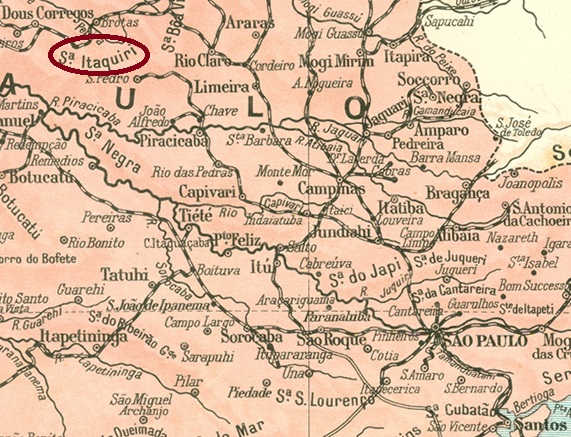
The history of this village is inextricably linked to the neighbouring villages of Itaquery (de Baixo, ISP-0635) and Morro Pelado (MSP-0835, today Itirapina). In May 1839, the chapel of N. Sra. da Conceição da Serra do Itaquery was built on the territory of Vila de Rio Claro, 240 kilometres northwest of the provincial capital of São Paulo, which was elevated to the status of a freguesia in July 1852. As the location in the low mountain range soon proved unfavourable, the community moved to the lower-lying Itaquery de Baixo (also known as Itaquery da Várzea) around 1873 and allowed the old settlement to fall into disrepair.
The situation changed again with the construction of the Rio Clarense railway line: the Morro Pellado (Bald Mountain) station, built nearby in 1885, attracted the population of Itaquery and also initiated the decline of the young settlement.
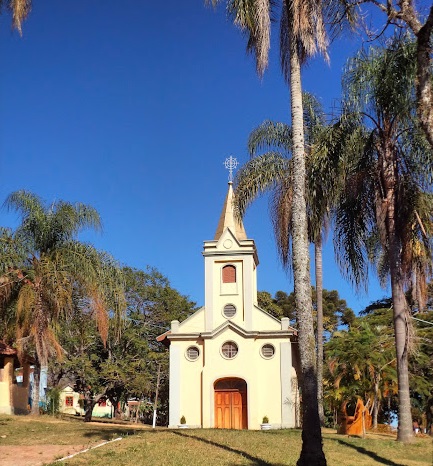
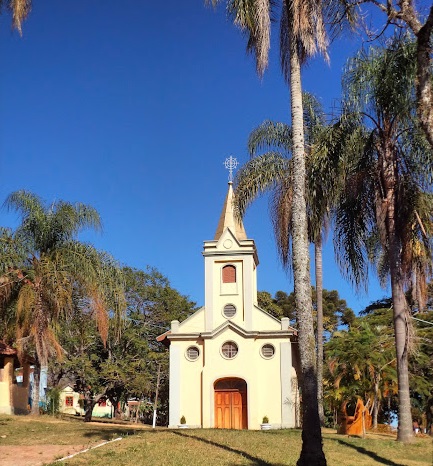
It was not until October 1903 that the old Itaquery de Cima became the Distrito de Itaquery da Serra, which was assigned to the newly founded Município de Itirapina in March 1935. Today, Itaqueri da Serra (as it is now spelt) is a popular tourist destination with the rebuilt chapel of N. Sra. da Conceição.
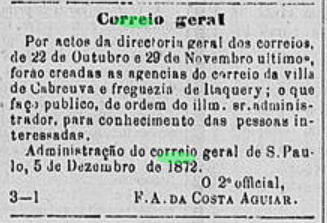
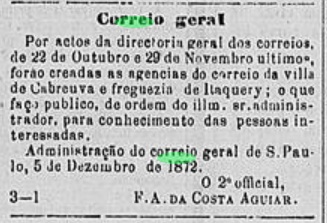
The turmoil of the settlement’s history is reflected in the postal system. In November 1872, a local post office was created, as reported in the regional press:
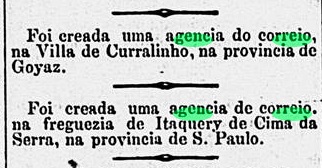
Presumably from 1873, the agency was also moved to Itaquery de Baixo. It was not until August 1888 that a post office was reopened in Itaquery de Cima, as reported in the Rio press:
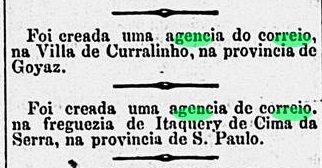
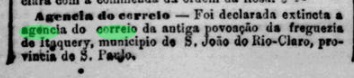
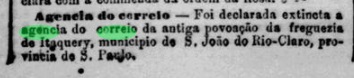
However, as this was already closed again the following October, as reported by the press in Rio, it is questionable whether the agency carried out the second period of operation at all:
To date, no imperial postmarks from Itaquery de Cima have surfaced, which is not surprising given the narrow time window of its postal operations.
Andere Namen: Itaquiry, Itaquery de Cima, Itaquery da Serra (1903)
Die Geschichte dieses Ortes ist untrennbar mit den Nachbarorten Itaquery (de Baixo, ISP-0635) und Morro Pelado (MSP-0835, heute Itirapina) verbunden. Im Mai 1839 wurde die Kapelle N. Sra. da Conceição da Serra do Itaquery auf dem Gebiet der 240 km nordwestlich der Provinzhauptstadt São Paulo gelegenen Vila de Rio Claro errichtet, die im Juli 1852 zur Freguesia erhoben wurde. Da sich die Lage am Mittelgebirge bald als ungünstig erwies, zog die Gemeinde um 1873 in das tiefer gelegene Itaquery de Baixo (auch Itaquery da Várzea genannt) und ließ die alte Siedlung verfallen.
Mit dem Bau der Eisenbahnlinie Rio Clarense änderte sich die Situation erneut: Der 1885 in der Nähe errichtete Bahnhof Morro Pellado (Kahler Berg) zog die junge Siedlung Itaquery an und leitete auch deren Niedergang ein.
Erst im Oktober 1903 wurde aus dem alten Itaquery de Cima der Distrito de Itaquery da Serra, der im März 1935 als Distrito dem damals neu gegründeten Município de Itirapina zugeordnet wurde. Heute ist Itaqueri da Serra (wie es heute geschrieben wird) ein beliebtes Touristenziel mit der wieder aufgebauten Kapelle N. Sra. da Conceição.
Die Wirren der Siedlungsgeschichte spiegeln sich im Postwesen wider. Im November 1872 wurde beschlossen, ein örtliches Postamt einzurichten, wie die regionale Presse berichtete:
Vermutlich ab 1873 wurde auch die Agentur nach Itaquery de Baixo verlegt. Erst im August 1888 sollte wieder ein Postamt in Itaquery de Cima eröffnet werden, wie aus der Presse in Rio hervorgeht:
Da dieses jedoch bereits im darauffolgenden Oktober wieder geschlossen wurde, wie die Presse in Rio berichtete, ist fraglich, ob die Agentur die zweite Betriebsperiode überhaupt durchführte:
Bisher sind keine kaiserlichen Poststempel aus Itaquery de Cima aufgetaucht, was angesichts des engen Zeitfensters ihres Postbetriebs nicht verwunderlich ist.

 Carimbologia