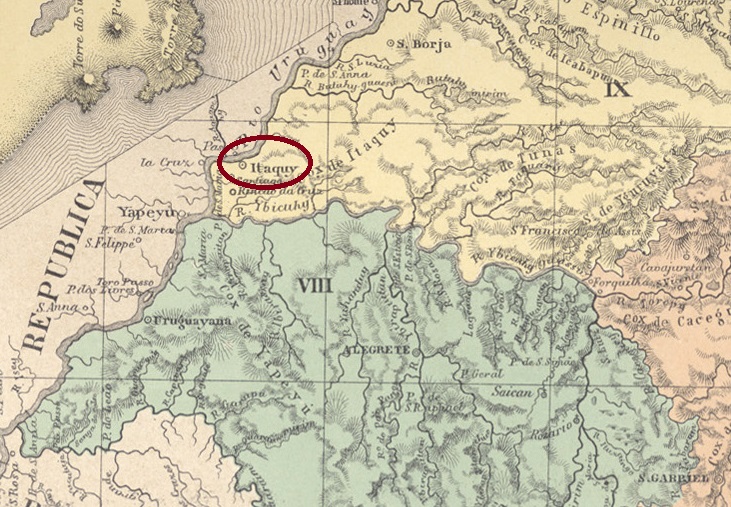
Other spelling: Itaquy
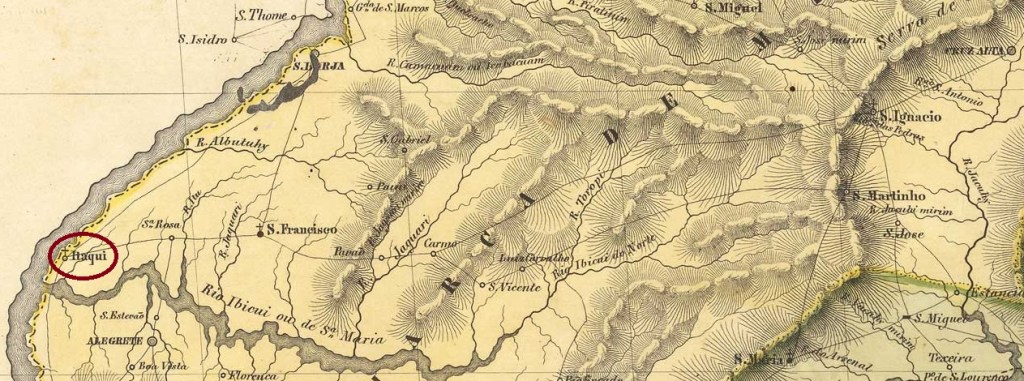
The Freguesia de S. Patricio de Itaqui, in existence since December 1837, belonged to the Vila de S. Borja and was located on the south bank of the Uruguai, 670 kilometres west of the provincial capital Porto Alegre. In December 1858 it became a Vila and in May 1879 a town. The name comes from the Tupi-guarani language and means grinding stone.
Nova Monteiro writes in Administrações e Agencias Postaes do Brasil Imperio (Brasil Filatelico/RJ, 1934-5; reprint SPP 1994-1999) that there had been a post office there since January 1858. This is confirmed by the report of the General Directorate of the Post Office from that year:

The oldest postmark was found on a letter to Argentina. As it dates from September 1856 (image from the Internet) and therefore predates the opening of the postal agency, it could be a forgery:
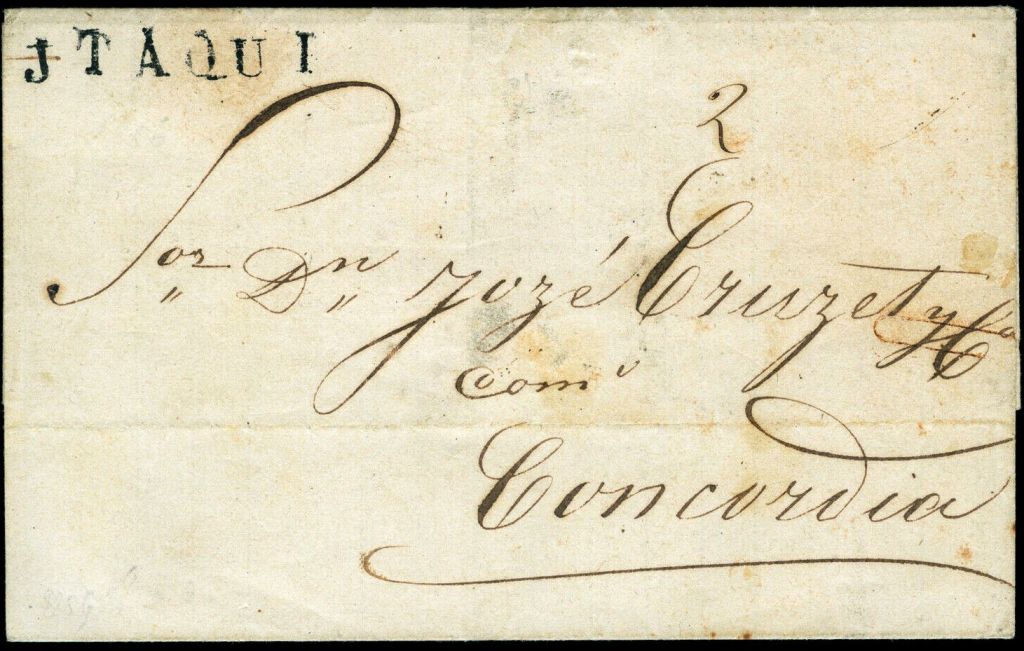
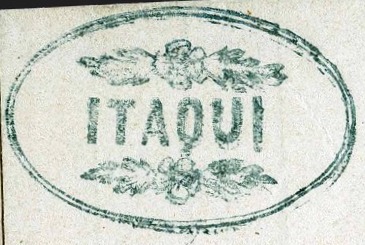
In contrast, IRS-0195a (illustration by Felipe Piccinini) from 1859 is proven to be genuine:
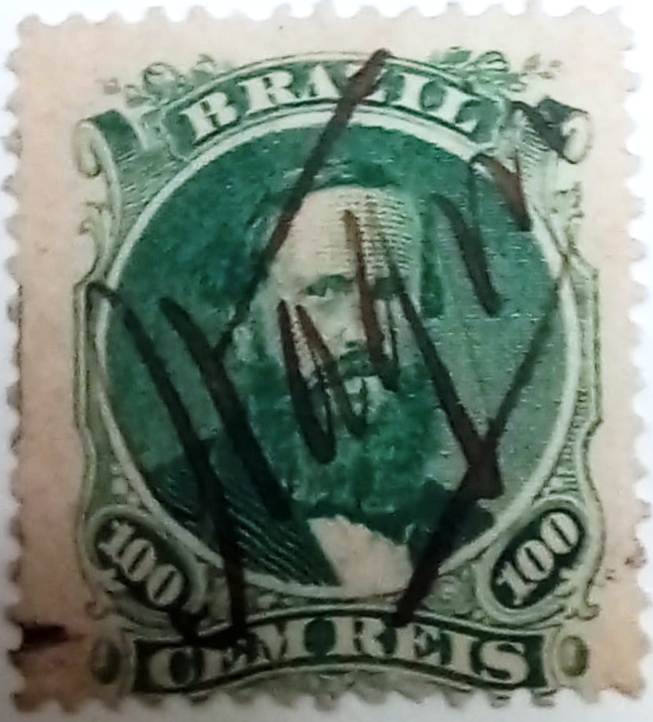
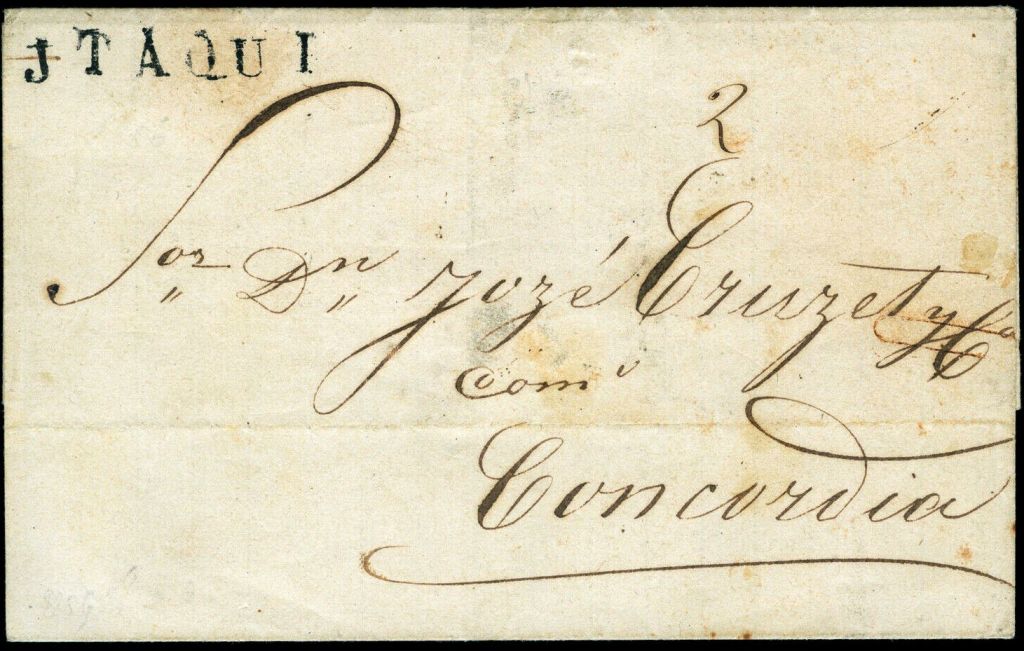
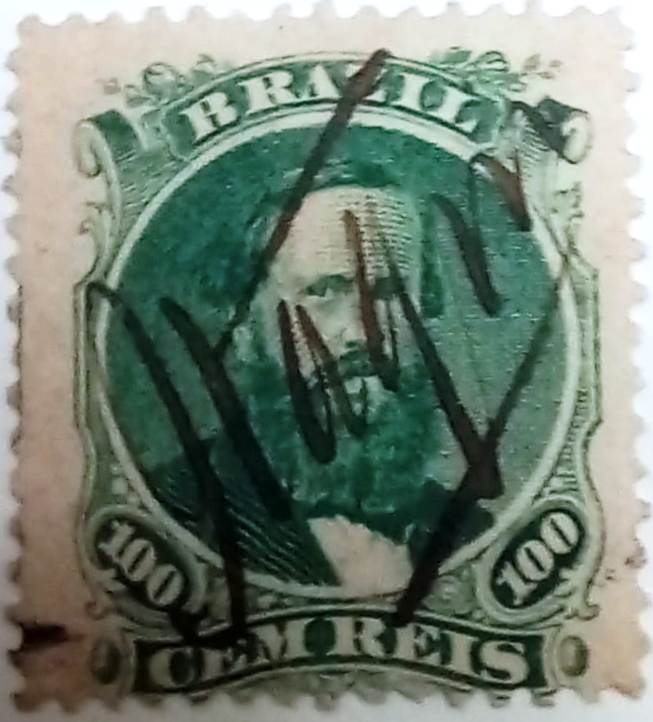
This was followed by a handwritten cancellation (Fuad Ferreira Fo. collection):
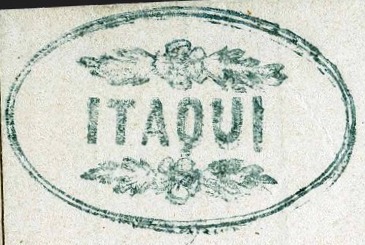
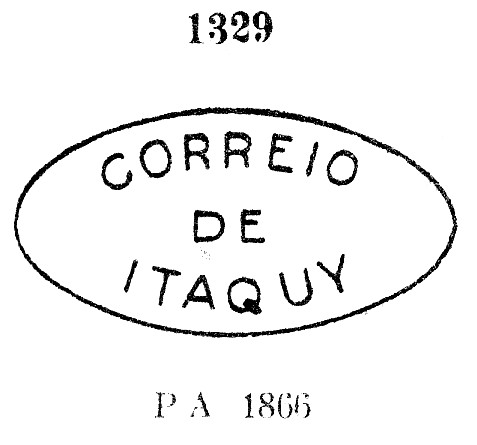
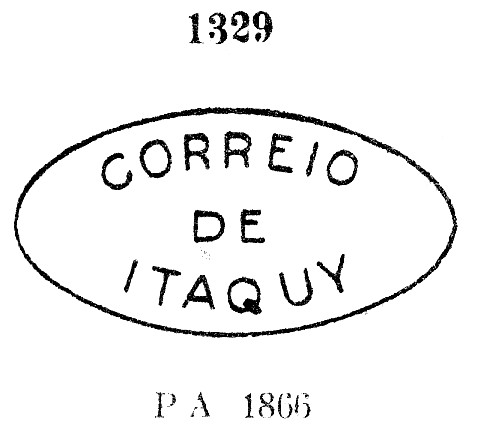
The following IRS-0195b also appears in blue and received the no. 1329 in P. Ayres’ Catálogo de Carimbos Brasil-Império (S. Paulo, 1937, 1942):
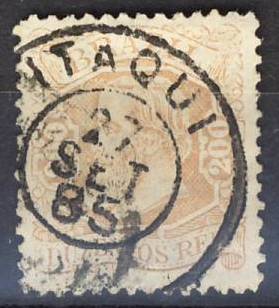
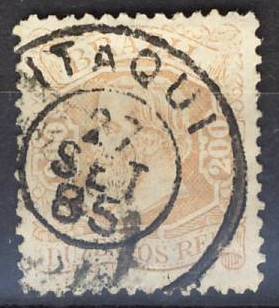
Towards the end of the Empire, the double circle IRS-0195c (collect. FM) also appeared. The inner years have different formats, the cancel also exists in dark violet.
Andere Schreibweise: Itaquy
Die seit Dezember 1837 bestehende Freguesia de S. Patricio de Itaqui gehörte zur Vila de S. Borja und lag am Südufer des Uruguai, 670 km westlich der Provinzhauptstadt Porto Alegre. Im Dezember 1858 wurde es zur Vila und im Mai 1879 zur Stadt erhoben. Der Name stammt aus der Sprache der Tupi-guarani und bedeutet Schleifstein.
Nova Monteiro schreibt in Administrações e Agencias Postaes do Brasil Imperio (Brasil Filatelico/RJ, 1934-5; Reprint SPP 1994-1999), dass es dort seit Januar 1858 ein Postamt gab. Dies wird durch den Bericht der Generaldirektion der Post aus dem Jahr bestätigt:

Der älteste Poststempel wurde auf einem Brief nach Argentinien gefunden. Da er vom September 1856 (Abbildung aus dem Internet) und damit vor der Eröffnung der Postagentur stammt, könnte es sich um eine Fälschung handeln:
Sicher als echt belegt ist dagegen IRS-0195a (Abb. Felipe Piccinini) aus dem Jahr 1859:
Es folgte eine handschriftliche Entwertung (Samml. Fuad Ferreira Fo.):
Die folgende IRS-0195b erscheint auch in blau und erhielt die Nr. 1329 in P. Ayres‘ Catálogo de Carimbos Brasil-Império (S. Paulo, 1937, 1942)
Gegen Ende des Kaiserreichs erschien auch der Doppelkreis IRS-0195c (Samml. FM). Die inneren Jahreszahlen haben unterschiedliche Formate, den Stempel gibt es auch in dunkelviolett.

 Carimbologia