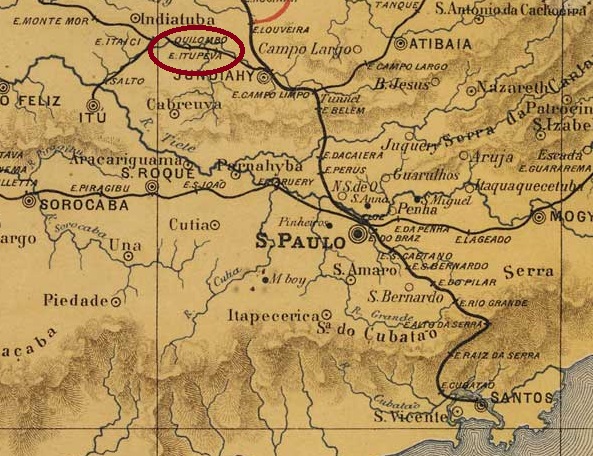
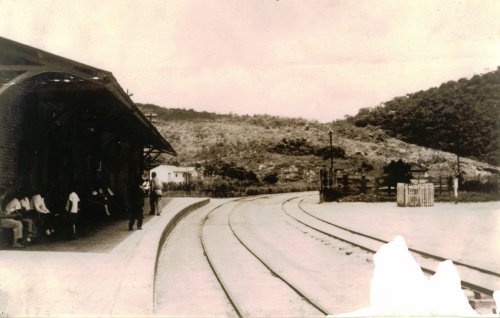
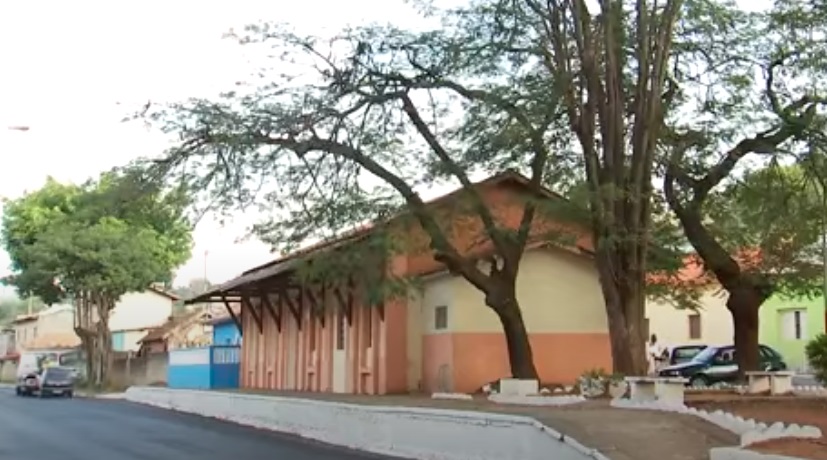
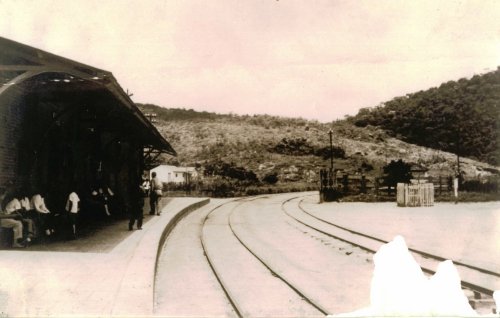
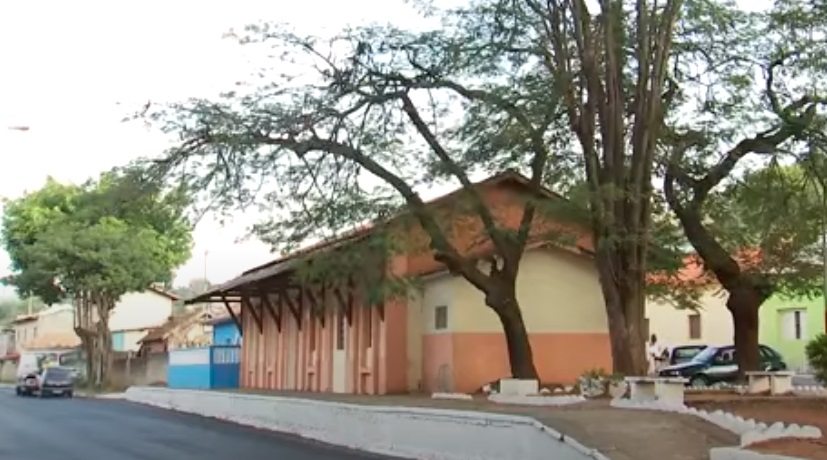
Itupeva station was opened in 1873 by the E.F. Ytuana railway company (Jundiaí branch), located on the south bank of the Jundiaí in the Município of the same name, 70 km north-west of the capital São Paulo. The line then changed hands four times: in 1892 to the Cia. União Sorocabana e Ytuana, in 1907 to the Sorocabana Railway, in 1919 to E.F. Sorocabana, and from 1971 until its closure in 1973 it belonged to FEPASA (estacoesferroviarias.com.br). Today, the tracks have disappeared and the station building belongs to the municipality. Since February 1964, the station site has been part of the Município de Itupeva. The word comes from the Tupi-guarani language and means shallow waterfall.
According to the list of imperial post offices (Tabella das Agencias do Correio do Imperio, Rio de Janeiro, 1885), there was a post office at the railway station since 1880. The imperial postmark is the French type ISP-1970a (collect. Fuad Ferreira Fo.), which also exists in blue:

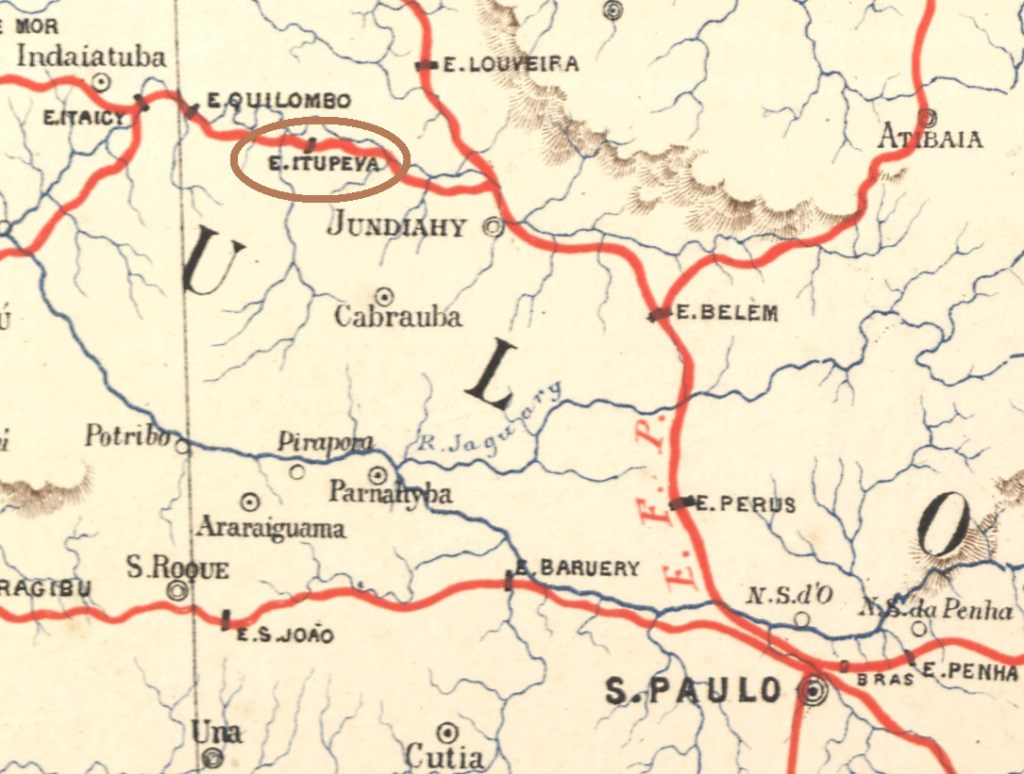
1873 wurde der Bahnhof Itupeva von der Eisenbahngesellschaft E.F. Ytuana (Jundiaí-Zweig) eröffnet, er lag am Südufer des Jundiaí im gleichnamigen Município, 70 km nordwestlich der Hauptstadt São Paulo. Danach wechselte die Strecke viermal den Besitzer: 1892 an die Cia. União Sorocabana e Ytuana, 1907 an die Sorocabana Railway, 1919 an E.F. Sorocabana, von 1971 bis zur Stilllegung 1973 gehörte sie der FEPASA (estacoesferroviarias.com.br). Heute sind die Gleise verschwunden, das Bahnhofsgebäude gehört der Gemeinde. Seit Februar 1964 befindet sich das Bahnhofsgelände im Município de Itupeva. Das Wort stammt aus der Sprache der Tupi-guarani und bedeutet seichter Wasserfall.
Wie aus dem Verzeichnis der kaiserlichen Postämter (Tabella das Agencias do Correio do Imperio, Rio de Janeiro, 1885) hervorgeht, gab es ein Postamt am Bahnhof seit 1880. Der kaiserliche Poststempel ist der französische Typ ISP-1970a (Samml. Fuad Ferreira Fo.), den es auch in blau gibt:


 Carimbologia