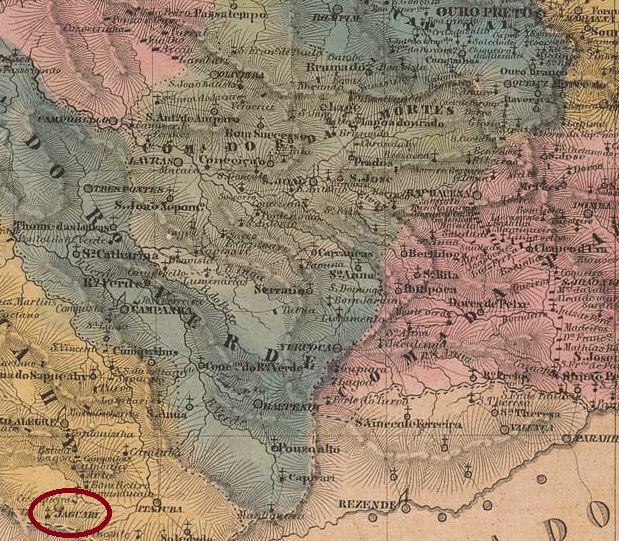
Other names: Camanducaia (1925)
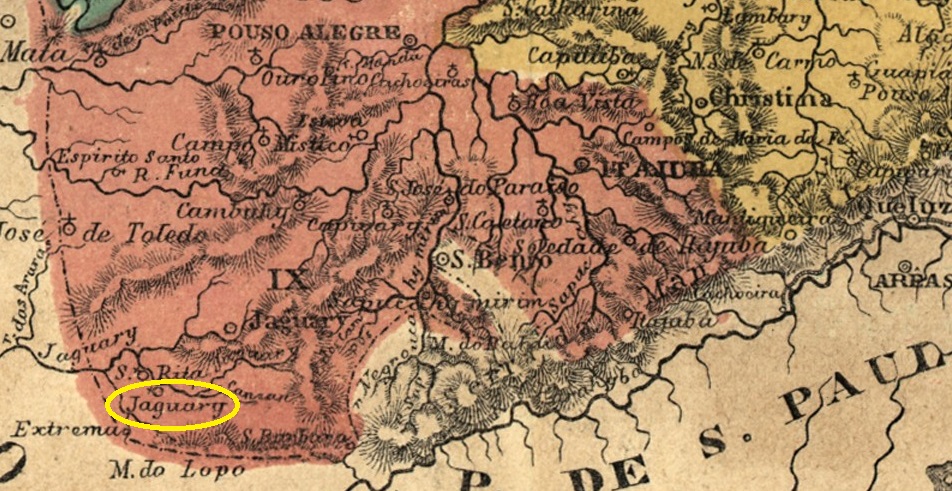
The Freguesia de Camanducaia on the north bank of the river of the same name, 500 kilometres southwest of the later provincial capital Ouro Preto, had existed since 1775. In March 1840 it became Vila de Jaguary (River of the Jaguars, in Tupi-guarani) and in July 1868 it was elevated to the status of a town. In September 1930, the original place name Camanducaia returned, probably to distinguish it from other Jaguaris (as it is spelt today). The meaning of the word Camanduacaia is not clear; some believe it means cooked beans, others are in favour of the translation ‘fireplace for hunting’.
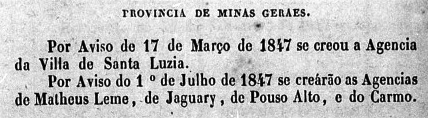
In July 1847, it was decided to establish a post office in Jaguary, according to the report of the Imperial Ministry:
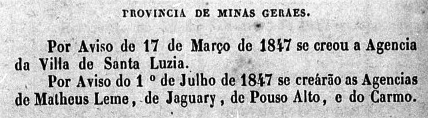
R. However, Koester shows in Carimbologia XXV that postal routes were routed via Jaguary (then Camanducaia) at least as early as 1835, as a tax control office (Registro) still existed there.
Initially, the stamps were cancelled by hand, as R. Koester (op. cit.) shows:
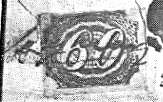
Then came the unfortunately poorly legible cancel JMG-1410a (fig. Koester). The inscription would read ‘Correio de Jaguary’:
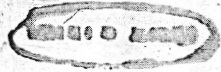
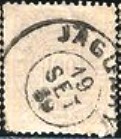
Later, the double circle JMG-1410b (ill. Claudio Neumann) was added, which also exists in blue:
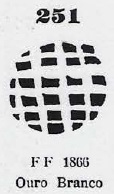
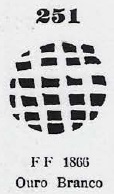
According to Koester, the following mute cancel no. 251 in P. Ayres (Catálogo de Carimbos Brasil-Império, S. Paulo, 1937, 1942) also comes from Jaguary:
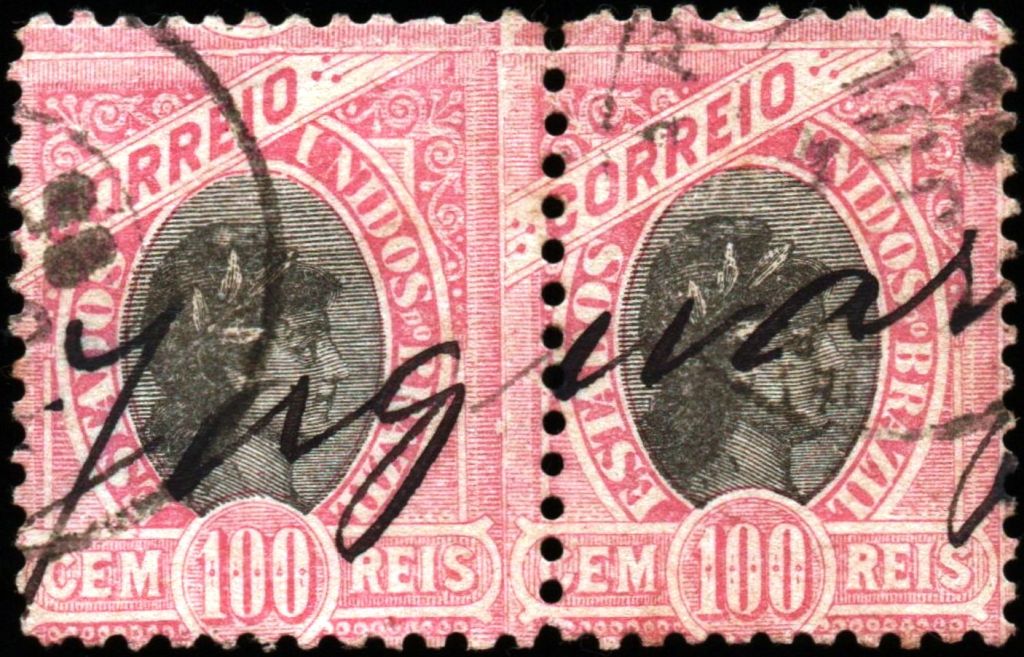
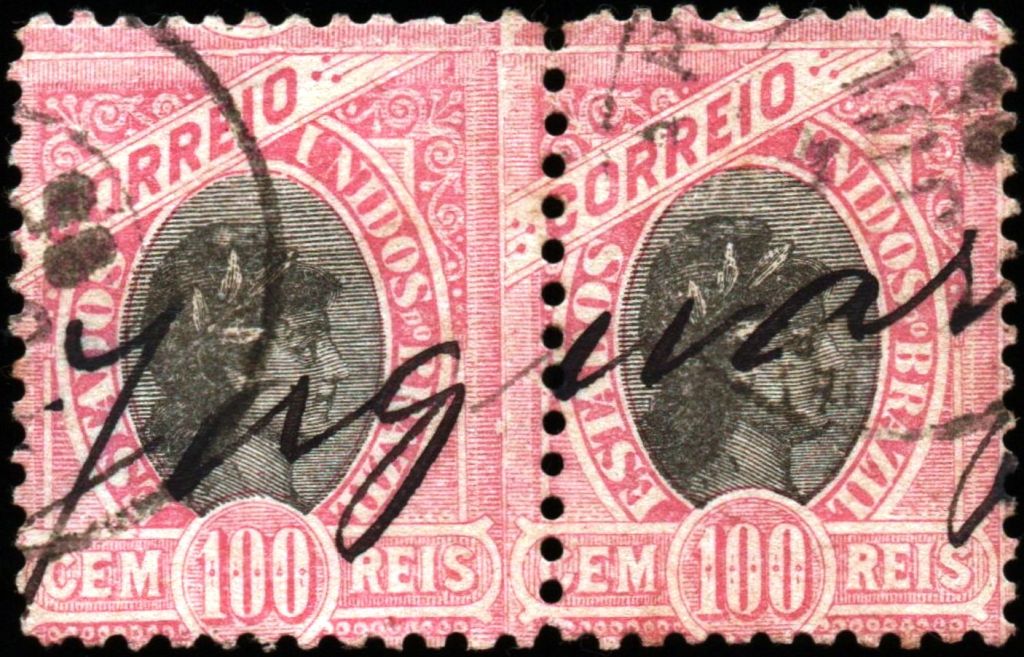
At the beginning of the Republic, cancellations were again made by hand, as the following image shows (ill. Cláudio Coelho):
Andere Namen: Camanducaia (1925)
Seit 1775 bestand die Freguesia de Camanducaia am Nordufer des gleichnamigen Flusses, 500 km südwestlich der späteren Provinzhauptstadt Ouro Preto. Im März 1840 wurde sie zur Vila de Jaguary (Fluss der Jaguare, auf Tupi-guarani) und im Juli 1868 zur Stadt erhoben. Im September 1930 kehrte der ursprüngliche Ortsname Camanducaia zurück, wahrscheinlich um sich von anderen Jaguaris (wie es heute geschrieben wird) zu unterscheiden. Die Bedeutung des Wortes Camanduacaia ist nicht eindeutig; einige glauben, dass es gekochte Bohnen bedeutet, andere sind für die Übersetzung “Feuerstelle für die Jagd”.
Im Juli 1847 wurde beschlossen, in Jaguary ein Postamt einzurichten, wie aus dem Bericht des kaiserlichen Ministeriums hervorgeht:
R. Koester weist jedoch in Carimbologia XXV nach, dass zumindest schon 1835 Postrouten über Jaguary (damals Camanducaia) geführt wurden, da dort noch eine Steuerkontrollstelle (Registro) existierte.
Anfangs wurden die Marken noch von Hand entwertet, wie R. Koester (op. cit.) zeigt:
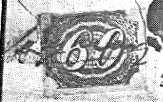
Dann kam der leider schlecht lesbare Stempel JMG-1410a (Abb. Koester). Die Inschrift soll “Correio de Jaguary” lauten:
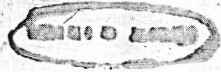
Später kam der Doppelkreis JMG-1410b (Abb. Claudio Neumann) hinzu, den es auch in blau gibt:
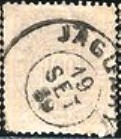
Aus Jaguary stammt nach Koester auch der folgende stumme Stempel Nr. 251 in P. Ayres (Catálogo de Carimbos Brasil-Império, S. Paulo, 1937, 1942):
Zu Beginn der Republik wurde wieder von Hand gestempelt, wie das folgende Bild zeigt (Abb. Cláudio Coelho):

 Carimbologia