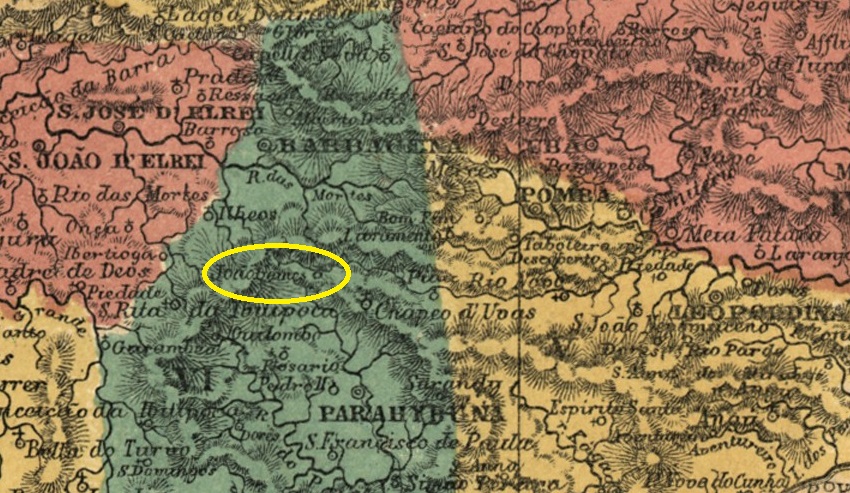
Other names: Palmyra, Santos Dumont (1932)
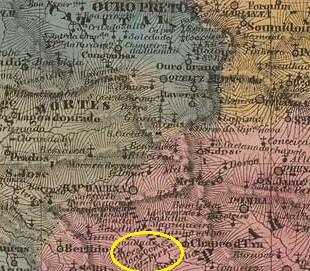
From November 1728, there was an estate (rancho) belonging to João Gomes Martins on the New Road (Caminho Novo) from Vila Rica to Rio de Janeiro, 170 kilometres south of the later capital Ouro Preto. The settlement became the Distrito de Vila de Barbacena in 1839, the Freguesia de S. Miguel e Almas de João Gomes in December 1867, the Vila de Palmyra in July 1889 and the town in March 1890, which has borne the name of its famous son, the aviation pioneer Alberto Santos Dumont (born 1873), since July 1932, shortly after his voluntary death in a beach hotel in Guarujá.

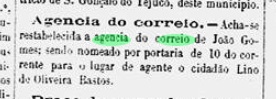
Nova Monteiro writes in Administrações e Agencias Postaes do Brasil Imperio (Brasil Filatelico/RJ, 1934-5; reprint SPP 1994-1999) that there had been a post office in João Gomes since May 1863. As the Minas Gerais press reported that it reopened in April 1872, it must have been closed before then.
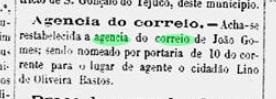
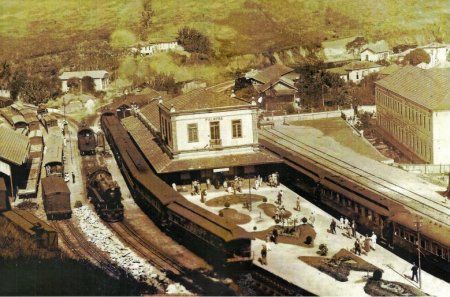
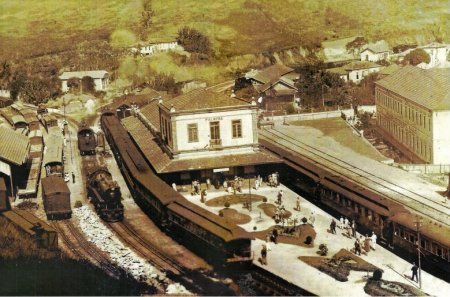
The post office was probably later moved to the railway station of the E.F. D. Pedro II railway company, which opened in February 1877.
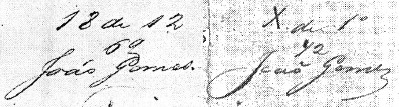
In the beginning, the stamps were cancelled by hand (fig. R. Koester, in Carimbologia XXV):

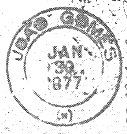
Later came the double circle JMG-3360a (fig. Koester):
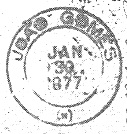
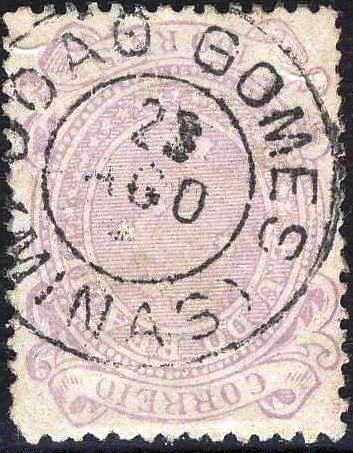
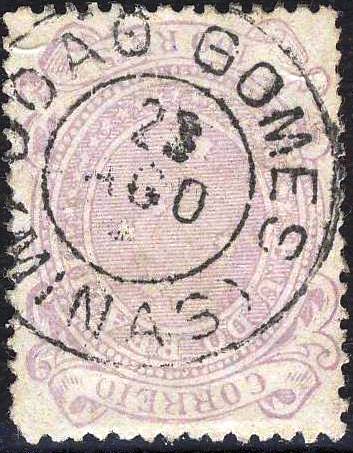
This was followed by JMG-3360b (ill. José L. Fevereiro):
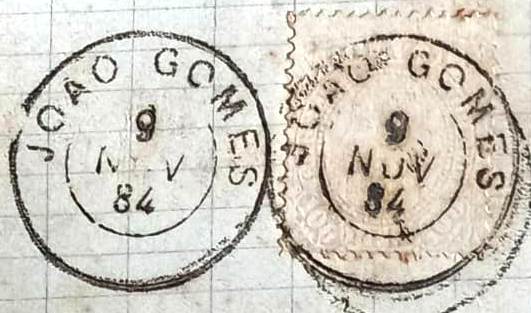
At the end of the Empire, JMG-3360c (collect. FM) also appeared:
Andere Namen: Palmyra, Santos Dumont (1932)
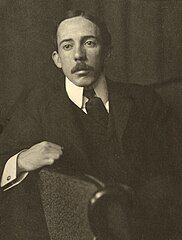
Seit November 1728 gab es ein Landgut (Rancho) eines João Gomes Martins am Neuen Weg (Caminho Novo) von Vila Rica nach Rio de Janeiro, 170 km südlich der späteren Hauptstadt Ouro Preto. Die Siedlung wurde 1839 zum Distrito de Vila de Barbacena, im Dezember 1867 zur Freguesia de S. Miguel e Almas de João Gomes, im Juli 1889 zur Vila de Palmyra und im März 1890 zur Stadt, die seit Juli 1932 den Namen ihres berühmten Sohnes, des Luftfahrtpioniers Alberto Santos Dumont (geb. 1873) trägt, kurz nach dessen freiwilligem Tod in einem Strandhotel in Guarujá.
Nova Monteiro schreibt in Administrações e Agencias Postaes do Brasil Imperio (Brasil Filatelico/RJ, 1934-5; Reprint SPP 1994-1999), dass es in João Gomes seit Mai 1863 ein Postamt gab. Da die Presse von Minas Gerais von einer Wiedereröffnung im April 1872 berichtete, muss es vorher geschlossen worden sein.
Vermutlich wurde das Postamt später in den Bahnhof der Eisenbahngesellschaft E.F.D. Pedro II verlegt, der im Februar 1877 eröffnet wurde.
Zu Beginn wurden die Marken noch per Hand entwertet (Abb. R. Koester, in Carimbologia XXV):
Später kam der Doppelkreis JMG-3360a (Abb. Koester):
Es folgte JMG-3360b (Abb. José L. Fevereiro):
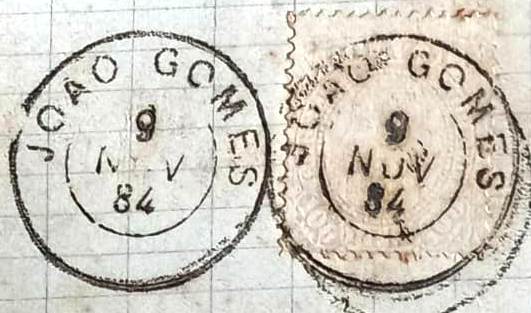
Am Ende des Kaiserreichs erschien auch JMG-3360c (Samml. FM):

 Carimbologia