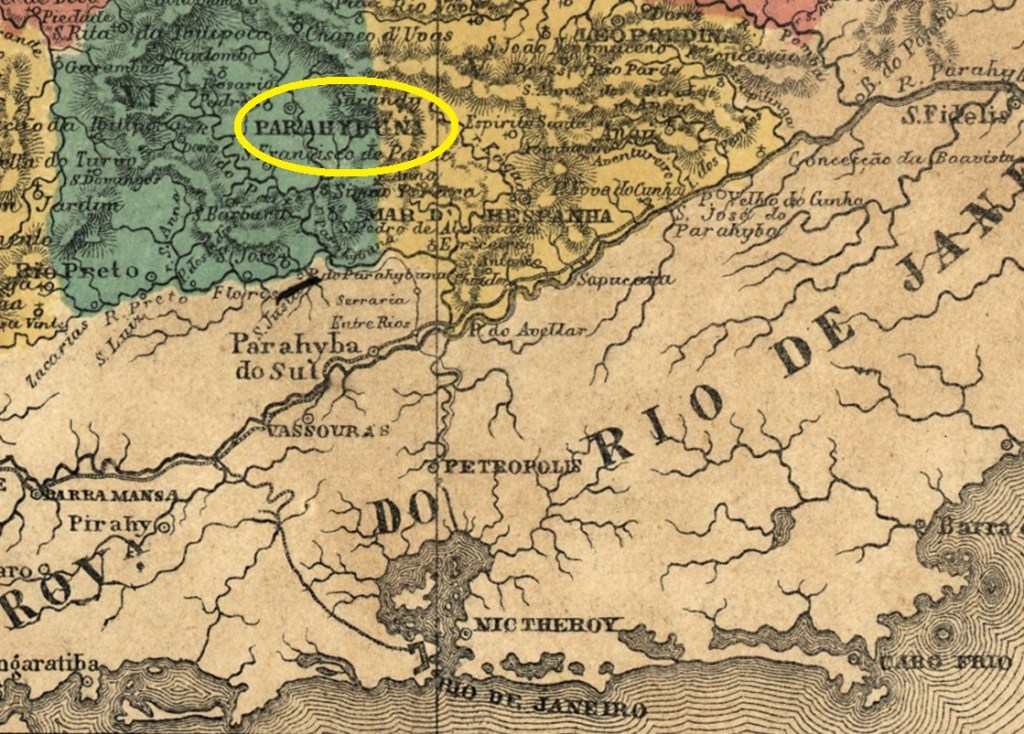
Other names: Santo Antonio do Parahybuna, Parahybuna
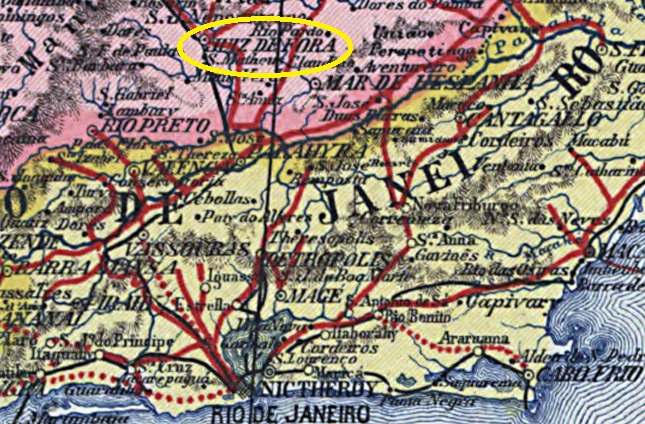
Since March 1781, a Fazenda do Juiz de Fora existed on the west bank of the Paraibuna around Vila de S. João d’El Rei, 230 kilometres south of the later provincial capital of Ouro Preto. In March 1844, the chapel of Sto. Antonio do Parahybuna was consecrated here, which was assigned to the Vila de Santo Antonio do Parahybuna in May 1850. Parahybuna was elevated to the status of town in May 1856 and in December 1865 the original name was changed back as Município de Juiz de Fora.
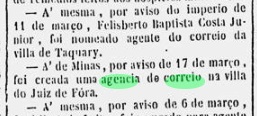
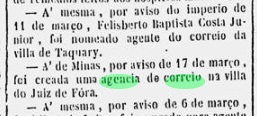
In March 1851, it was decided to establish a local post office, as reported in the Rio de Janeiro press:
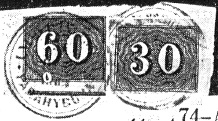
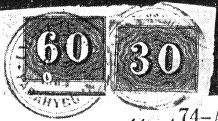
The first postmarks still bear the place name Parahybuna. The oldest to date is PMG-3925b (fig. R. Koester, in Carimbologia XXV):
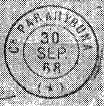
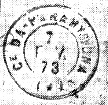
Two French type postmarks followed. The first is PMG-3925c (fig. Koester, op. cit.):
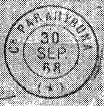
The second, slightly modified, is PMG-3925d (fig. Koester):
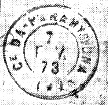
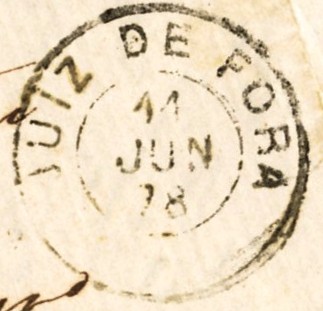
From around 1877, the place name Juiz de Fora appears on the postmarks, beginning with JMG-1445a (collect. FM):
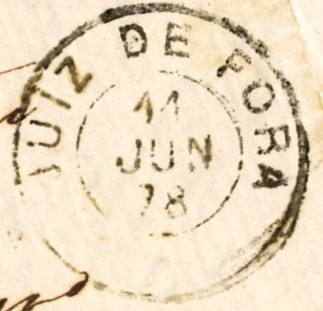
Then came the interesting JMG-1445b, which is illustrated in P. Ayres’ Catálogo de Carimbos Brasil-Império (S. Paulo, 1937, 1942) on page 122. However, the illustration was corrected by Koester:
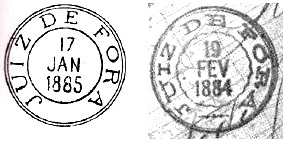
At the end of the Empire, two more circle cancels appeared, first JMG-1445c (fig. Koester):
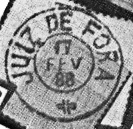
Shortly afterwards, JMG-1445d (fig. Koester) appeared:
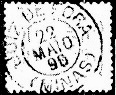
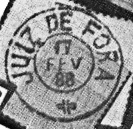
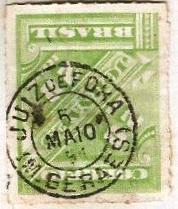
The following postmark JMG-1445e (illustration from the Internet) is probably already republican:

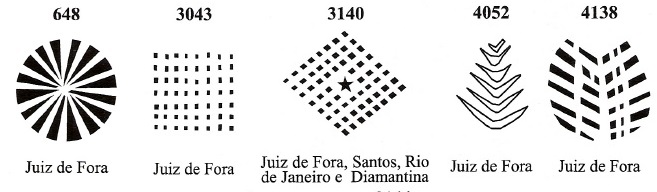
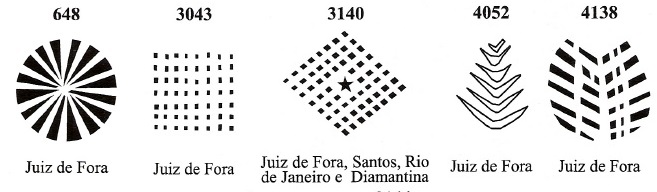
James Dingler and Klerman W. Lopes have listed five mute cancels from Juiz de Fora in Mute Cancellations of the Brazil Empire / Carimbos Mudos do Brasil Império (Brazil Philatelic Association, Rio de Janeiro, 2000):
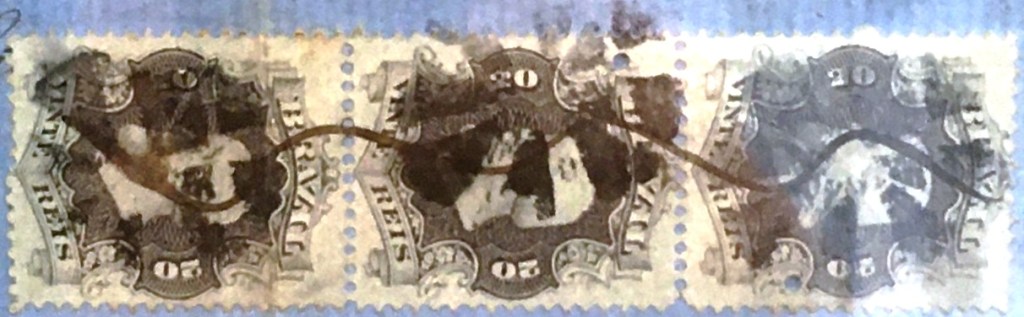
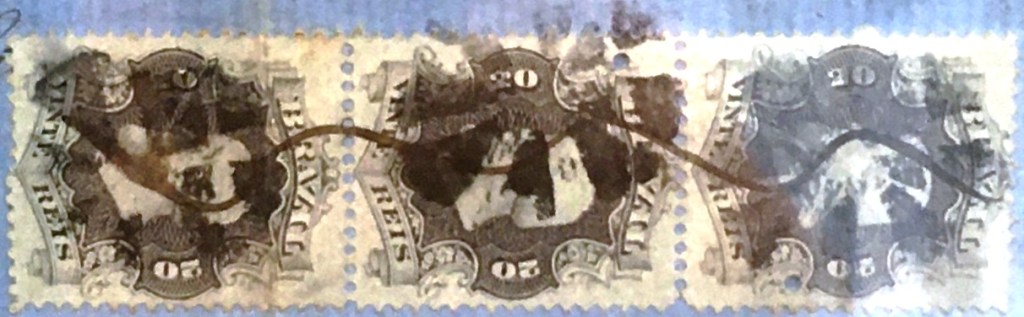
Two further mute cancellations are known:

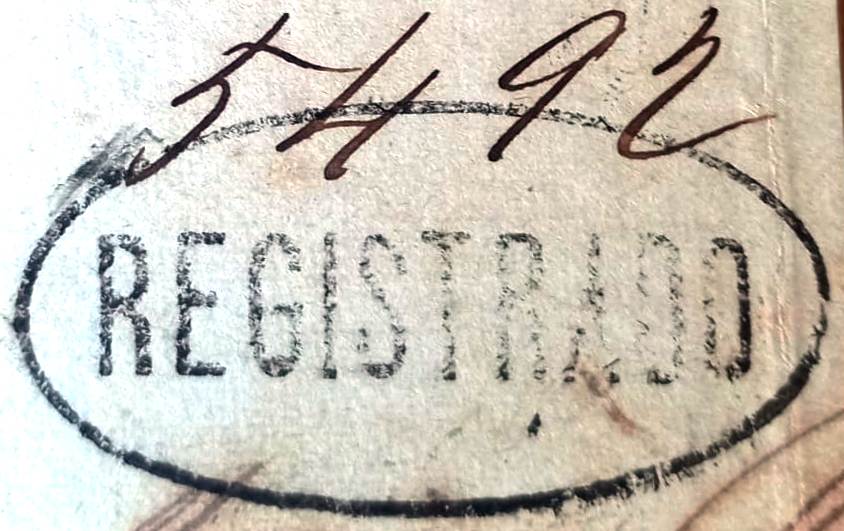
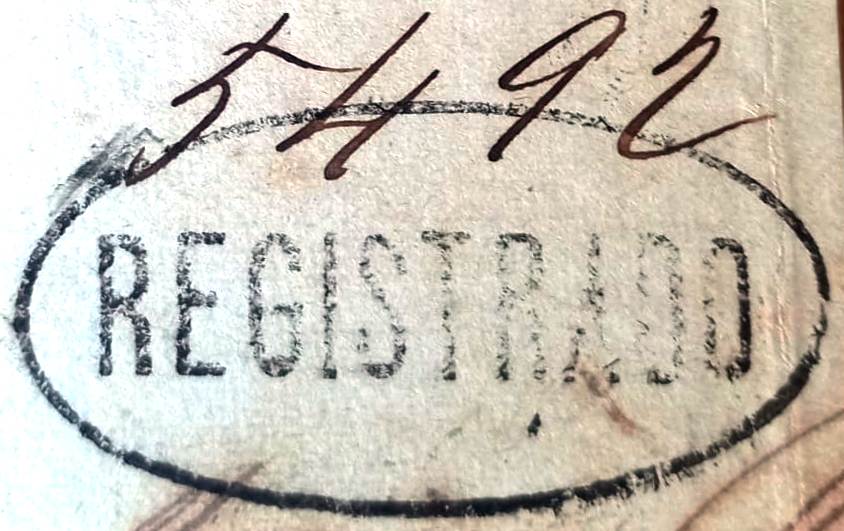
The philatelist Fuad Ferreira Fo. also showed a registered postmark from Juiz de Fora:
Andere Namen: Santo Antonio do Parahybuna, Parahybuna
Seit März 1781 bestand eine Fazenda do Juiz de Fora am Westufer des Paraibuna im Gebiet von Vila de S. João d’El Rei, 230 km südlich der späteren Provinzhauptstadt Ouro Preto. Im März 1844 wurde hier die Kapelle Sto. Antonio do Parahybuna eingeweiht, die im Mai 1850 der Vila de Santo Antonio do Parahybuna zugeordnet wurde. Die Erhebung zur Stadt Parahybuna erfolgte im Mai 1856 und im Dezember 1865 wurde der ursprüngliche Ortsname wieder in Município de Juiz de Fora geändert.
Im März 1851 wurde die Einrichtung eines örtlichen Postamtes beschlossen, wie aus der Presse von Rio de Janeiro hervorgeht:
Die ersten Poststempel tragen noch den Ortsnamen Parahybuna. Der bisher älteste ist PMG-3925b (Abb. R. Koester, in Carimbologia XXV):
Es folgten zwei französische Poststempel. Der erste ist PMG-3925c (Abb. Koester, op. cit.):
Der zweite, leicht veränderte, ist PMG-3925d (Abb. Koester):
Ab ca. 1877 erscheint der Ortsname Juiz de Fora auf den Poststempeln, beginnend mit JMG-1445a (Samml. FM):
Dann kam der interessante JMG-1445b, der in P. Ayres‘ Catálogo de Carimbos Brasil-Império (S. Paulo, 1937, 1942) auf Seite 122 abgebildet ist. Die Abbildung wurde jedoch von Koester korrigiert:
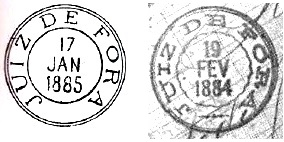
Am Ende des Kaiserreichs erschienen zwei weitere Kreisstempel, zuerst JMG-1445c (Abb. Koester):
Kurz darauf erschien JMG-1445d (Abb. Koester):

Der folgende Stempel JMG-1445e (Abb. aus dem Internet) dürfte bereits republikanisch sein:
James Dingler und Klerman W. Lopes haben in Mute Cancellations of the Brazil Empire / Carimbos Mudos do Brasil Império (Brazil Philatelic Association, Rio de Janeiro, 2000) fünf stumme Stempel aus Juiz de Fora aufgeführt:
Zwei weitere stumme Stempel sind bekannt:

Der Philatelist Fuad Ferreira Fo. zeigte auch einen Einschreibstempel aus Juiz de Fora:

 Carimbologia