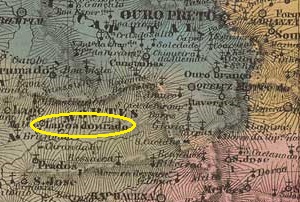
Other names: Alagoas
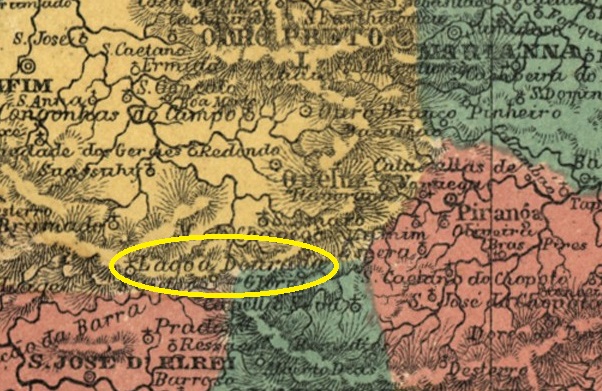
The settlement of Arraial de Alagoas, which belonged to the Vila de S. José d’El-Rei (today: Tiradentes) and was located 120 kilometres southwest of the later provincial capital of Ouro Preto, had existed since 1715. In 1750 it became the Distrito de Santo Antonio da Lagoa Dourada, which was elevated to a freguesia in October 1849. This became the Vila de Prados in November 1891 and Lagoa Dourada has been an independent município since August 1911.
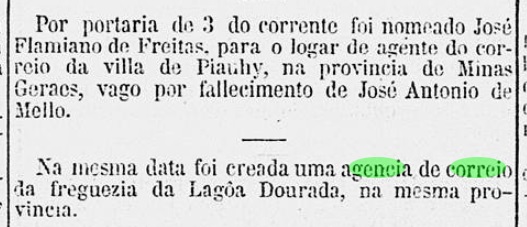
Two dates have been found for the foundation of the local post office. The first is in March 1865, as Nova Monteiro writes in Administrações e Agencias Postaes do Brasil Imperio (Brasil Filatelico/RJ, 1934-5; reprint SPP 1994-1999) and is confirmed by the press in Rio:
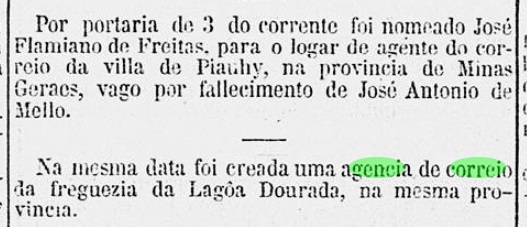
As this agency does not appear in any of the directories of post offices in Minas Gerais between 1870 and 1875, it was short-lived. Then again in February 1877, as can be seen from the list of imperial post offices (Tabella das Agencias do Correio do Imperio, Rio de Janeiro, 1885).
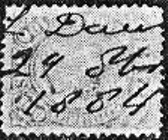
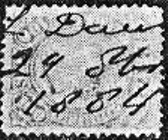
The oldest postal cancellation to date is handwritten and was illustrated by R. Koester in Carimbologia XXVI:
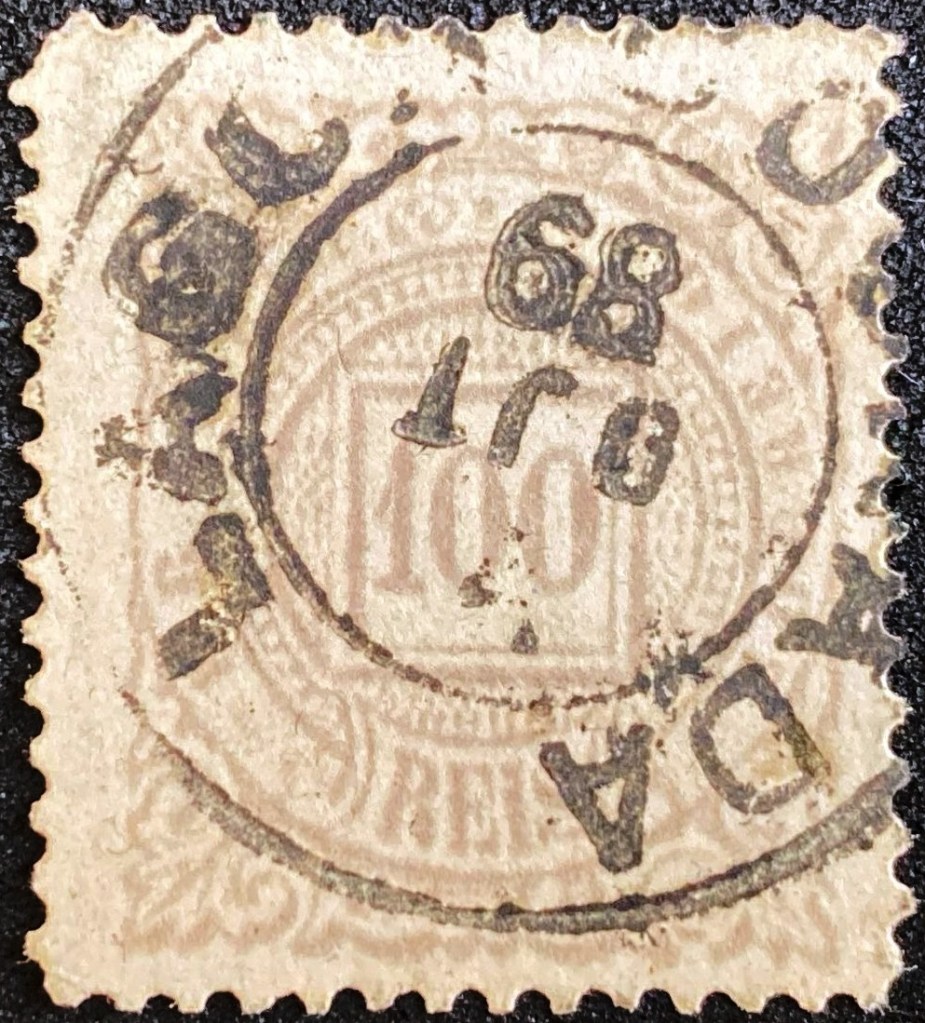
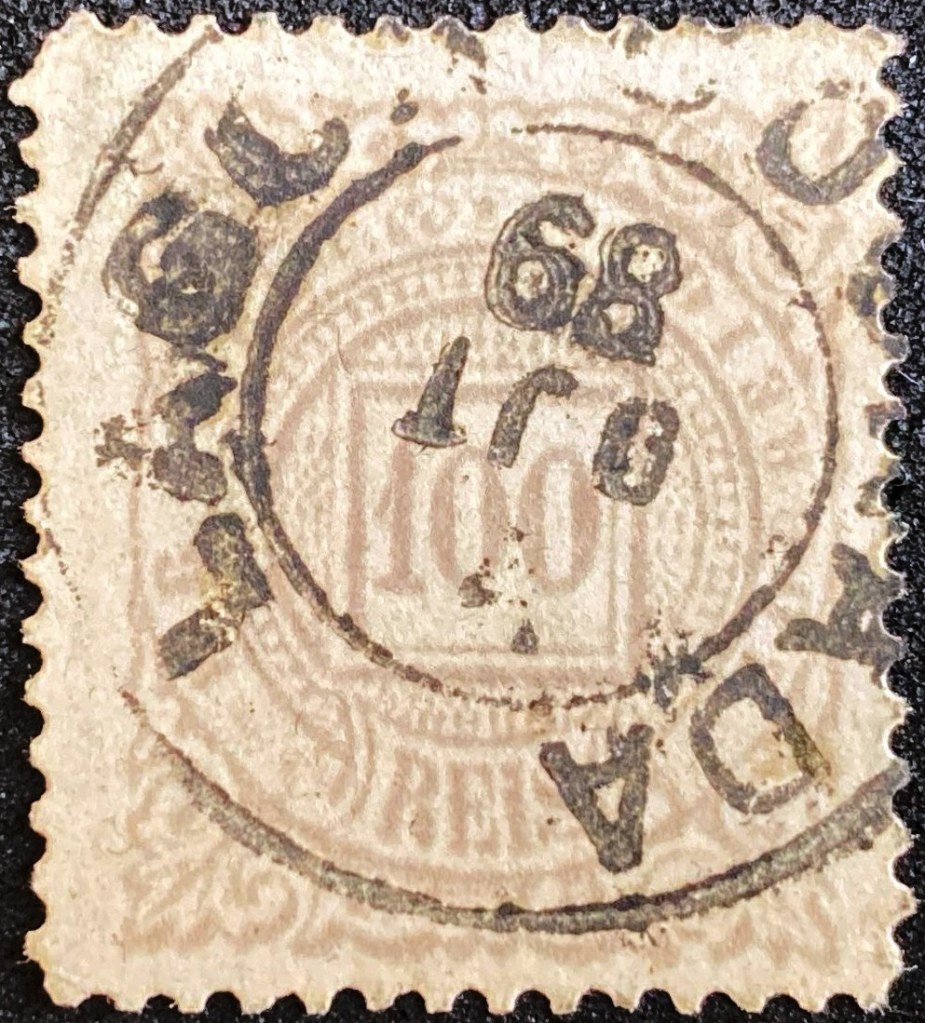
The postmark LMG-1460b (fig. Felipe Piccinini) was added a short time later:
Andere Namen: Alagoas
Seit 1715 existierte die Siedlung Arraial de Alagoas, die zur Vila de S. José d’El-Rei (heute: Tiradentes) gehörte und 120 km südwestlich der späteren Provinzhauptstadt Ouro Preto lag. 1750 wurde es zum Distrito de Santo Antonio da Lagoa Dourada, der im Oktober 1849 zur Freguesia erhoben wurde. Diese wurde im November 1891 zur Vila de Prados und seit August 1911 ist Lagoa Dourada ein eigenständiges Município.
Für die Gründung des örtlichen Postamtes wurden zwei Daten gefunden. Erstmals im März 1865, wie Nova Monteiro in Administrações e Agencias Postaes do Brasil Imperio (Brasil Filatelico/RJ, 1934-5; Nachdruck SPP 1994-1999) schreibt und von der Presse in Rio bestätigt wird:
Da diese Agentur zwischen 1870 und 1875 in keinem der Verzeichnisse der Postämter von Minas Gerais auftaucht, war sie nur von kurzer Dauer. Dann wieder im Februar 1877, wie aus dem Verzeichnis der kaiserlichen Postämter hervorgeht (Tabella das Agencias do Correio do Imperio, Rio de Janeiro, 1885).
Die bisher älteste postalische Entwertung ist handschriftlich und wurde von R. Koester in Carimbologia XXVI abgebildet:
Kurze Zeit später kam der Poststempel LMG-1460b (Abb. Felipe Piccinini) dazu:

 Carimbologia