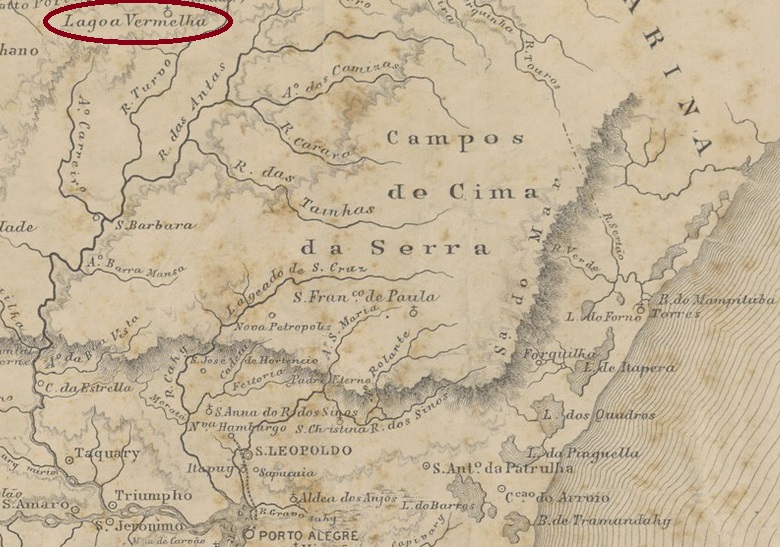
The chapel of S. Paulo da Lagoa Vermelha existed since January 1845, it belonged to the Vila de Sto. Antonio da Patrulha and was located on the east bank of the Passinho Fundo, 320 kilometres north of the provincial capital Porto Alegre. In October 1850, the settlement was subordinated to the Vila de Vacaria and in January 1857 was elevated to the seat of this municipality. The very next month, however, Lagoa Vermelha was returned as a freguesia to the Município de Sto. Antonio da Patrulha. In April 1876, Lagoa Vermelha became an independent Município for the first time, lost this status in April 1878 when it became a Distrito de Vacaria again, and was promoted to Município for the second time in May 1881.
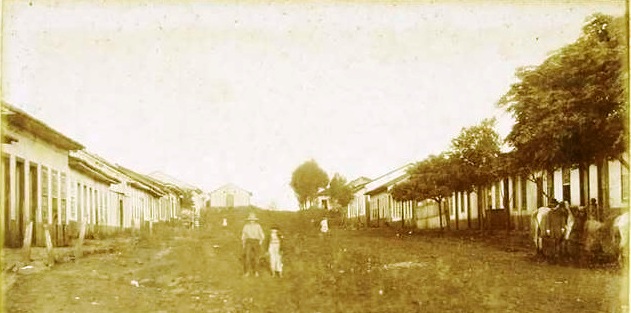
As Nova Monteiro writes in Administrações e Agencias Postaes do Brasil Imperio (Brasil Filatelico/RJ, 1934-5; reprint SPP 1994-1999), there had been a post office there since February 1860. Handwritten cancellations are known on the D. Pedro issue of 1866 (ill. Carlos A. Balata):
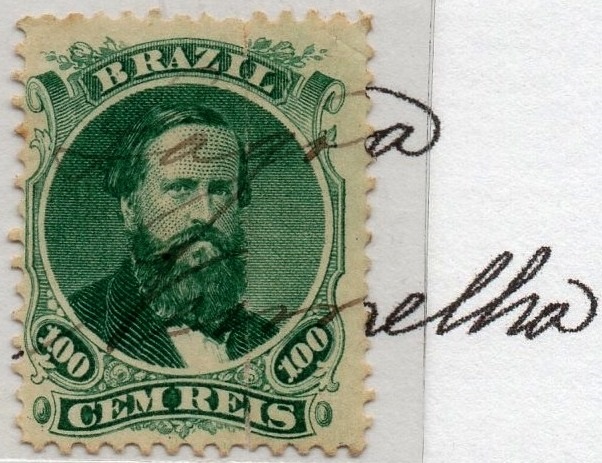
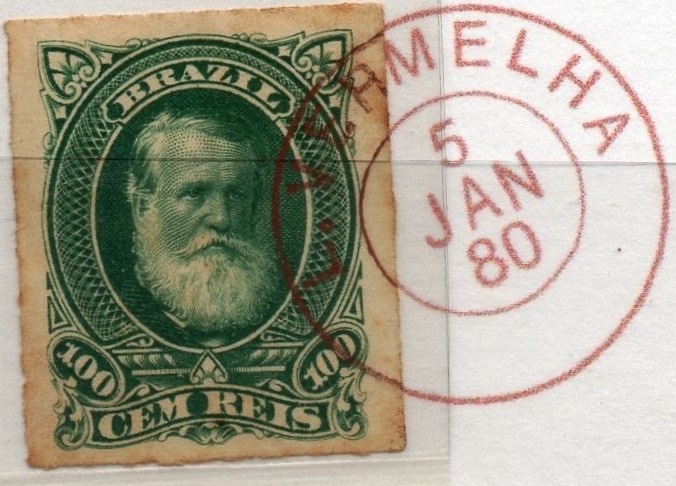
The oldest postmark to date is LRS-0205b (Ill. Carlos A. Balata), which also exists in red:

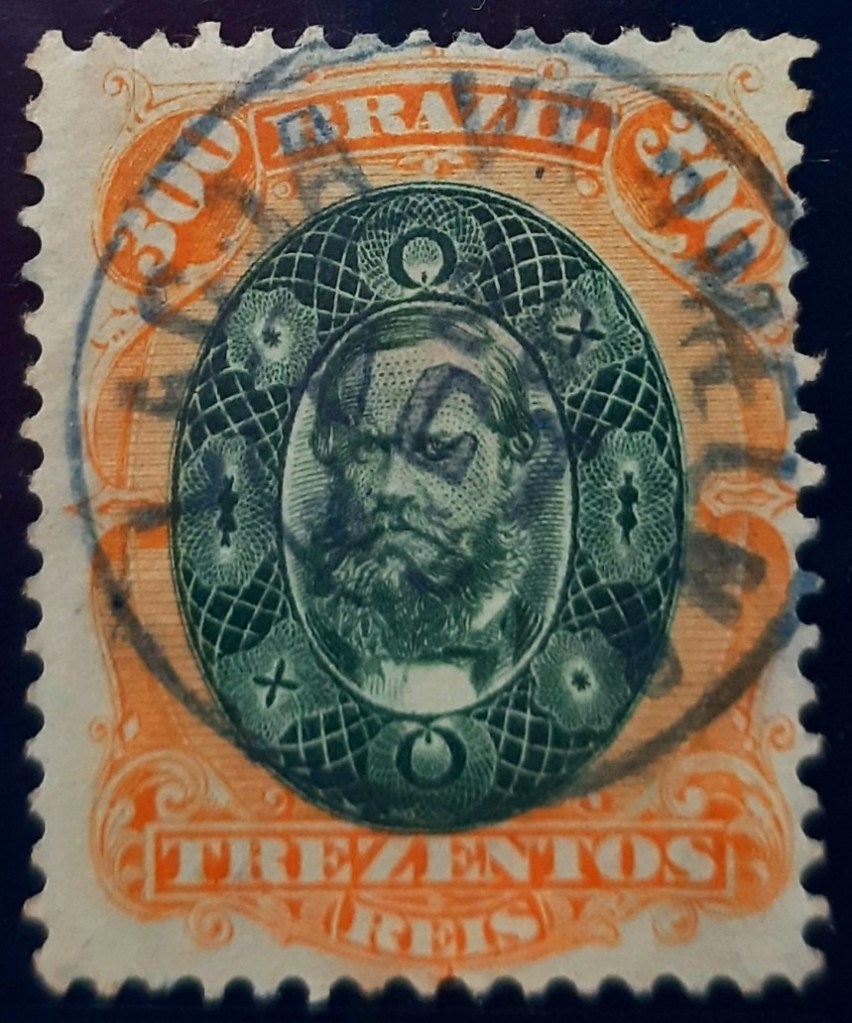
This was followed by LRS-0205c (fig. Felipe Piccinini):
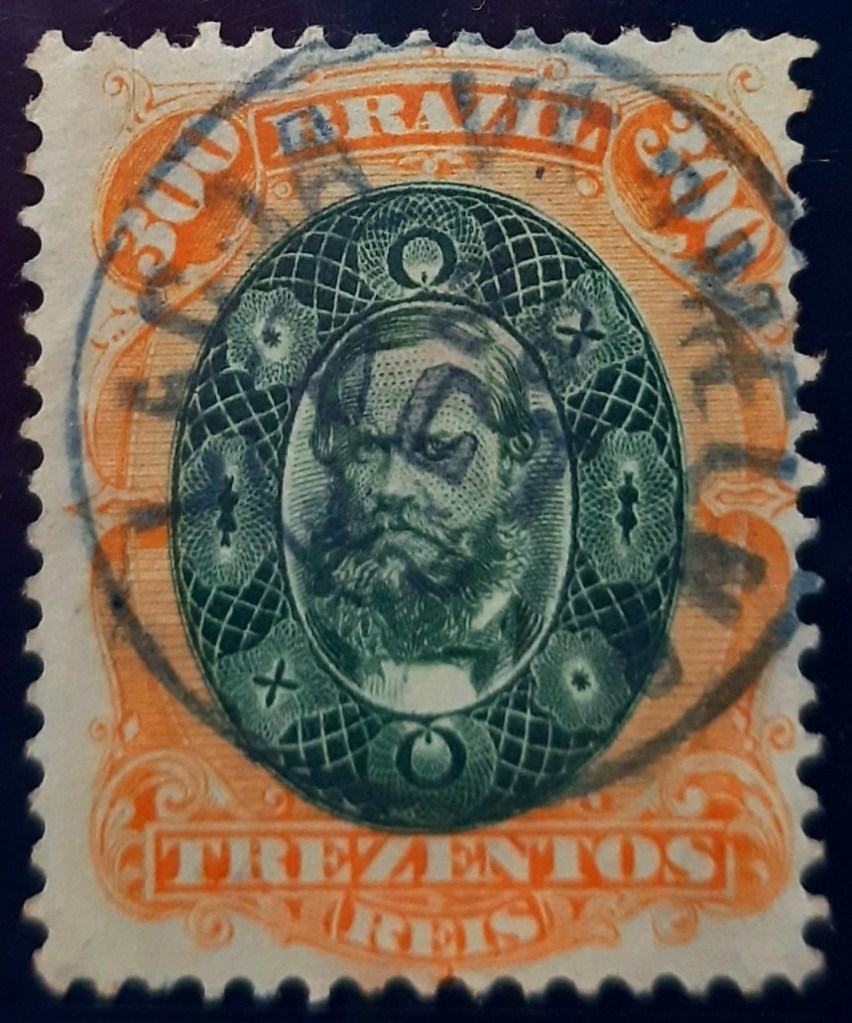
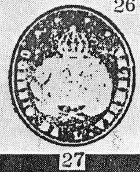
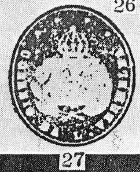
R. Koester showed in Carimbologia XXVI the postmark with the imperial seal LRS-0205d:
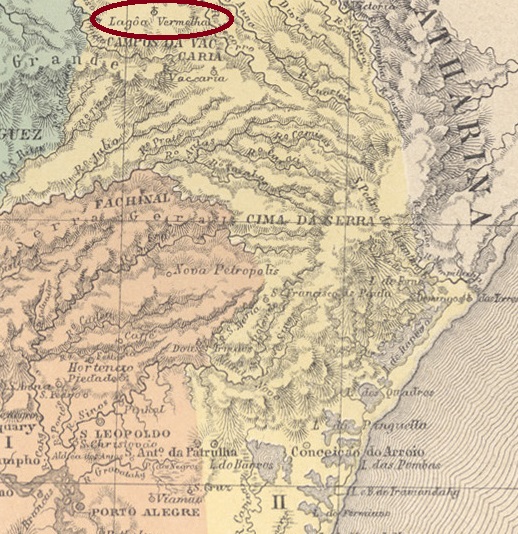
Seit Januar 1845 ist die Kapelle S. Paulo da Lagoa Vermelha bezeugt, die zur Vila de Sto. Antonio da Patrulha gehörte und am Ostufer des Passinho Fundo lag, 320 km nördlich der Provinzhauptstadt Porto Alegre. Im Oktober 1850 wurde die Siedlung der Vila de Vacaria unterstellt und im Januar 1857 zum Sitz dieses Municipios erhoben. Bereits im folgenden Monat wurde Lagoa Vermelha jedoch als Freguesia wieder dem Município de Sto. Antonio da Patrulha. Im April 1876 wurde Lagoa Vermelha zum ersten Mal ein eigenständiges Município, verlor diesen Status im April 1878, als es wieder ein Distrito de Vacaria wurde, und stieg im Mai 1881 zum zweiten Mal zum Município auf.
Wie Nova Monteiro in Administrações e Agencias Postaes do Brasil Imperio (Brasil Filatelico/RJ, 1934-5; Reprint SPP 1994-1999) schreibt, gab es dort ein Postamt seit Februar 1860. Auf der D. Pedro-Ausgabe von 1866 sind handschriftliche Entwertungen bekannt (Abb. Carlos A. Balata):

Der bisher älteste Poststempel ist LRS-0205b (Abb. Carlos A. Balata), den es auch in rot gibt:
Es folgte LRS-0205c (Abb. Felipe Piccinini):
R. Koester zeigte in Carimbologia XXVI noch den Poststempel mit dem kaiserlichen Siegel LRS-0205d:

 Carimbologia