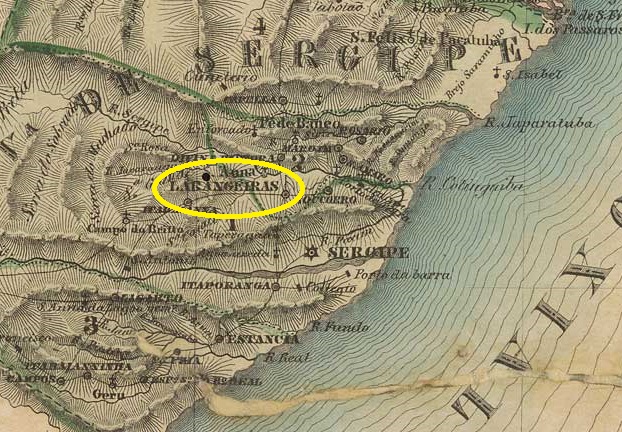
Other names: Porto de Larangeiras
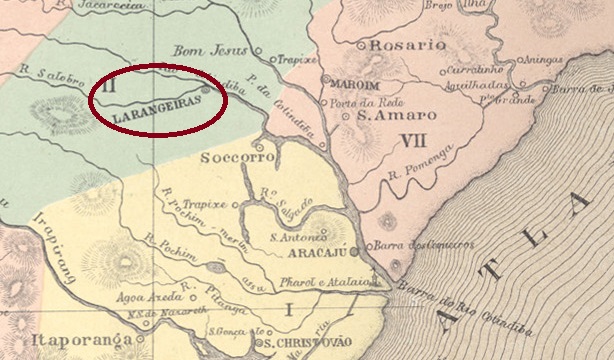
The settlement developed around a harbour on the south bank of the Cotinguiba (tributary of the Sergipe), 20 km northwest of the later provincial capital of Aracaju. From 1637 to 1645, Larangeiras was controlled by Dutch conquerors. It was not until long after the liberation, in August 1832, that it became a Vila and in February 1835 the Freguesia de Santissimo Coração de Jesus de Larangeiras. The following year, Larangeiras became the seat of the customs authority of the province of Sergipe. Since May 1848, Laranjeiras (as it is spelt today) has been a town.
Nova Monteiro writes in Administrações e Agencias Postaes do Brasil Imperio (Brasil Filatelico/RJ, 1934-5; reprint SPP 1994-1999) that there had been a post office there since March 1829. Further opening dates in 1844 and 1849 can be found in R. Koester (Carimbologia XXVI) and in the Directory of Imperial Post Offices (Tabella das Agencias do Correio do Imperio, Rio de Janeiro, 1885).
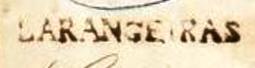
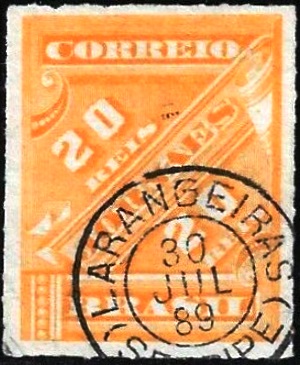
The oldest postmark to date is LSE-0110a (fig. Yuri Nobre):
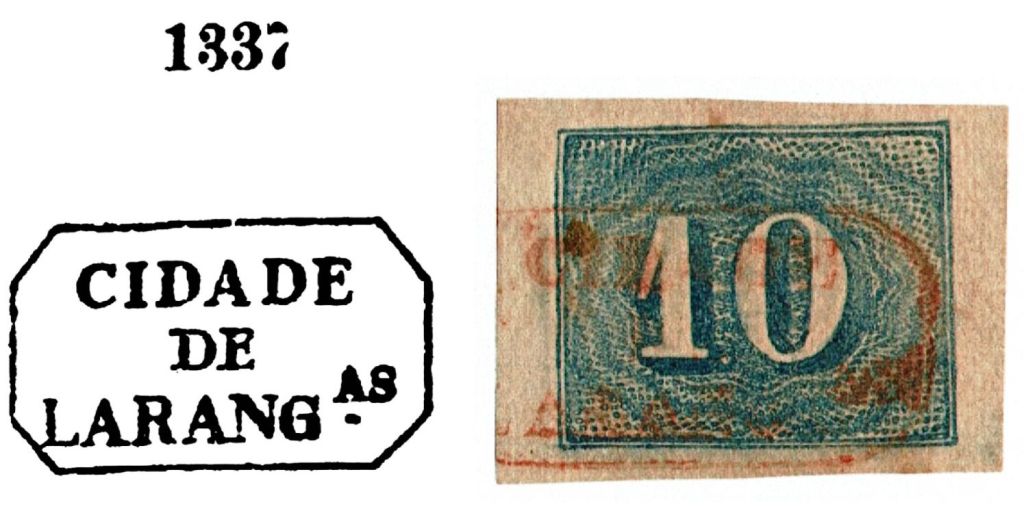
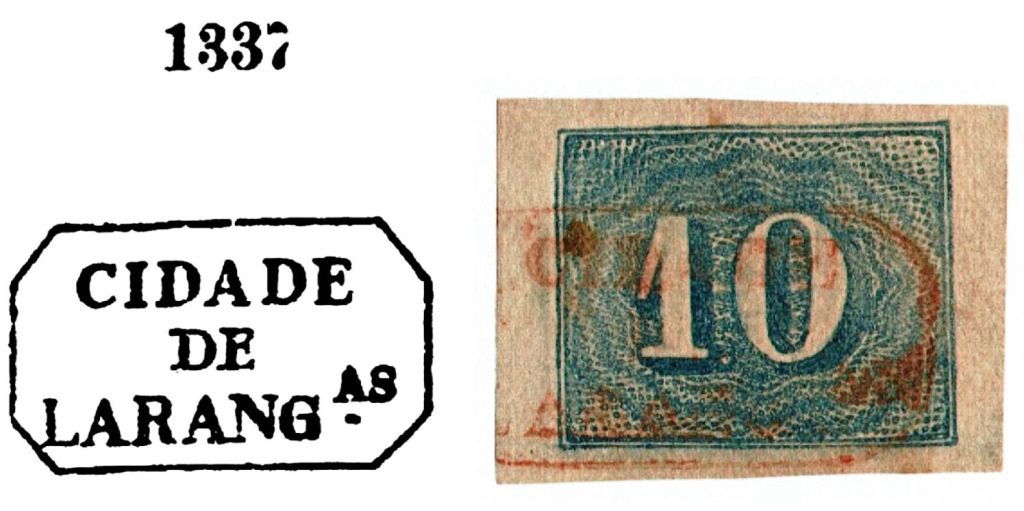
This was followed by LSE-0110b, which was given the no. 1337 in P. Ayres’ Catálogo de Carimbos Brasil-Império (S. Paulo, 1937, 1942), mostly in red, rarely in blue, here in an illustration by Cláudio Coelho:
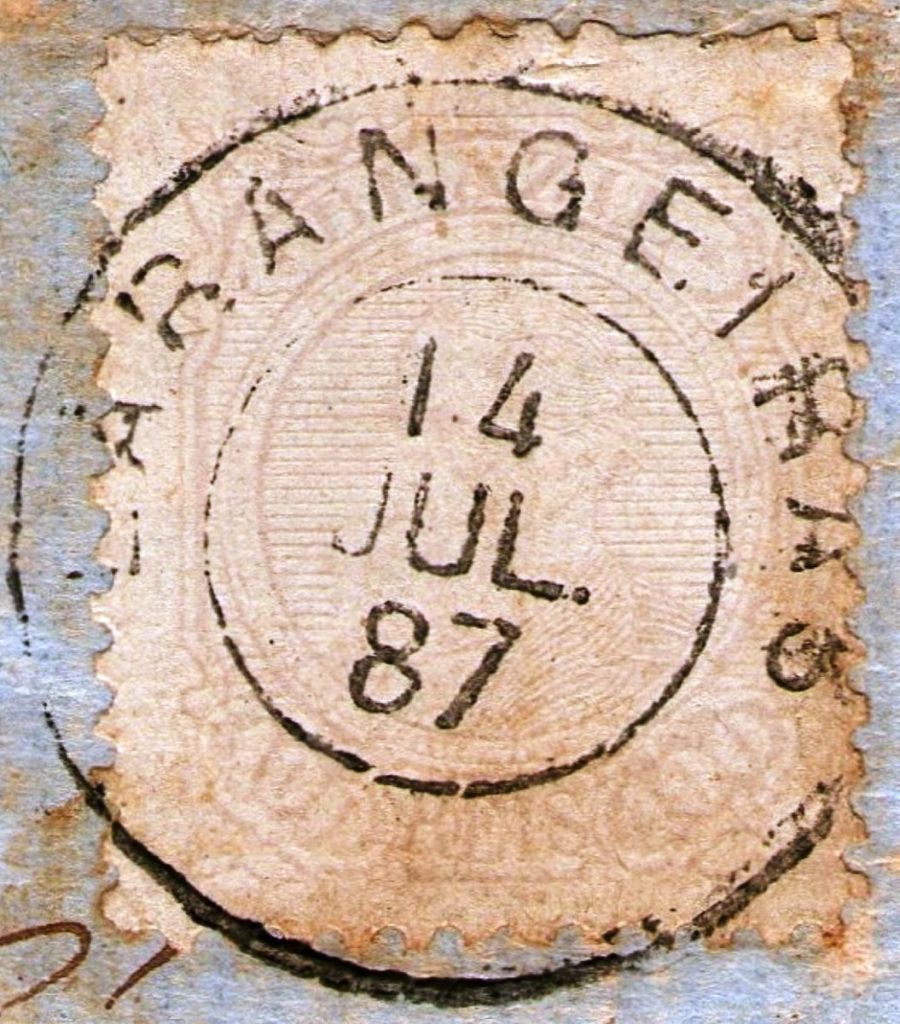
Then came the double circle LSE-0110c (illustration by Claudio Coelho):
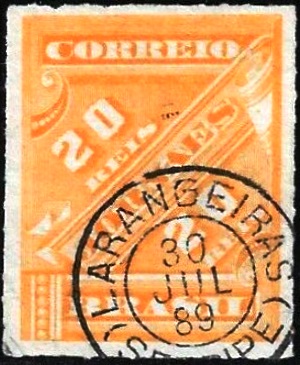
Towards the end of the century, LSE-0110d also appeared (illustration from the Internet):
Andere Namen: Porto de Larangeiras
Die Siedlung entstand um einen Hafen am Südufer des Cotinguiba (Nebenfluss des Sergipe), 20 km nordwestlich der späteren Provinzhauptstadt Aracaju. Von 1637 bis 1645 wurde Larangeiras von holländischen Eroberern kontrolliert. Erst lange nach der Befreiung, im August 1832, wurde es zur Vila und im Februar 1835 zur Freguesia de Santissimo Coração de Jesus de Larangeiras. Im folgenden Jahr wurde Larangeiras Sitz der Zollbehörde der Provinz Sergipe. Seit Mai 1848 ist Laranjeiras (wie es heute geschrieben wird) eine Stadt.
Nova Monteiro schreibt in Administrações e Agencias Postaes do Brasil Imperio (Brasil Filatelico/RJ, 1934-5; Reprint SPP 1994-1999), dass es dort seit März 1829 ein Postamt gab. Weitere Eröffnungsdaten in den Jahren 1844 und 1849 finden sich bei R. Koester (Carimbologia XXVI) und im Verzeichnis der Kaiserlichen Postämter (Tabella das Agencias do Correio do Imperio, Rio de Janeiro, 1885).
Der bisher älteste Poststempel ist LSE-0110a (Abb. Yuri Nobre):

Es folgte LSE-0110b, der im P. Ayres‘ Catálogo de Carimbos Brasil-Império (S. Paulo, 1937, 1942) die Nr. 1337 erhielt, meistens in rot, selten in blau vorkommend, hier in einer Abbildung von Cláudio Coelho:
Danach kam der Doppelkreis LSE-0110c (Abb. Claudio Coelho):
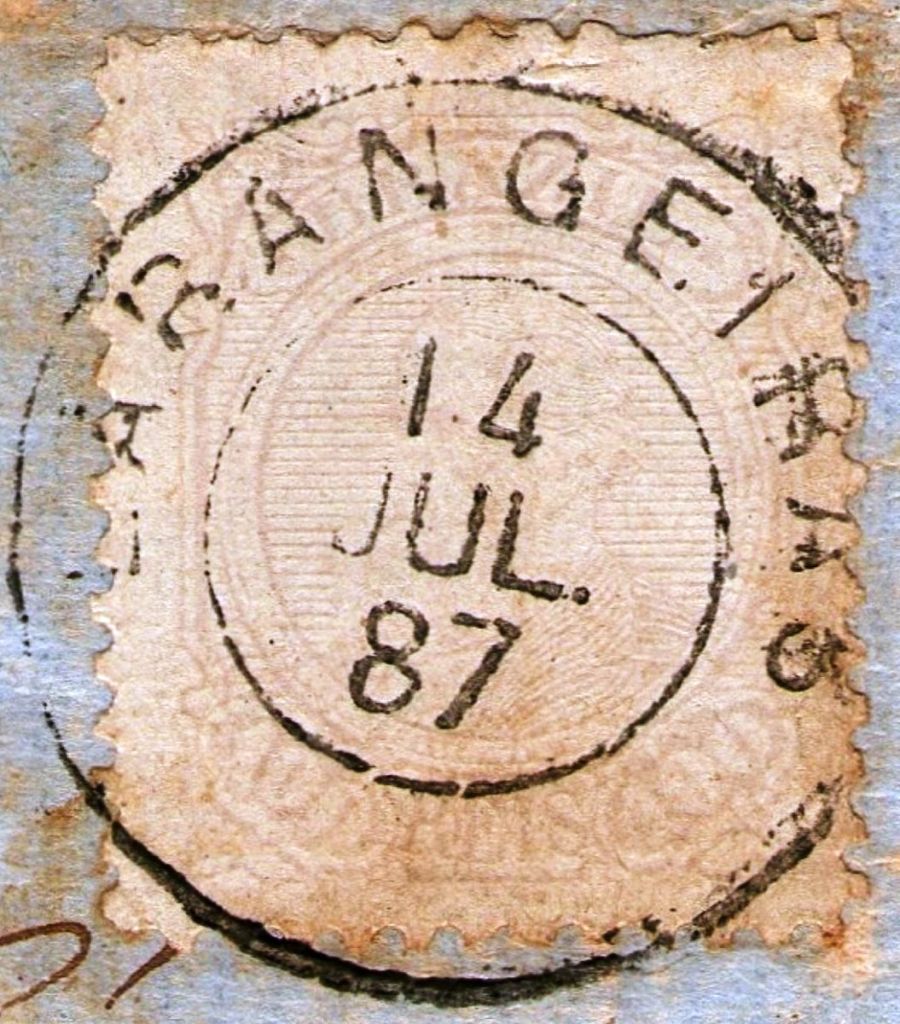
Gegen Ende des Jahrhunderts erschien auch LSE-0110d (Abb. aus dem Internet):

 Carimbologia