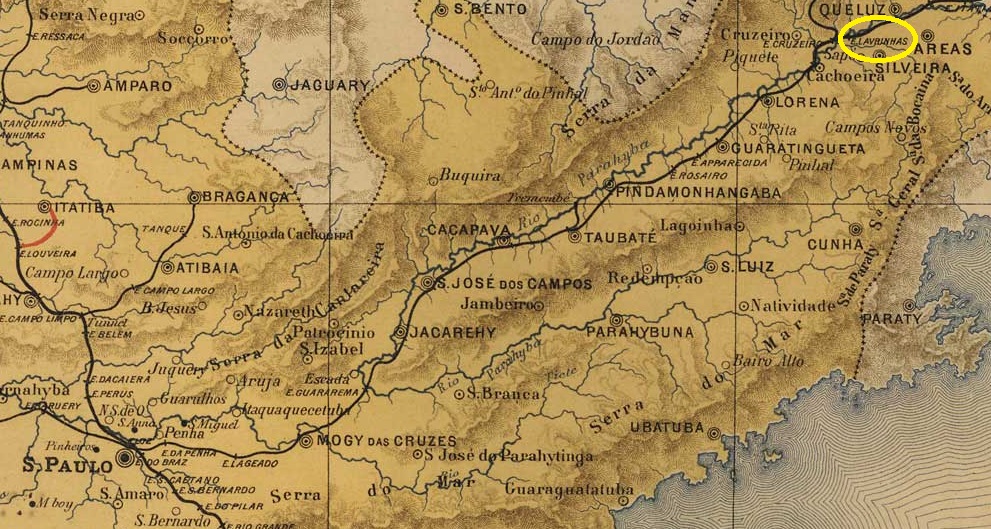
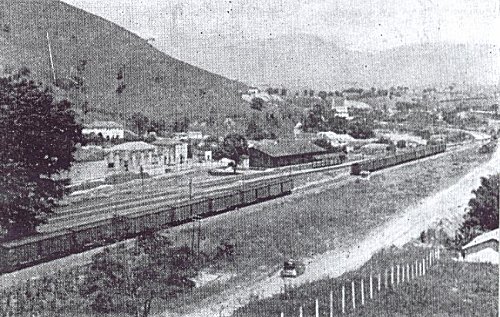
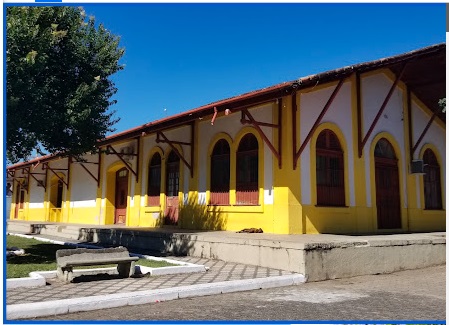
Lavrinhas station was opened in November 1874 by the railway company E.F. D. Pedro II (São Paulo branch) and was located on the east bank of the Paraíba do Sul in the Município de Queluz, 230 km north-east of the capital São Paulo. The line was put into operation by E.F. Central do Brasil in 1889 and belonged to Rede Ferroviária Federal S.A. from 1975 until its closure around 1980 (estacoesferroviarias.com.br). Today, the tracks have disappeared and the station building belongs to the Lavrinhas city council.
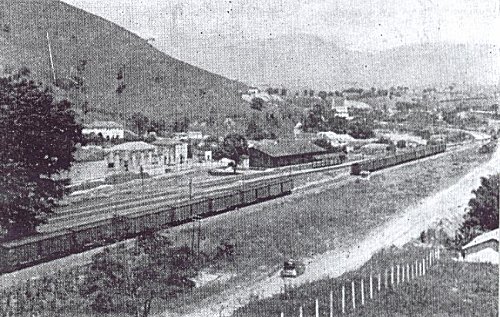
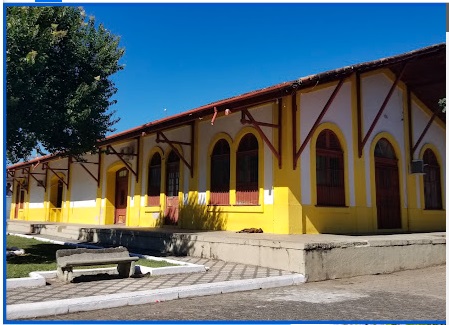
The area around the railway station became the Distrito de Lavrinhas in the Município de Pinheiros in December 1917. Since November 1944, it has belonged to the Município de Lavrinhas.
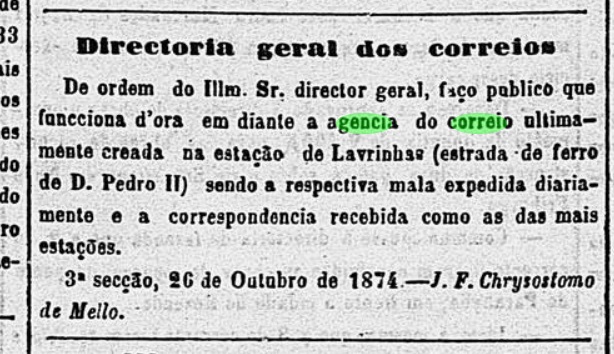
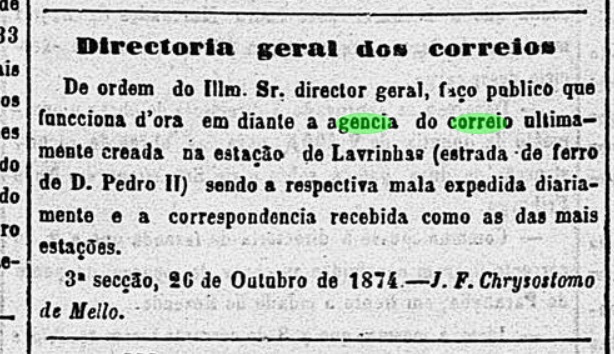
In October 1874, it was created a railway station post office, as can be seen in the Rio press:
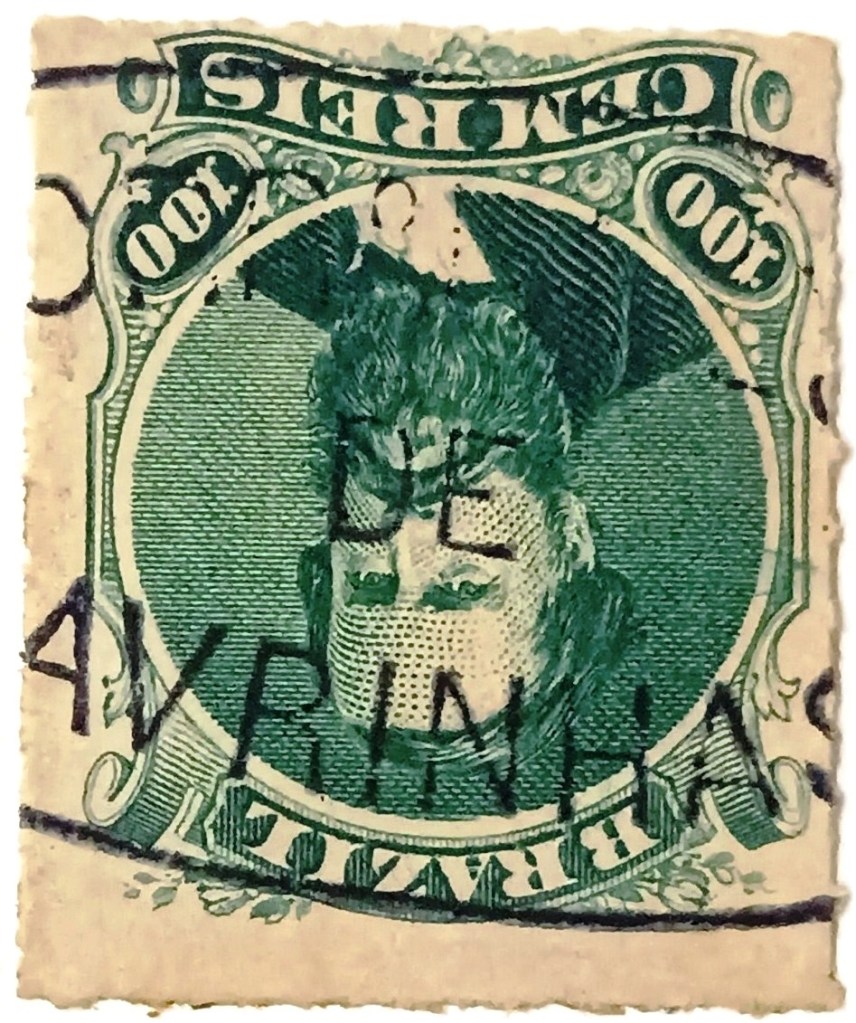
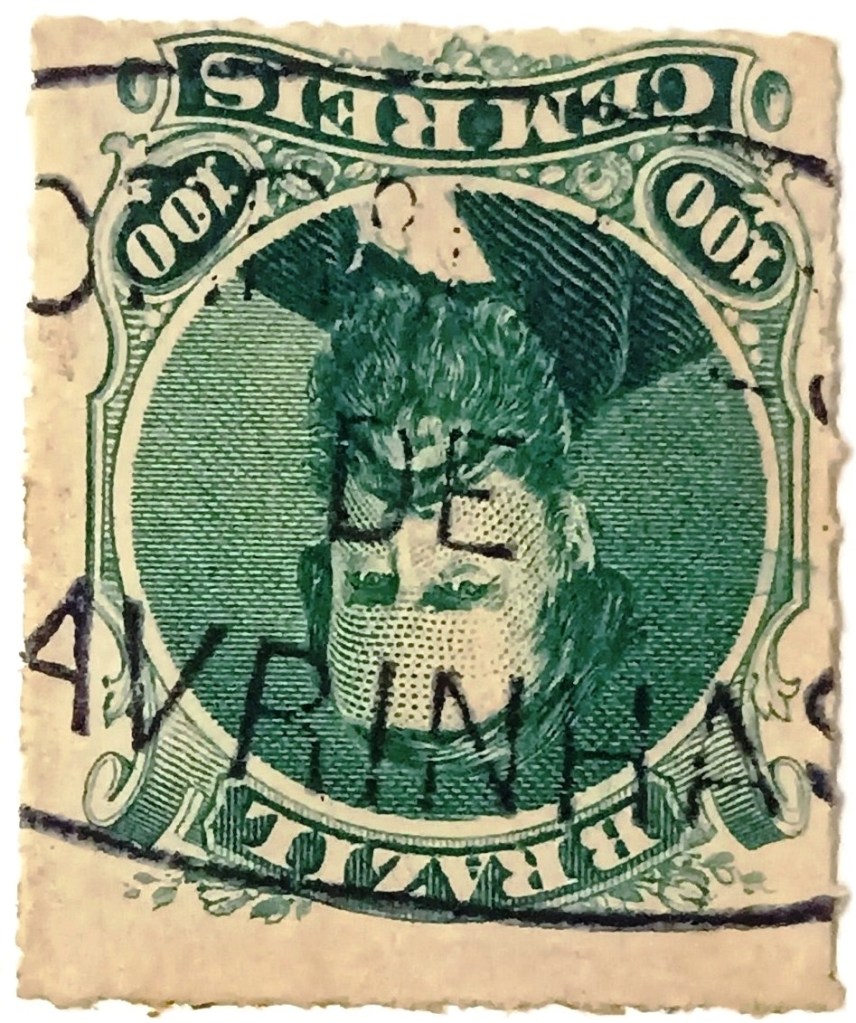
The oldest postmark is LSP-1645a (fig. Paulo Daroz):
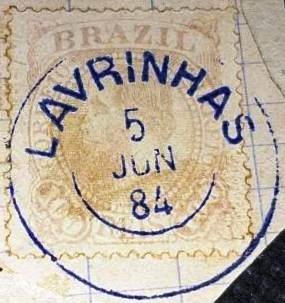
This was followed by the double circle LSP-1645b (fig. Felipe Piccinini), which also exists in blue:
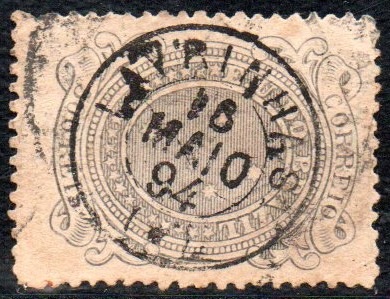
The French type LSP-1645c (Fig. Felipe Piccinini) was also found around the same time:
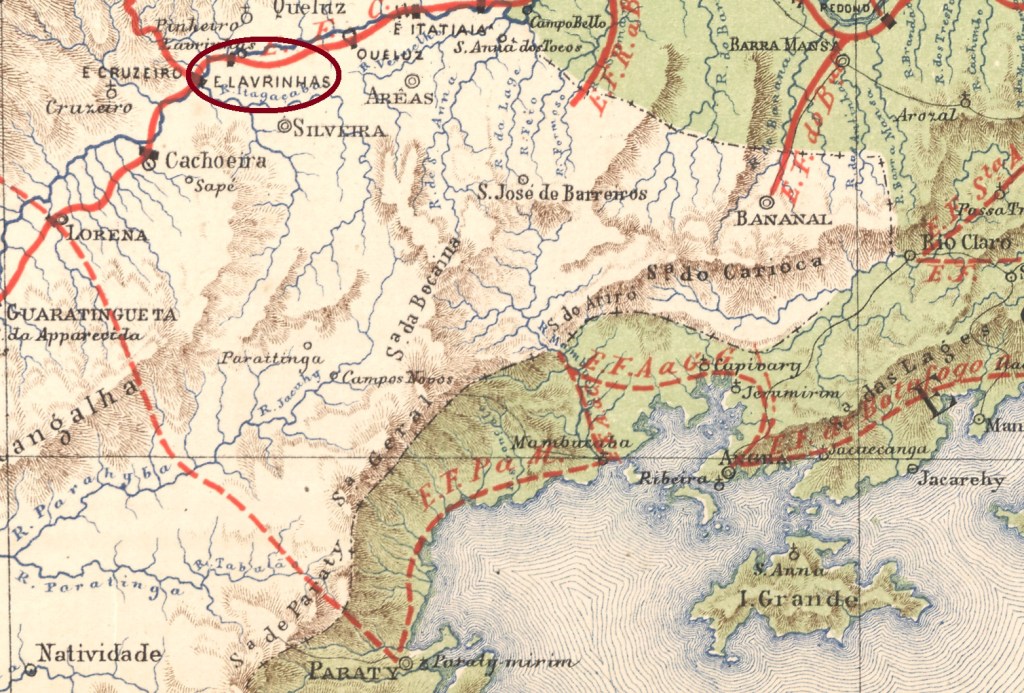
Towards the end of the Empire, the rare LSP-1645d appeared (fig. R. Koester, in Carimbologia XXVI):

Der Bahnhof Lavrinhas wurde im November 1874 von der Eisenbahngesellschaft E.F. D. Pedro II (Zweig São Paulo) eröffnet und lag am Ostufer des Paraíba do Sul im Município de Queluz, 230 km nordöstlich der Hauptstadt São Paulo. Die Strecke wurde 1889 von der E.F. Central do Brasil in Betrieb genommen und gehörte von 1975 bis zu ihrer Stilllegung um 1980 der Rede Ferroviária Federal S.A. (estacoesferroviarias.com.br). Heute sind die Gleise verschwunden, das Bahnhofsgebäude gehört der Stadtverwaltung von Lavrinhas.
Das Gebiet um den Bahnhof wurde im Dezember 1917 zum Distrito de Lavrinhas im Município de Pinheiros. Seit November 1944 gehört es zum Município de Lavrinhas.
Im Oktober 1874 wurde beschlossen, ein Bahnhofspostamt einzurichten, wie aus der Presse von Rio hervorgeht:
Der älteste Poststempel ist LSP-1645a (Abb. Paulo Daroz):
Es folgte der Doppelkreis LSP-1645b (Abb. Felipe Piccinini), den es auch in Blau gibt:
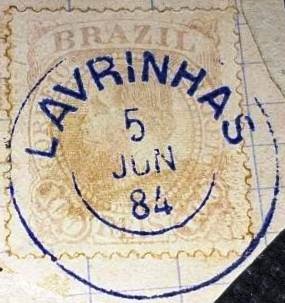
Etwa zur gleichen Zeit fand sich auch der französische Typ LSP-1645c (Abb. Felipe Piccinini):
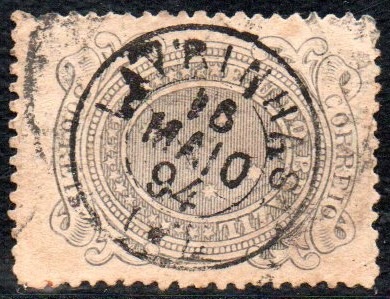
Gegen Ende des Kaiserreichs erschien der seltene LSP-1645d (Abb. R. Koester, in Carimbologia XXVI):


 Carimbologia