Text updated on June 30, 2025
See also Villa de Lorena (VSP-1780)
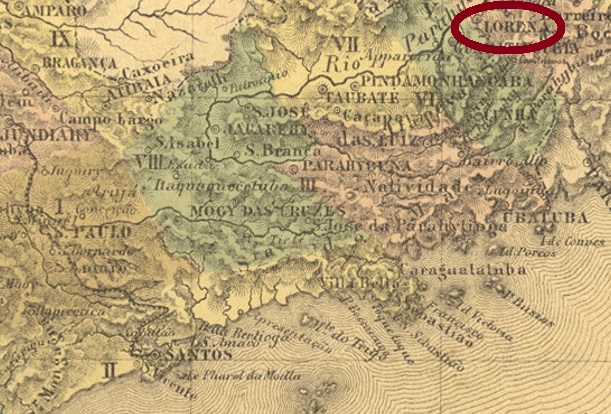
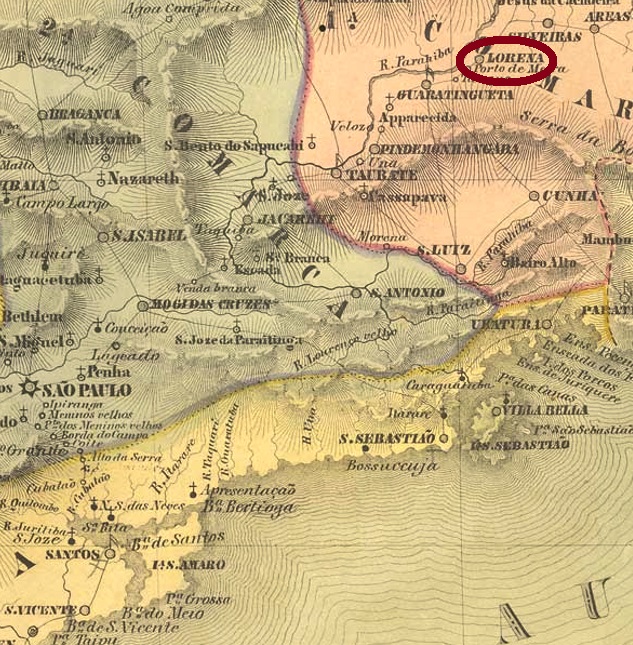
The original settlement of Guaiapacaré became the freguesia of N. Sra. da Piedade de Lorena in 1718, it belonged to the Vila de Guaratinguetá and was situated on the south bank of the river Paraíba do Sul, 180 km northeast of the later provincial capital São Paulo. In September 1788, it was elevated to the status of vila, and in April 1856, it became a town. The name comes from Bernardo José Maria de Lorena e Silveira (1756-1818), the Count of Sarzedas, who was Capitão-Mor of São Paulo from 1788 to 1797.
Both Nova Monteiro (Administrações e Agencias Postaes do Brasil Imperio, in Brasil Filatelico/RJ, 1934-5; Reprint SPP 1994-1999) and the Directory of Imperial Post Offices (Tabella das Agencias do Correio do Imperio, Rio de Janeiro, 1885) agree that there was a post office there from June 1842. However, there are postmarked letters from Lorena that show earlier dates. Apparently, Lorena was one of the towns in the Paraíba do Sul valley that had a functioning postal system before 1842 which was not subordinate to the central government in Rio. The first two postmarks are from this period of operation. LSP-0775a and LSP-0775b are very similar; the first postmark is chestnut in colour and was in circulation between 1831 and 1841, while the second – which probably also occurs in green – was found on letters and documents between 1829 and at least 1843. Both cancels were presented in the RHM catalogue under P-SP-18a and P-SP-19 respectively.


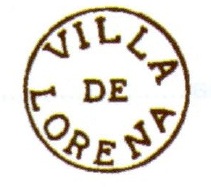
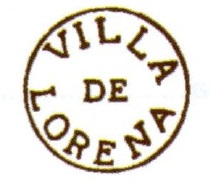
Then came VSP-1780a, which appeared from 1841 to 1856 and was already shown by Paulo Ayres in Catálogo de Carimbos Brasil-Império (S. Paulo, 1937, 1942) under no. 1578:
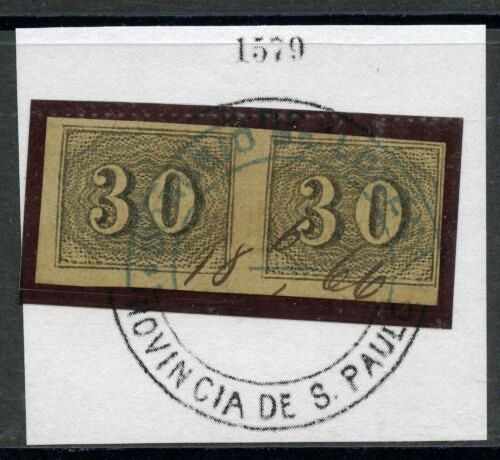
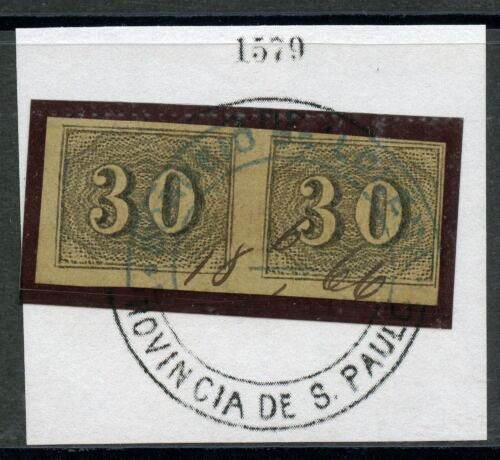
This was followed by LSP-0775c, which can also be seen in Ayres’ work (op. cit.), this time under no. 1579:
A short time later, the French type LSP-0775d also appeared, also in blue, also presented by P. Ayres. The circumflex accent on the E in the image is actually an acute accent, as can be seen on the right, in Felipe Piccinini’s image:

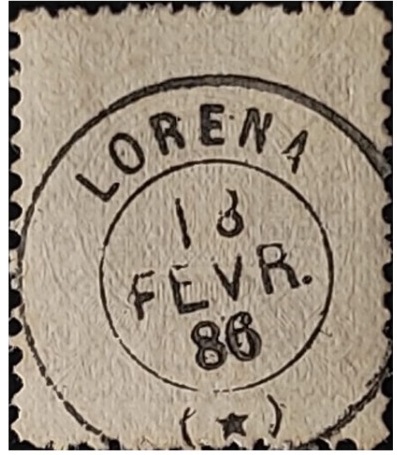
In the 1880s, the French cancel returned, this time without any accent, as seen in LSP-0775e (image C. A. Balata):
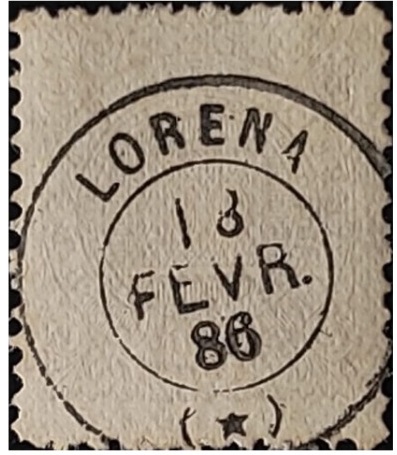
LSP-0775e (CB) 1877-1888, also in blue
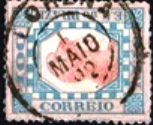
At the end of the empire finally came LSP-0775f (ill. Mário Celso Orsi Jr.):
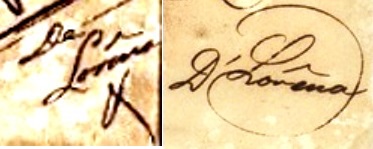
These handwritten cancellations also date from the first period of operation (Coll. José L. Fevereiro/Mario Celso Orsi JR.):
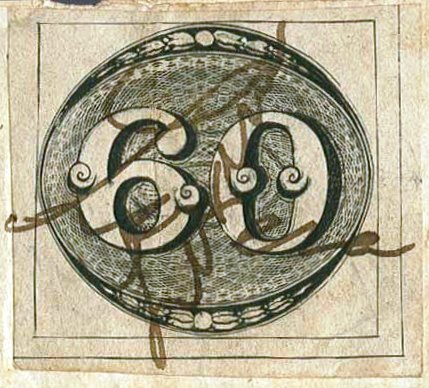
Another handwritten cancellation (fig. Corinphila) dates from the second period of operation:
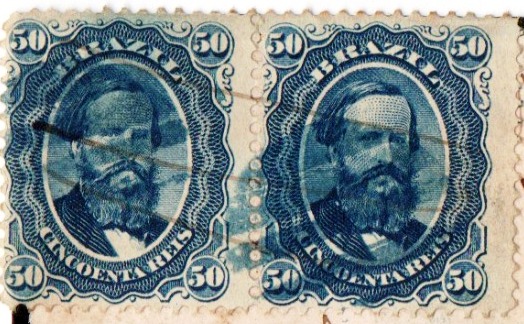
Two mute cancellations are known from Lorena. Firstly by Mário Celso Orsi Jr:

Then by Nikolas Moura:
Textaktualisierung vom 30. Juni 2025
Siehe auch Villa de Lorena (VSP-1780)
Die ursprüngliche Siedlung von Guaiapacaré wurde 1718 die Freguesia von N. Sra. da Piedade de Lorena, sie gehörte der Vila de Guaratinguetá und lag am Südufer des Flusses Paraíba do Sul,, 180 km nordöstlich der späteren Provinzhauptstadt São Paulo entfernt. Im September 1788 wurde der Ort zur Vila erhoben und im April 1856 zur Stadt. Der Name kommt von Bernardo José Maria de Lorena e Silveira (1756-1818), dem Graf von Sarzedas, der von 1788 bis 1797 Capitão-Mor von São Paulo war.
Sowohl Nova Monteiro (Administrações e Agencias Postaes do Brasil Imperio, in Brasil Filatelico/RJ, 1934-5; Reprint SPP 1994-1999) als auch das Verzeichnis der kaiserlichen Postämter (Tabella das Agencias do Correio do Imperio, Rio de Janeiro, 1885) sind sich darüber einig, dass es dort ab Juni 1842 ein Postamt gab. Allerdings kennt man gestempelte Briefe aus Lorena, die frühere Daten aufweisen. Offenbar gehörte Lorena zu den Ortschaften im Paraíba do Sul-Tal, die vor 1842 ein funktionierendes Postwesen unterhielten, das nicht der Zentralregierung in Rio unterstellt war. Die ersten beiden Poststempel entstammen dieser Betriebsperiode. LSP-0775a und LSP-0775b sind sich sehr ähnlich; der erste Poststempel ist kastanienfarbig und war zwischen 1831 und 1841 im Umlauf, während der zweite – der wohl auch in grün vorkommt – auf Briefen und Dokumenten zwischen 1829 und zumindest 1843 gefunden wurde. Beide Stempel wurden im RHM-Katalog unter P-SP-18a bzw. P-SP-19 vorgestellt.


Danach kam VSP-1780a, der von 1841 bis 1856 erschien und bereits durch Paulo Ayres in Catálogo de Carimbos Brasil-Império (S. Paulo, 1937, 1942) unter Nr. 1578 gezeigt wurde:
Es folgte LSP-0775c, der ebenfalls im Ayres‘ Werk (op. cit.) zu sehen ist, diesmal unter Nr. 1579:
Kurze Zeit später erschien auch der französische Typ LSP-0775d, auch in Blau, und auch von P. Ayres vorgestellt. Der Zirkumflex auf dem E im Bild ist in Wirklichkeit ein accent aigu, wie rechts im Bild von Felipe Piccinini zu sehen ist:

In den 80er Jahren kehrte der französische Stempel zurück, diesmal ohne jeglichen Akzent, wie in LSP-0775e (Bild C. A. Balata) zu sehen ist:
Am Ende des Kaiserreichs kam schließlich LSP-0775f (Abb. Mário Celso Orsi Jr.):
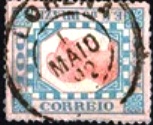
Aus der ersten Betriebsperiode stammen auch diese handschriftlichen Entwertungen (Samml. José L. Fevereiro/Mário Celso Orsi Jr.):
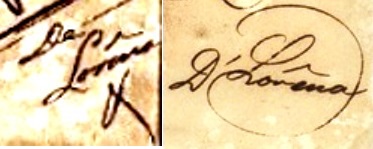
Eine weitere handschriftliche Entwertung (Abb. Corinphila) kommt aus der zweiten Betriebsperiode:
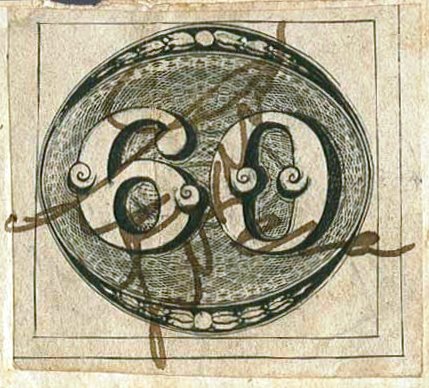
Zwei stumme Abstempelungen sind aus Lorena bekannt. Erstens durch Mário Celso Orsi Jr:

Dann durch Nikolas Moura:


 Carimbologia