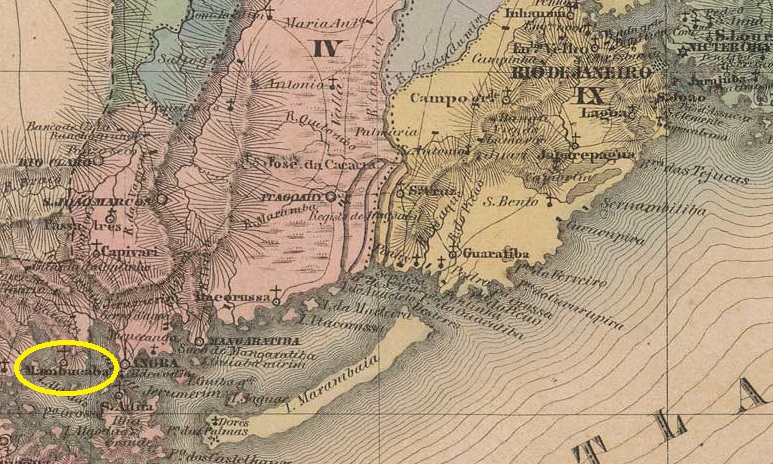
Mambucaba (previously also often spelled Mambocaba) was, since July 1808, the Parish of Nossa Senhora do Rosário de Mambucaba and belonged to the town of Angra dos Reis. The town was located at the mouth of the Mambucaba River, now also called Perequê, 220 km west of the capital Rio de Janeiro. Around 1890, Mambucaba became a district of Angra dos Reis and remains part of it to this day.
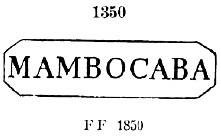
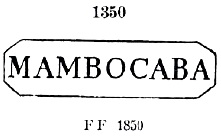
According to Nova Monteiro, there had been a post office there since December 1831, as described in Administrações e Agencias Postaes do Brasil Imperio (Brasil Filatelico/RJ, 1934–1935; reprinted by SPP 1994–1999). The oldest postmark to date is MRJ-0705a, which was assigned the number 1350 by Paulo Ayres in the Catálogo de Carimbos Brasil-Império (S. Paulo, 1937, 1942):
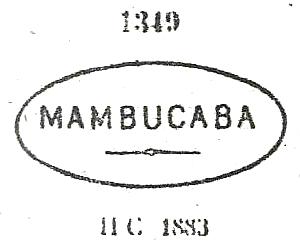
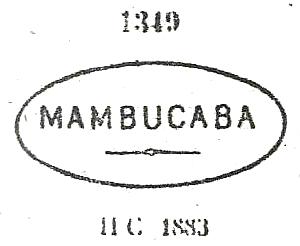
Its successor, MRJ-0705b, was also shown by P. Ayres, this time with the number 1349:
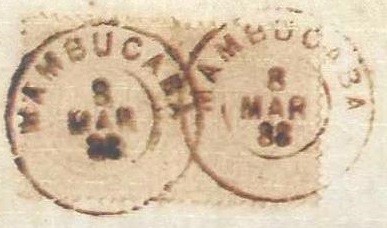
At the end of the 19th century, MRJ-0705c (fig. Paulo R. Risi) also appeared:
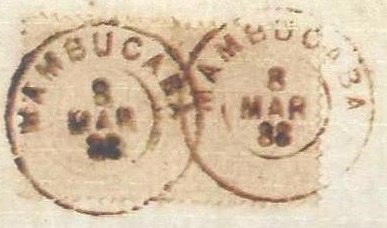
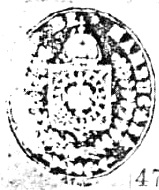
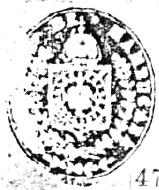
R. Koester also showed the postmark with the imperial seal MRJ-0705d at Carimbologia XXVII:
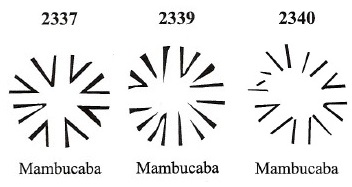
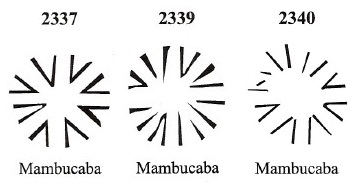
James Dingler and Klerman W. Lopes presented three blank postmarks from Mambucaba in Mute Cancellations of the Brazil Empire / Carimbos Mudos do Brasil Império (Brazilian Philatelic Association, Rio de Janeiro, 2000):
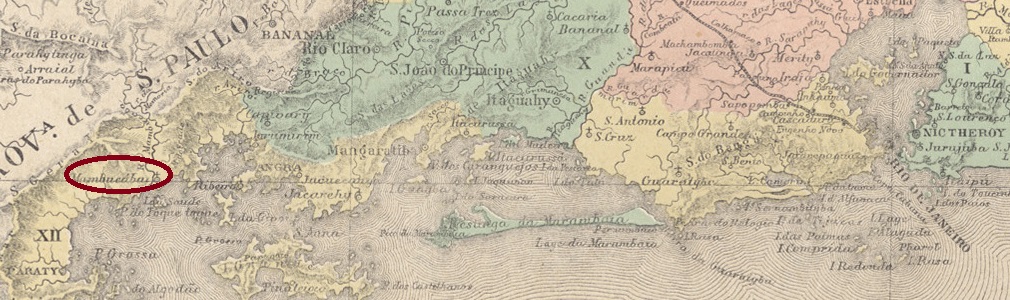
Mambucaba (früher oft auch Mambocaba geschrieben) war ab Juli 1808 die Freguesia de Nossa Senhora do Rosário de Mambucaba und gehörte zur Vila de Angra dos Reis. Der Ort lag an der Mündung des Mambucaba, der heute auch Perequê heißt, 220 km westlich der Hauptstadt Rio de Janeiro. Um 1890 wurde Mambucaba ein Distrikt von Angra dos Reis und ist bis heute Teil davon.
Laut Nova Monteiro gab es dort seit Dezember 1831 ein Postamt, wie in Administrações e Agencias Postaes do Brasil Imperio (Brasil Filatelico/RJ, 1934–1935; Nachdruck SPP 1994–1999) beschrieben. Der bisher älteste Poststempel ist MRJ-0705a, der von Paulo Ayres in Catálogo de Carimbos Brasil-Império (S. Paulo, 1937, 1942) die Nr. 1350 erhielt:
Sein Nachfolger MRJ-0705b wurde ebenfalls durch P. Ayres gezeigt, diesmal mit Nr. 1349:
Gegen Ende des 19. Jahrhunderts erschien auch MRJ-0705c (Abb. Paulo R. Risi):
R. Koester zeigte auch in Carimbologia XXVII den Poststempel mit dem kaiserlichen Siegel MRJ-0705d:
James Dingler und Klerman W. Lopes haben in Mute Cancellations of the Brazil Empire / Carimbos Mudos do Brasil Império (Brazil Philatelic Association, Rio de Janeiro, 2000) drei stumme Stempel aus Mambucaba vorgestellt :

 Carimbologia