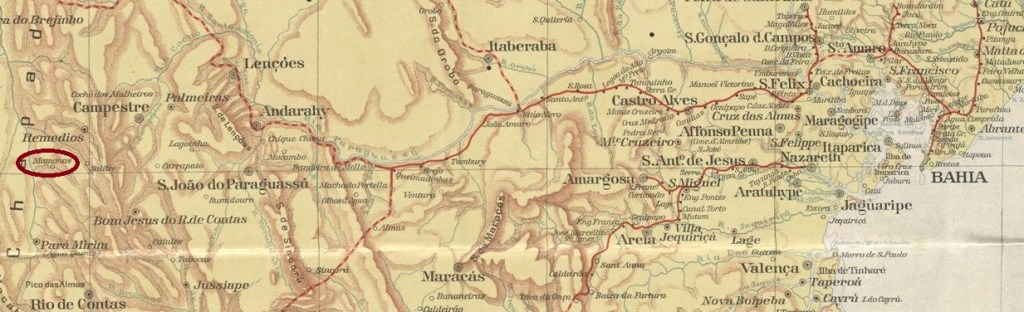
Other names: Santa Maria do Ouro
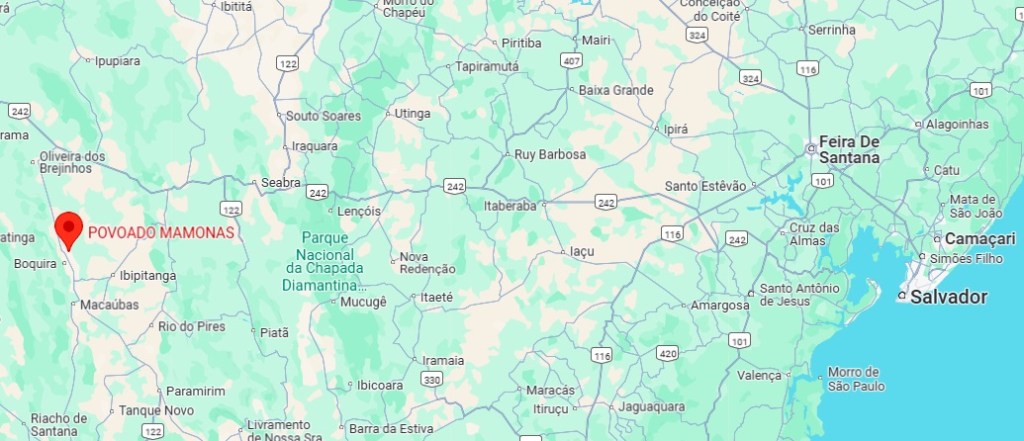
Here we are once again dealing with a town that has disappeared from the map. Arraial de Santa Maria do Ouro existed around 1850 on the eastern bank of the Riacho Santa Rosa around Vila de Minas do Rio de Contas, 700 kilometres west of the provincial capital Salvador da Bahia. Today, the region is known as Chapada Diamantina. At that time, gold and gemstone deposits attracted many adventurers, and later also bandits and corrupt politicians. They wreaked havoc until all the valuable minerals were exhausted and the town experienced economic decline. In 1878, the settlement known as Mamonas came under the jurisdiction of Vila de Bom Jesus do Rio de Contas. And so it has remained to this day, after the município was renamed twice: in March 1931 to Anchieta and in December 1943 to Piatã.
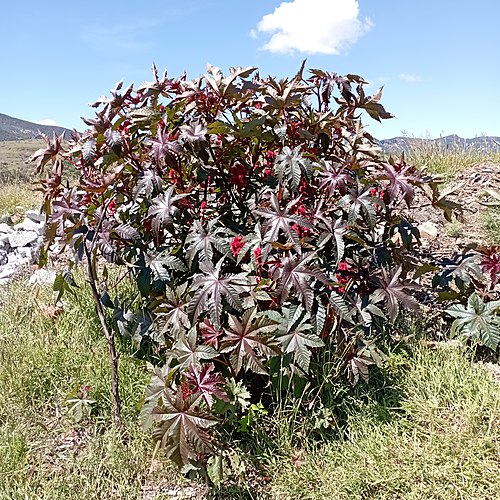
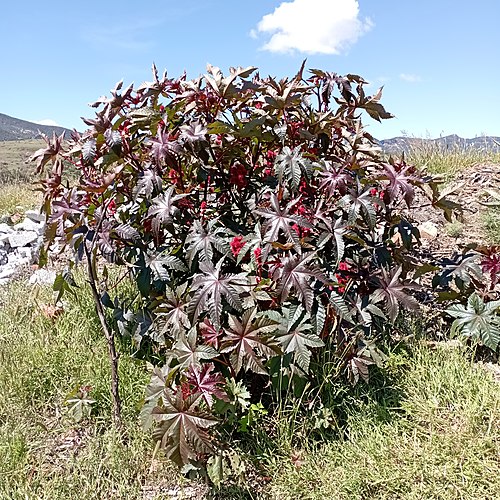
Mamona is the Brazilian name for a tree of the spurge family (Euphorbiaceae).
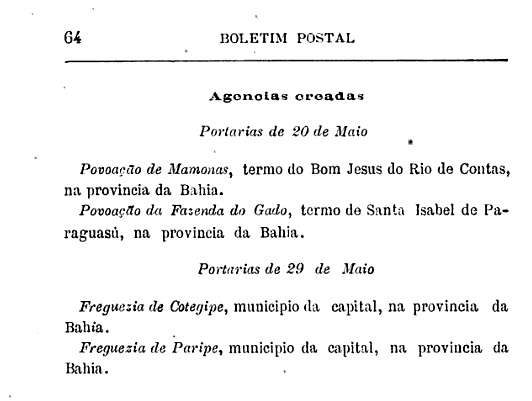
According to the Postbulletiin (Boletim Postal), there has been a post office in the area since May 1889.
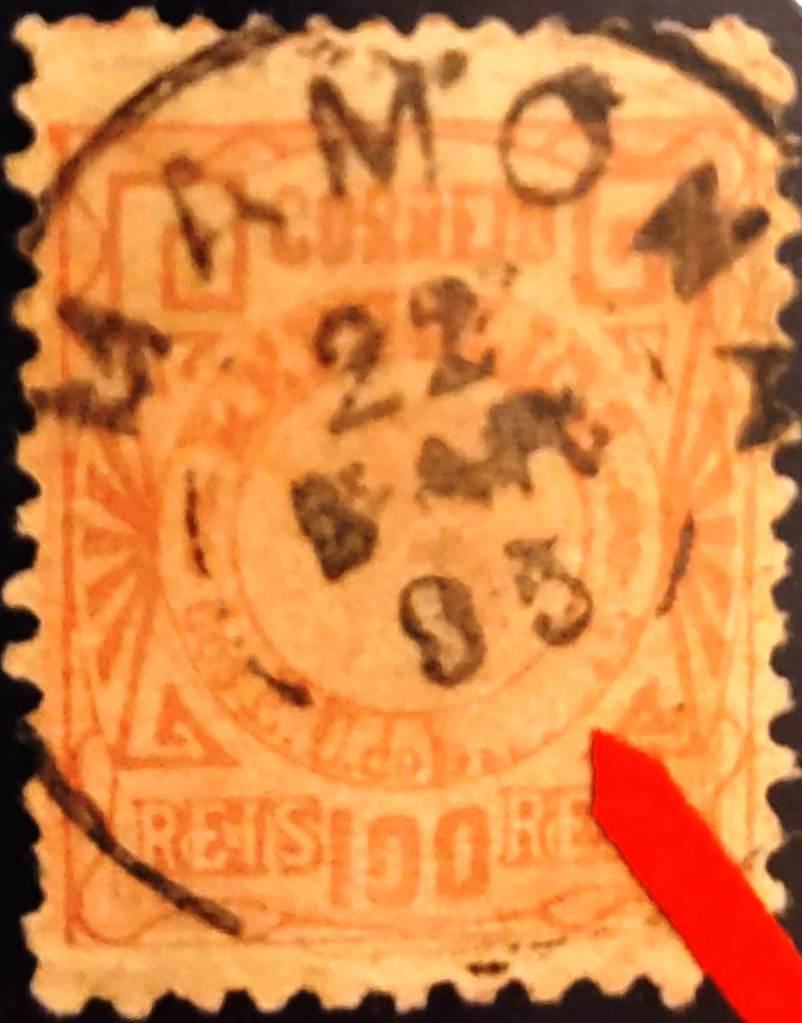
The only postmark from the 19th century is MBA-0890a (Fig. Jorge L. Pedreira), where the place name reads Mamona:
Andere Namen: Santa Maria do Ouro
Hier haben wir es wieder mit einer Ortschaft zu tun, die heute von der Landkarte verschwunden ist. Der Arraial de Santa Maria do Ouro bestand um 1850 am Ostufer des Riacho Santa Rosa im Gebiet der Vila de Minas do Rio de Contas, 700 Kilometer westlich der Provinzhauptstadt Salvador da Bahia. Die Region ist heute als Chapada Diamantina bekannt. Damals lockten Gold- und Edelsteinvorkommen viele Abenteurer an, später auch Banditen und korrupte Politiker. Sie trieben ihr Unwesen, bis alle wertvollen Mineralien erschöpft waren und der Ort seinen wirtschaftlichen Niedergang erlebte. 1878 ging die als Mamonas bekannte Siedlung unter die Zuständigkeit der Vila de Bom Jesus do Rio de Contas. Und so blieb es bis heute, nach zweimaliger Umbenennung des Município: im März 1931 in Anchieta und im Dezember 1943 in Piatã.
Mamona ist der brasilianische Name für den Wunderbaum, einen Wolfsmilchgewächs (Euphorbiaceae).
Wie aus dem Postbulletin (Boletim Postal) hervorgeht, gab es vor Ort ein Postamt seit Mai 1889:

Der bisher einzige Poststempel im 19. Jahrhundert ist MBA-0890a (Abb. Jorge L. Pedreira), hier lautet der Ortsname Mamona:


 Carimbologia