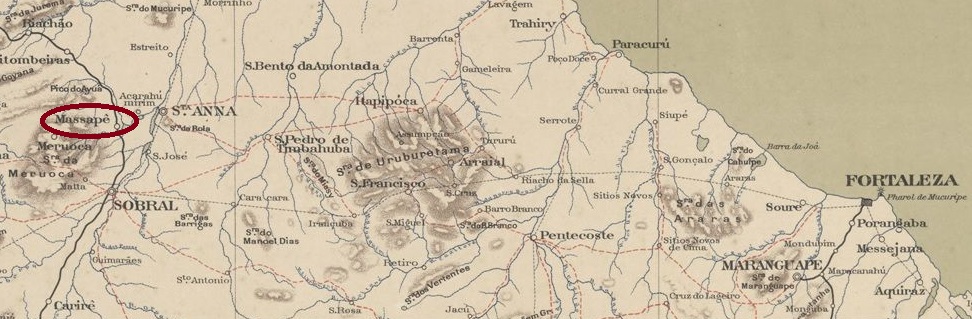
Alternative spelling: Massapê
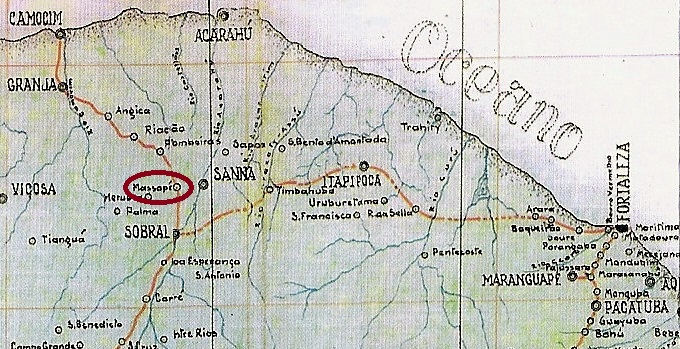
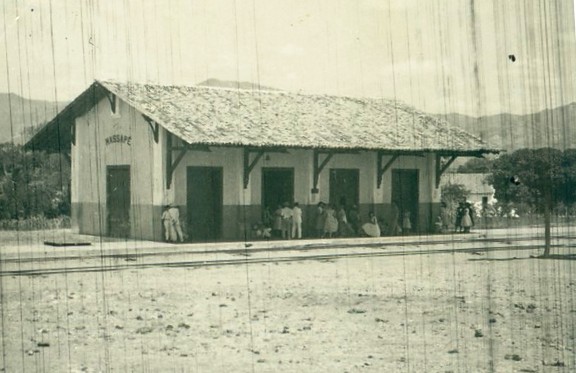
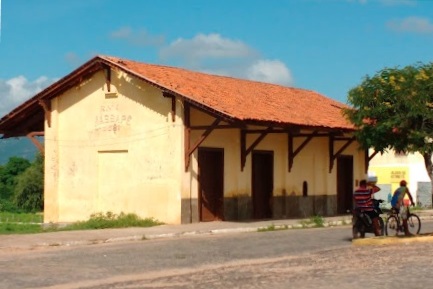
The Massapé railway station (now Massapê) was opened in December 1881 by the E.F. de Sobral railway company (Camocim Branch line). It was located in the municipality of Sant’Anna, in front of the Meruoca Mountains, 250 kilometres west of the provincial capital Fortaleza. The railway line was transferred to Rede de Viação Cearense in 1909 and belonged to Rede Ferroviária Federal S.A. from 1975 until it was decommissioned around 1980 (source: estacoesferroviarias.com.br). The station building has been restored and is now a tourist attraction.
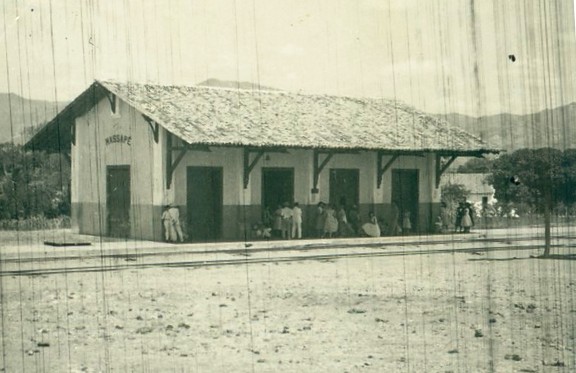
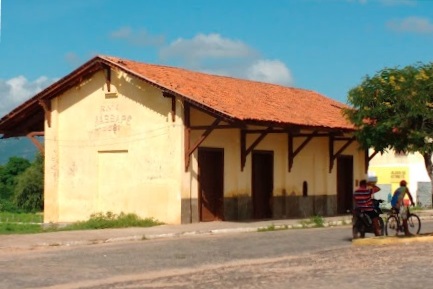
The area around the station became Freguesia de Serra Verde in February 1882, which was declared a Vila in September 1897. In August 1899, the old place name returned as Município de Massapê. Massapê has been a city since August 1917.
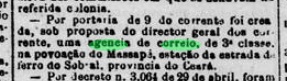
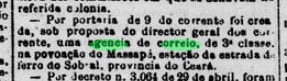
As reported by the regional press, there has been a post office at the railway station since May 1882.
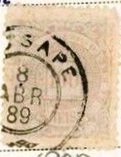
Two imperial postmarks were found. The oldest of these is MCE-0210a (illustration by R. Koester in Carimbologia XXVII):

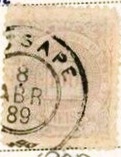
Later, MCE-0210b (illustration from the Internet) was added:
Andere Schreibweise: Massapê
Der Bahnhof Massapé (heute Massapê) wurde im Dezember 1881 durch die Eisenbahngesellschaft E.F. de Sobral (Camocim-Abzweigung) eröffnet. Er lag im Município de Sant’Anna vor dem Meruoca-Gebirge, 250 Kilometer westlich der Provinzhauptstadt Fortaleza. Die Bahnlinie ging 1909 an die Rede de Viação Cearense über und gehörte von 1975 bis zur Stilllegung um 1980 zur Rede Ferroviária Federal S.A. (estacoesferroviarias.com.br). Das Bahnhofsgebäude wurde restauriert und ist heute ein Touristenmagnet.
Das Gebiet um den Bahnhof wurde im Februar 1882 zur Freguesia de Serra Verde, die im September 1897 zur Vila erklärt wurde. Im August 1899 kehrte der alte Ortsname als Município de Massapê zurück. Seit August 1917 ist Massapê eine Stadt.
Wie die regionale Presse bekannt gab, gab es seit Mai 1882 ein Postamt am Bahnhof.
Zwei kaiserliche Poststempel sind vorhanden. Der älteste davon ist MCE-0210a (Abb. R. Koester in Carimbologia XXVII):

Später kam auch MCE-0210b (Abb. aus dem Internet) dazu:

 Carimbologia